Does Pu-erh Tea Improve With Age Like Wine? The Honest Answer
Here’s the question, does Pu-erh tea improve with age like wine? Of all the claims made about tea, the one that raises the most eyebrows is this: some teas genuinely improve with age – becoming more complex, more valuable, and more interesting the longer you keep them.

And nowhere is that claim more serious, more studied, and more contested than with pu-erh. 

Pu-erh is the only tea in the world with a documented, centuries-old tradition of intentional ageing – one that stretches back along the ancient Tea Horse Road, the trade route that carried compressed pu-erh cakes across mountains and borders for centuries.


If that history interests you, our piece on walking the Tea Horse Road brings it to life. Cakes of compressed pu-erh change hands for thousands of pounds.

Collectors store them for decades. Experts taste the difference between a five-year-old and a twenty-year-old pressing as readily as a sommelier distinguishes vintages.

But is the wine comparison actually accurate? And does the ageing potential apply to all pu-erh, or only specific types? In this guide, we give you the honest, science-grounded answer – and explain why quality and purity matter enormously to whether any of this is worth the effort.

For a full introduction to pu-erh – what it is, where it comes from, and how to prepare it – you can read our complete pu-erh guide. Here, we go deep on the ageing question specifically.

Table of contents

What Makes Pu-erh Different from Every Other Tea?

To understand why pu-erh ages the way it does, you first need to understand what makes it fundamentally different from green tea, black tea, or oolong.

All tea comes from the same plant: Camellia sinensis. The difference between tea types is almost entirely about how the leaf is processed after picking – specifically, how much oxidation is allowed, and whether the leaf is fired (heated) to stop that process.

Green tea is fired quickly to stop oxidation. Black tea is fully oxidised before firing. Oolong sits somewhere in between.

Pu-erh is different from all of them because it undergoes a microbial fermentation process – a genuine biological transformation involving bacteria, fungi, and other microorganisms that act on the leaf over time.

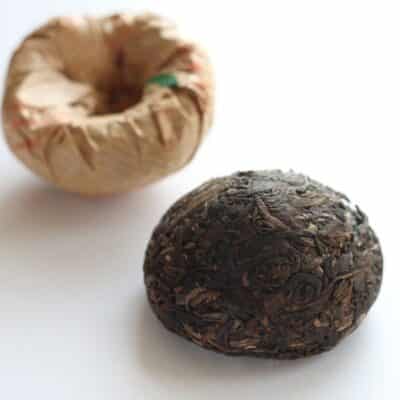
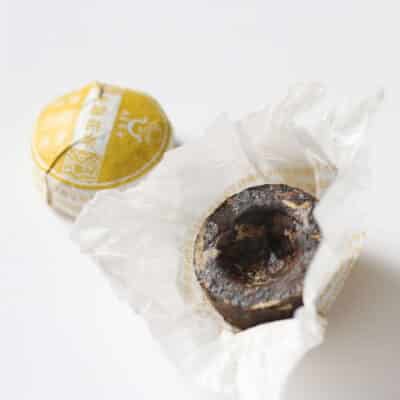
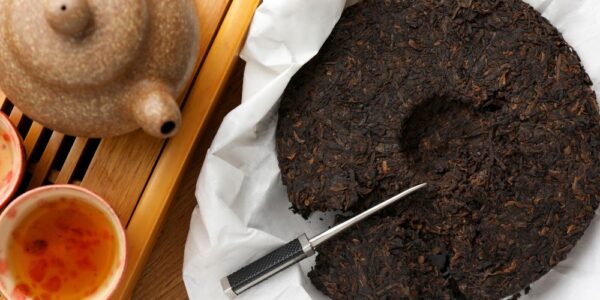
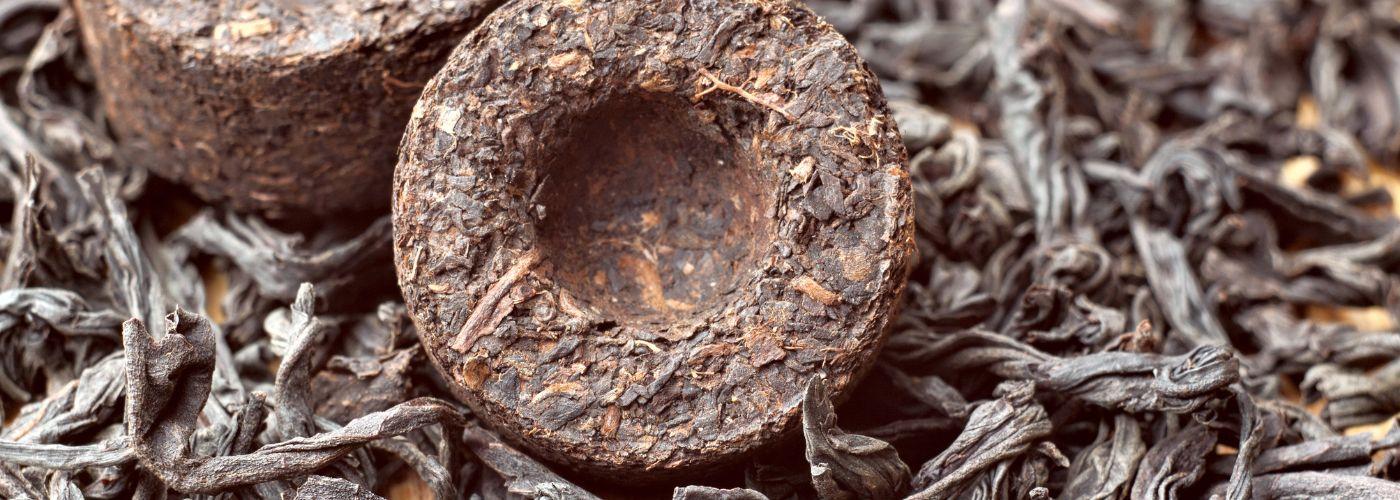
fermented pu erh - does pu erh improve with age like wine

This fermentation is what gives pu-erh its aged potential. The microorganisms do not stop working when the tea is packed and sold.

In the right conditions, they continue transforming the compounds in the leaf for years or decades – breaking down harsh tannins, developing new aromatic compounds, and producing a flavour profile that genuinely evolves over time.

No other mainstream tea category does this. Green tea stales. Black tea fades. Pu-erh, under the right conditions, matures. This is not marketing. It is microbiology.

The Two Types of Pu-erh and Why They Age Differently

Understanding pu-erh ageing requires understanding that there are two fundamentally different types – and they behave very differently over time.

Sheng (raw) pu-erh

Sheng pu-erh is made from sun-dried maocha (rough tea) that is compressed into cakes and left to age naturally. It is the traditional form of pu-erh and the type with the longest history of intentional ageing.

Young sheng is often astringent, grassy, and intensely bitter – challenging for new drinkers.

But over years and decades of careful storage, the bitterness softens, the astringency rounds out, and a complex, earthy sweetness develops.

A well-aged sheng from a respected producing region is genuinely one of the most complex flavour experiences in the tea world.

This is the type of pu-erh that most accurately earns the wine comparison.

Like a young Barolo or an unready Burgundy, young sheng needs time to reveal what it is capable of.

Loading...
Price range: £5.50 through £28.00

Shou (ripe) pu-erh

Shou pu-erh was developed in the 1970s as a way of accelerating the natural ageing process. The maocha is pile-fermented – heaped in conditions of controlled heat and humidity that encourage rapid microbial activity, mimicking years of natural ageing in a matter of months.

The result is a tea that is earthy, smooth, and dark from the moment it is made – without the bitterness of young sheng, and without the decades of waiting.

Shou is an excellent tea in its own right, and it does improve somewhat with age.

But the transformation is less dramatic than sheng, and the ceiling of its potential is generally considered lower.

When people ask whether pu-erh ages like wine, they are almost always asking about sheng.

The shou analogy is closer to a tea that has already been ‘cooked’ – its fundamental character is set.

Loading...
Price range: £12.00 through £125.00

For a full breakdown of how these two types differ in production and flavour, see our guide to sheng vs shou pu-erh.

What Actually Happens When Pu-erh Ages?

The ageing of pu-erh is a genuine scientific process, and understanding it helps demystify some of the more extravagant claims made about aged tea.

The key mechanisms:

Process What it does to the tea
Microbial activity Bacteria, fungi (including Aspergillus niger and others), and yeasts present in the compressed cake continue to act on the leaf compounds in storage. They break down complex polysaccharides and proteins, produce new organic acids, and transform the aromatic profile of the tea.
Tannin polymerisation The astringent tannins in young sheng - the compounds that make it grip the sides of your mouth - polymerise and condense over time, becoming larger molecules that are less reactive on the palate. This is why aged sheng feels smoother and less drying than young sheng.
Oxidative changes Even in a compressed cake, slow oxidation continues. This darkens the liquor over time and contributes to the development of earthy, woody, and sweet aromatic compounds.
Reduction of chlorophyll Young sheng is often greenish in colour. As it ages, the chlorophyll breaks down and the leaf - and the brewed liquor - shifts through amber to deep reddish-brown.

The result, in ideal conditions, is a progressive deepening and mellowing of the flavour profile – from the high, green, sometimes aggressive character of young sheng toward the earthier, more complex, and more nuanced character of aged tea.

Importantly, this only happens if the storage conditions are right. Microbial activity requires a specific range of temperature and humidity. Too dry, and the ageing stalls.

Too wet, and harmful moulds proliferate and ruin the tea. This is the variable that separates genuine aged pu-erh from damaged or improperly stored tea.

Loading...
Price range: £9.00 through £100.00
Price range: £12.00 through £125.00
Price range: £12.00 through £100.00

How Pu-erh Ageing Compares to Wine Ageing

The wine comparison is frequently made – and it holds in some significant ways, while breaking down in others.

Where the comparison works

Similarity Where the comparison works
Biological transformation Both involve ongoing biological transformation after production. Wine ages through a combination of slow oxidation and the continued work of compounds left over from fermentation. Pu-erh ages through microbial activity and oxidation in the cake.
Terroir Both have a concept of terroir. Just as wine from different vineyards tastes different even from the same grape, pu-erh from different mountains in Yunnan (Bulang, Jingmai, Laobanzhang, and others) has distinct flavour characteristics that persist through ageing and command very different prices.
Vintages Both have vintages. Serious pu-erh collectors track production years closely. A cake pressed in a good year from old-growth trees in a respected region will be considered fundamentally different from a mass-produced cake of the same age.
Storage sensitivity Both can be ruined by poor storage. A great wine stored in the wrong conditions becomes undrinkable. A great pu-erh cake stored in excessive humidity can develop off-flavours from harmful moulds - a condition known as 'wet storage gone wrong'.

Where the comparison breaks down

Difference Where the comparison breaks down
Ageing timeline The ageing timeline is much longer. A wine might need five to fifteen years to reach its peak. Serious collectors of sheng pu-erh talk in decades - some cakes are considered to improve for thirty, forty, or even fifty years under ideal conditions.
Storage environment The storage environment matters more. Wine cellars need to be cool and dark. Pu-erh storage requires specific humidity as well as temperature - and different storage environments (dry storage in Kunming versus more humid storage in Hong Kong) produce genuinely different aged teas from the same starting cake.
Starting material quality Not all pu-erh is worth ageing. A mass-produced, low-grade pu-erh cake will not become a great tea with age. The starting material has to be worth keeping - just as cheap wine does not become fine wine with time in a cellar.
Loading...
Price range: £9.00 through £100.00
Price range: £37.00 through £60.00
SOLD
Price range: £5.00 through £100.00

What Improves With Age – and What Does Not

Being honest about this matters, because not every aspect of pu-erh improves with time.

What genuinely improves

Quality What genuinely improves
Reduction in astringency This is the most reliable improvement. The mouth-drying, gripping quality of young sheng diminishes significantly over years of ageing as tannins polymerise.
Flavour complexity Well-aged sheng develops layers of flavour that simply are not present in young tea - dried fruit, earthiness, a quality often described as 'camphor', and a lingering sweetness on the finish.
Texture and mouthfeel The overall texture of a well-aged pu-erh is markedly different from young sheng - rounded, full, and easy to drink across multiple infusions.
Depth of the finish Aged pu-erh is often described as having a 'returning sweetness' - a pleasant sweetness that develops in the throat after swallowing, a characteristic prized in high-quality examples.

What does not necessarily improve

Factor What ageing does not improve
Caffeine content Caffeine does not increase with ageing, and some research suggests it may decrease slightly as the compounds are broken down.
Health compound concentration Some of the catechins and polyphenols in the original leaf are transformed during ageing into different compounds. Whether these are more or less beneficial is an area of active research - the profile changes, but it does not straightforwardly 'improve'.
Poor starting material A low-grade cake made from young plantation trees rather than old-growth leaves will not develop into a great tea. It may mellow, but it will not gain complexity it never had the potential for.

The health profile of pu-erh is a subject worth exploring separately. For a closer look at how fermentation affects the digestive benefits that traditional Chinese medicine has long associated with this tea, see our article on pu-erh and digestion.

How Long Does Pu-erh Need to Age?

There is no single answer to this – it depends on the starting point, the storage conditions, and what you are looking for.

As a rough guide:

Age What to expect
3 to 5 years Young sheng begins to lose some of its harshest edges. The green, grassy notes soften slightly. Still recognisably young, but beginning to show its direction.
8 to 15 years A significant transition zone. Well-stored sheng starts to develop genuine complexity - earthy notes, dried fruit, the first signs of the aged character that collectors seek. This is often considered the minimum for a tea to be described as 'aged'.
20 to 30 years Fully aged territory. The flavour profile is transformed from the original. Cakes from this period, stored well, are what command serious prices and serious attention from collectors.
50 years and beyond Rare, expensive, and contested. Some argue that very old pu-erh reaches a peak and then begins to decline. Others believe exceptional examples continue to develop. At this level, provenance verification matters enormously - the market for very old pu-erh includes fakes.
Loading...
Price range: £12.00 through £125.00
Price range: £12.00 through £89.00
Price range: £4.50 through £55.00

For most tea drinkers – as opposed to serious collectors – a quality shou pu-erh (which simulates ageing) or a sheng that has 8 to 15 years of proper storage is the most accessible way to experience what aged pu-erh is actually about.

Why Quality and Provenance Determine Ageing Potential

This is the point that matters most for anyone interested in pu-erh as something more than a curiosity.

The ageing potential of a pu-erh cake is almost entirely determined by the quality of the material it was made from. And quality in pu-erh is a specific thing:

Factor Why it matters for ageing potential
Old-growth trees Pu-erh made from the leaves of old-growth trees (ancient trees, sometimes hundreds of years old) is considered to have significantly greater ageing potential than plantation tea. Old-growth leaves contain a more complex chemical profile - more oils, more diverse compounds, more of the material that transforms into complexity over time.
Single-mountain provenance Just as single-vineyard wine is traceable and accountable, single-mountain pu-erh - from named regions like Laobanzhang, Yiwu, or Jingmai - offers a known starting point. Blended pu-erh from unspecified sources is harder to evaluate and typically less trustworthy as an ageing candidate.
Proper processing The maocha (the base leaf) must be properly sun-dried and compressed at the right moisture level. Incorrectly processed leaf will not age well regardless of its provenance.
No artificial flavourings or additives At Teapro, our approach to all teas applies equally here: artificial flavourings mask what is really in your cup. A pu-erh that has been flavoured or adulterated cannot age authentically - you are not ageing a tea, you are ageing a mixture. Pure, single-origin pu-erh is the only version where ageing makes meaningful sense.

For a deeper look at how to identify quality pu-erh and understand its provenance, visit our complete pu-erh guide.

Loading...
Price range: £37.00 through £60.00
Price range: £12.00 through £100.00
Price range: £5.50 through £28.00

How to Store Pu-erh if You Want to Age It

If you have a quality cake worth keeping, storage is everything. Here are the essentials.

Condition What you need to know
Temperature 20 to 30 degrees Celsius. Microbial activity slows dramatically in cold storage. Room temperature in most UK homes is fine - a consistently cool room is better than fluctuating temperatures.
Humidity 60 to 75 percent relative humidity. This is the critical variable. Below 60 percent, ageing stalls - the tea dries out too much for microbial activity. Above 80 percent for sustained periods, harmful moulds can develop. If you are serious about ageing pu-erh in the UK, a small humidity-controlled storage unit is a worthwhile investment.
Air circulation Pu-erh needs some air to age. Completely sealed airtight storage slows the process significantly. But direct airflow - or storage near strong-smelling items - will contaminate the flavour. Pu-erh is highly absorbent of ambient aromas.
Light exposure UV light degrades compounds in the tea. Dark storage is preferred.
Location Keep it away from the kitchen and bathroom. Strong smells from cooking, cleaning products, or moisture from showers will be absorbed by the tea over time.
Handling the cake Do not open the cake unnecessarily. Every time you break into a compressed cake, you expose more surface area to the environment. If you are ageing for the long term, buy multiple cakes and keep the ones you are not drinking intact.
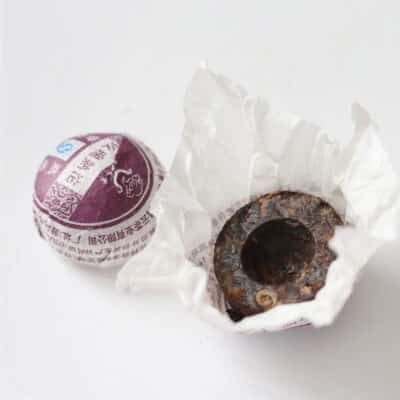
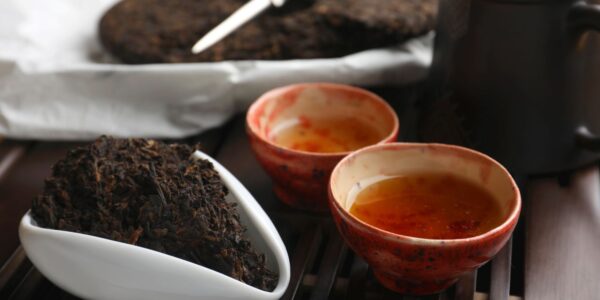
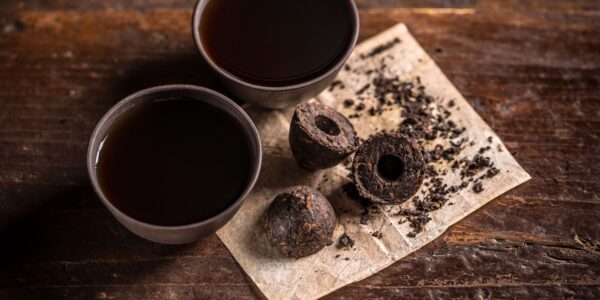
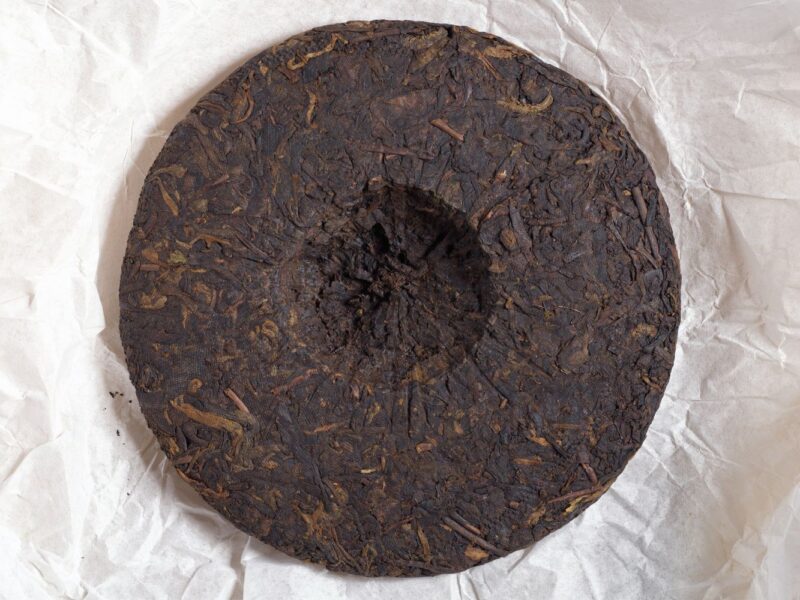
aged pu erh - does pu-erh improve age like wine

Is Aged Pu-erh Worth the Price?

Aged pu-erh can be expensive – sometimes significantly so. Whether it is worth it depends on what you are looking for.

For tea drinkers who want to understand the full range of what Camellia sinensis is capable of, a quality aged pu-erh is one of the most educational experiences the tea world offers.

The flavour complexity – the earthiness, the camphor, the returning sweetness, the way the character shifts across ten or fifteen infusions from the same leaves – is genuinely unlike anything else.

For people who are pu-erh-curious but not ready to invest in aged cakes, a quality shou pu-erh offers a more affordable entry point.

It will not have the same complexity as a twenty-year-old sheng, but it gives you the earthiness, the smoothness, and the unique fermented character that makes pu-erh worth exploring.

If you are new to brewing it, our complete guide to brewing pu-erh walks you through everything from water temperature to steeping times.

For collectors, the investment angle is real but unpredictable. The market for aged pu-erh is opaque, difficult to navigate without expertise, and includes fakes at the higher end.

If you are buying pu-erh to drink rather than to trade, focus on quality and provenance rather than speculation.

Loading...
Price range: £37.00 through £60.00
Price range: £4.50 through £55.00

The honest answer: properly aged pu-erh from quality starting material, stored well, is worth the experience. It is one of the most compelling arguments for the idea that tea is as serious and rewarding a subject as wine.

Frequently Asked Questions

Yes – specifically, quality sheng (raw) pu-erh does improve with proper ageing, developing greater complexity, reduced astringency, and deeper flavour characteristics over years and decades. The comparison to wine is apt in several ways: both involve ongoing biological transformation, both have terroir and vintages, and both require the right starting material and storage conditions to age well. Shou (ripe) pu-erh improves somewhat with age but undergoes a less dramatic transformation.

Young sheng pu-erh starts to show meaningful development after around 8 to 15 years of proper storage. What the tea world considers ‘aged’ pu-erh typically refers to tea with 15 to 30 years of storage. Beyond that, very old examples are rare, expensive, and subject to significant quality variation depending on how they were stored.

Well-aged sheng pu-erh typically has an earthy, complex flavour profile with notes of dried fruit, camphor, mushrooms, and a pleasant sweetness that develops in the throat after swallowing – a quality known as ‘hui gan’. The astringency and bitterness of young sheng is significantly reduced. Aged shou pu-erh tends to be smooth, earthy, and deeply warming.

No. Low-grade pu-erh made from young plantation leaves will not develop significant complexity with age – it may mellow, but it will not gain what it never had the potential for. Quality ageing requires quality starting material: old-growth leaves, proper processing, and a single-mountain provenance you can trust. Mass-produced, blended pu-erh is a poor ageing candidate.

Aim for a room temperature of 20 to 30 degrees Celsius, with relative humidity between 60 and 75 percent. Store away from strong smells, direct light, and airtight conditions. The UK climate can be challenging for pu-erh storage – a humidity-controlled storage area is ideal if you are serious about ageing. Never store pu-erh near food, cleaning products, or in a bathroom.

Sheng (raw) pu-erh is made from sun-dried, compressed leaf that ages naturally over years and decades. Shou (ripe) pu-erh is produced using a pile-fermentation process developed in the 1970s that accelerates the ageing effect – producing an earthy, smooth tea in months rather than decades. Sheng has greater ageing potential and is the type most associated with serious collecting. Shou is more accessible and consistent, and an excellent everyday tea.

Pu-erh – both fresh and aged – contains a distinct profile of compounds including theabrownins (produced during fermentation), polyphenols, and various microbially produced metabolites. Research has looked at pu-erh in relation to gut health, cholesterol, and blood lipid levels, with some promising findings. The fermentation process produces compounds not found in other teas. That said, the science on aged pu-erh specifically is still developing, and it should be enjoyed as part of a balanced diet rather than treated as a supplement.

Compressed cakes are the traditional and most effective format for ageing pu-erh – they provide the semi-permeable, low-oxygen environment that supports slow, controlled microbial ageing. Loose leaf pu-erh can be stored, but it ages faster, less evenly, and with a higher risk of absorbing unwanted aromas. If ageing is your goal, look for compressed cakes from a reputable source with clear provenance information.

Your Next Step

Pu-erh is one of the most intellectually compelling teas in the world – and the ageing question is only one part of what makes it so interesting. The history, the regional variation, the two distinct types, the fermentation science, and the way it rewards patient attention all make it a subject worth exploring properly.

If you want to understand pu-erh from the beginning – what it is, how it is made, how to brew it, and how to find quality examples worth drinking – our complete guide covers everything.

Explore The Complete Pu-erh Tea Guide and start understanding what aged tea is really about.

Or, if you are ready to begin a structured tea education across twelve tea types – pu-erh included – our ‘Become a Teapro’ 12-month subscription gives you the knowledge, provenance, and brewing guidance that turns a tea drinker into a tea pro.

Loading...
Loading...
Price range: £37.00 through £60.00

Teapro co-founder. Favourite tea - Long Jing Dragon Well Green Tea. Obsessed with film, photography and travelling.

No Comments

Post A Comment