
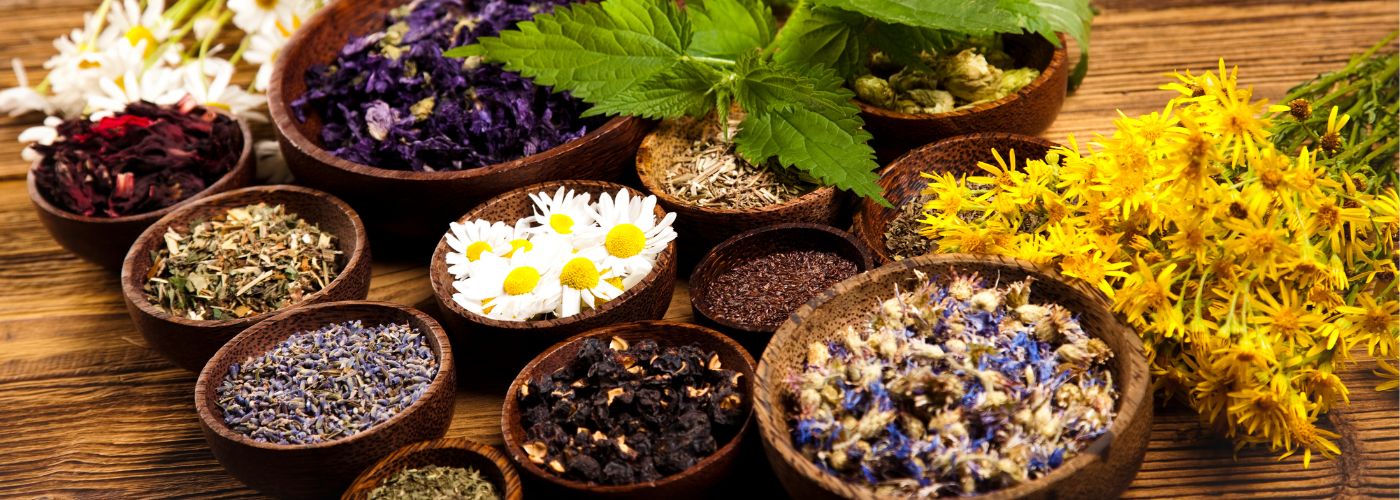
07 May What is Herbal Tea? The Complete Guide
Herbal tea is one of the oldest categories of drink in human history – and also one of the most misunderstood. It is not tea. Not technically. And that single fact opens a door to an entire world most tea drinkers have barely explored.
In the UK, we call almost anything brewed in hot water ‘tea.’ Chamomile tea. Peppermint tea. Hibiscus tea. None of these contain a single leaf from the tea plant. They are herbal infusions – beverages made from flowers, roots, bark, seeds, and leaves of plants entirely separate from Camellia sinensis, the plant that gives us black, green, white, oolong, and pu-erh.
For drinks made from dried fruit pieces and berries — often grouped alongside herbal teas — see our guide to fruit teas.
This guide covers everything: what herbal tea actually is, how it differs from true tea, the main types and what they do, how to brew them correctly, what the health evidence shows, and why the quality difference between a mass-market teabag and a pure, single-ingredient loose leaf herbal infusion is enormous.
What’s in This Guide
- What is herbal tea? The essential definition
- Herbal tea vs. true tea: what actually changes
- The main types of herbal tea – by plant part
- Teapro’s herbal tea range: a guided tour
- How to brew herbal tea properly
- Herbal tea and caffeine: the complete picture
- Health benefits of herbal tea: what the evidence says
- Why loose leaf herbal tea is different
- How to choose the right herbal tea for you
- The Teapro Herbal Tea Blending Masterclass
- FAQ: everything else you need to know
- Your next step
What is Herbal Tea? The Essential Definition
Herbal tea – also called a tisane (pronounced ti-zahn, from the French for ‘herbal infusion’) – is any beverage made by steeping plant material other than the leaves of Camellia sinensis in hot water.
The plant material can include flowers, leaves, stems, roots, bark, seeds, berries, or fruit pieces.
Because they do not come from Camellia sinensis, herbal teas are not ‘true teas’ under botanical classification. They are infusions of whatever edible plant material is placed in water.
This is why chamomile, peppermint, hibiscus, rooibos, lemon balm, elderflower, echinacea, and ginkgo biloba can all be called ‘tea’ in common usage, despite being entirely unrelated to one another – and to tea.
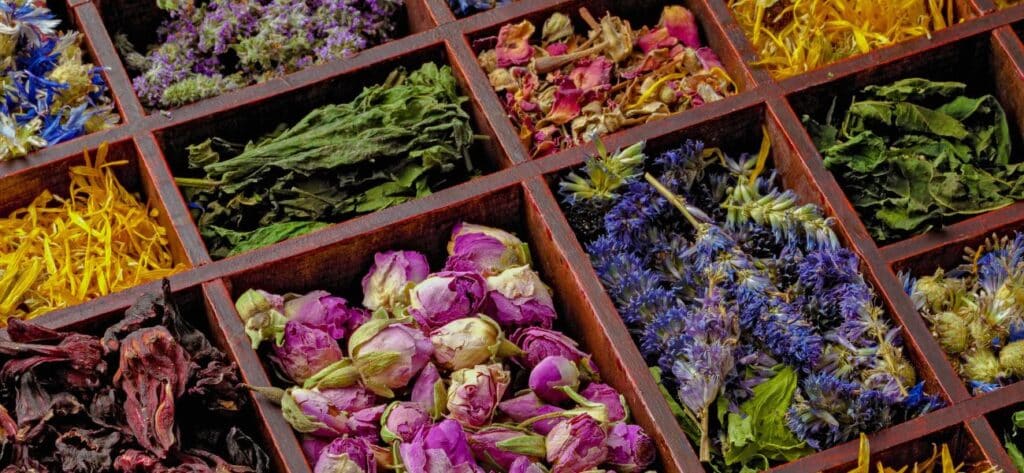
Herbal infusions have been consumed for medicinal and culinary purposes for thousands of years across almost every human culture. The ancient Egyptians documented chamomile use as early as 1550 BCE.
Hippocrates, writing in ancient Greece, described elderflower preparations. Traditional Chinese, Ayurvedic, and African herbal medicine systems all developed sophisticated knowledge of plant infusions centuries before Camellia sinensis reached European shores.
The word ‘herbal’ covers an enormous range. From a delicate rose bud infusion to a robust barley tea; from a butterfly pea flower that turns your cup vivid blue to a Greek mountain herb used for 2,000 years as a folk remedy.
These plants share only one thing: they are not Camellia sinensis.
Herbal Tea vs. True Tea: What Actually Changes
Understanding the difference between herbal tea and true tea is not academic – it changes what you are buying, what you are drinking, and what to expect from it.
| Category | Herbal tea (tisane) | True tea (Camellia sinensis) |
|---|---|---|
| Plant source | Any edible plant except Camellia sinensis | Camellia sinensis only |
| Caffeine | Typically zero (exceptions: yerba mate, guayusa) | Yes - 25-70 mg per cup depending on type |
| Tannins | Varies by plant - generally much lower than true tea | Yes - responsible for astringency |
| Antioxidants | Varies by plant - different compounds to true tea | Catechins, theaflavins, thearubigins |
| Flavour range | Virtually unlimited - floral, earthy, fruity, vegetal, sweet, medicinal | Defined by Camellia sinensis terroir and processing |
| Processing | Typically minimal - dried, sometimes roasted | Multiple steps: withering, rolling, oxidation, firing |
| Best time to drink | Any time, including evening (mostly caffeine-free) | Morning or daytime preferred due to caffeine |
| Brewing temp | Usually 95-100°C (most are robust) | Varies: 70-100°C by tea type |
The practical implication: if you want the specific antioxidant profile of green tea or the L-theanine and caffeine combination of black tea, herbal infusions do not provide that.
But if you want a genuinely caffeine-free drink with its own distinctive health compounds, flavour complexity, and ritual – herbal tea is not a consolation prize. It is a completely different world.
The Main Types of Herbal Tea – by Plant Part
Herbal teas can be made from virtually any edible plant material. The most useful way to understand the range is by the part of the plant being used – because this determines both the flavour profile and the brewing approach.
Flower Infusions
The most delicate category. Flowers are typically dried and steeped at or near boiling water. The volatile aromatic compounds responsible for floral character are fragile – over-brewing or using excessively high heat can drive them off.
- Chamomile (Matricaria chamomilla) – apple-like sweetness, mild, calming
- Hibiscus (Hibiscus sabdariffa) – tart, cranberry-like, vivid ruby colour
- Rose bud (Rosa centifolia) – delicate floral, subtly sweet
- Elderflower (Sambucus nigra) – fragrant, honey-like, distinctively English
- Calendula / marigold (Calendula officinalis) – mild, slightly earthy, golden colour
- Black mallow flower (Malva sylvestris) – neutral base that turns indigo in the cup
- Butterfly pea flower (Clitoria ternatea) – vivid blue colour, changes to purple with citrus
Leaf Infusions
Herbal leaf infusions behave most similarly to true tea – the leaf releases its compounds directly into the water. The range of flavour is wide: from the intense menthol of peppermint to the gentle lemon notes of lemon balm.
- Peppermint (Mentha piperita) – intense menthol, cooling, digestive
- Lemon balm (Melissa officinalis) – gentle lemon-herb, calming
- Lemongrass (Cymbopogon citratus) – bright citrus and ginger notes
- Lady’s mantle (Alchemilla vulgaris) – mild, slightly astringent, earthy
- Ginkgo biloba (Ginkgo biloba) – earthy, slightly bitter, ancient
- Bamboo leaf (Bambusa vulgaris) – light, clean, subtly grassy
- Lotus leaf (Nelumbo nucifera) – earthy, grounding, traditionally prized in East Asia
- Greek rock rose (Cistus incanus) – earthy, slightly resinous
Root and Bark Infusions
Roots and bark are the most robust herbal materials – they contain dense concentrations of compounds that require sustained steeping or even simmering to extract fully. These are often the most intensely flavoured herbal teas.
- Maca root (Lepidium meyenii) – earthy, malty, nutritionally dense
- African Padauk bark (Pterocarpus soyauxii) – deep, slightly woody, traditionally used in West African herbal practice
Whole Plant and Multi-Part Infusions
Some herbal teas use multiple parts of the same plant – leaves, stems, flowers, and seeds together – producing greater complexity.
- Greek mountain tea / sideritis (Sideritis scardica) – the whole dried plant is typically used; earthy, honey-like, slightly minty. Records of its use date back over 2,000 years.
- Echinacea (Echinacea purpurea) – leaves and stems used; slightly earthy with a characteristic tingling sensation
- Oat straw (Avena sativa) – the green tops and stems of the oat plant before grain formation; mild, slightly sweet
Grain Infusions
- Barley tea (Hordeum vulgare) – roasted barley grains; nutty, slightly bitter, popular across East Asia as a caffeine-free everyday drink
Teapro’s Herbal Tea Range: A Guided Tour
Teapro’s herbal tea selection is one of the most diverse in the UK – spanning flowering plants, medicinal herbs, ancient roots, and unique botanical curiosities from South Africa, Greece, Asia, and beyond.
Every one is pure: no artificial flavourings, no fillers, no compromise.
Here is the full current range, organised by character, to help you find the right starting point.
| Tea | Character | Best for |
|---|---|---|
| Butterfly Pea Flower | Vivid blue colour-changing, mild earthy, spectacular visual | Colour-changing drinks, Instagram moments, curious beginners |
| Chamomile | Gentle apple-sweetness, mild, famously calming | Evening ritual, sleep, digestive comfort |
| Hibiscus Flower | Tart, cranberry-vivid, refreshing hot or cold | Iced tea, high-antioxidant drinkers, those reducing caffeine |
| Elderflower | Delicate, floral, honey-like, quintessentially British | Spring and summer, gifting, delicate palates |
| Peppermint Whole Leaf | Intense menthol, clean, cooling, digestive | After meals, focus, morning ritual without caffeine |
| Rose Bud | Soft floral, gently sweet, elegant | Mindful moments, gifting, wellness rituals |
| Calendula / Marigold Flower | Mild, golden, slightly earthy | Daily wellness, anti-inflammatory interest |
| Black Mallow Flower | Colour-changing indigo, neutral base | Curiosity, visual impact, blending |
| Greek Rock Rose Leaf | Earthy, slightly resinous, traditional | Wellness-focused drinkers, antioxidant interest |
| Lotus Leaf | Earthy, grounding, clean | Calm rituals, exploring East Asian herbal traditions |
| Echinacea | Earthy, characteristic tingle on the palate | Immune support interest, seasonal wellness |
| Barley Tea | Nutty, roasted, mellow, caffeine-free | Coffee substitutes, everyday volume drinkers |
| Oat Straw | Mild, slightly sweet, grassy | Stress and nervous system support interest |
| African Padauk Bark | Deep, woody, rare | Adventurous drinkers, unique botanical curiosity |
| Lemon Balm | Gentle lemon-herb, calming, uplifting | Stress, anxiety, afternoon calm |
| Lemongrass | Bright citrus-ginger, energising, clean | Morning caffeine-free alternative, Asian-inspired menus |
| Lady's Mantle | Mild, earthy, slightly astringent | Women's wellness interest, traditional herbal practice |
| Maca Root | Malty, earthy, nutritionally dense | Energy and endurance interest, adaptogen exploration |
| Bamboo Leaf | Light, clean, subtly grassy | Gentle daily hydration, delicate palates |
| Ginkgo Biloba | Earthy, slightly bitter, distinctive | Cognitive wellness interest, traditional herbal medicine |
| Greek Mountain Tea | Earthy, honey-like, slightly floral | Antioxidant wellness, exploring Mediterranean herbs |
| Glow Up Blend (bamboo + rose) | Floral, clean, skin-focused | Wellness and beauty rituals, gifting |
| TrimTonic Workout Tea | Energising, functional blend | Pre-workout, active lifestyle |
| BodyBoost Workout Tea | Functional, botanical performance blend | Recovery, active wellness |
| Magic Love Potion | Colour-changing, playful, hibiscus-led | Gifting, curiosity, visual wow-factor |
Teapro Tip: Not sure where to start? If you’re new to herbal teas, chamomile and peppermint are the most familiar. If you want something genuinely surprising, butterfly pea flower or the Magic Love Potion colour-changing blend will change the way you think about what a cup of tea can be.
How to Brew Herbal Tea Properly
Herbal teas are generally more forgiving than true teas – most will not become bitter with longer steeping the way a black or green tea will. But ‘forgiving’ does not mean all methods produce the same result. Here is what actually matters.
Water Temperature
Most herbal teas benefit from near-boiling water – 95 to 100 degrees C. Unlike delicate green teas where boiling water scorches the leaf and destroys aromatics, most herbs and flowers need the heat to extract their compounds fully. The exception is very delicate floral infusions (rose bud, elderflower) where 85 to 90 degrees C preserves the most fragile aromatic compounds.
Quantity
1 to 2 teaspoons (approximately 2 to 3 grams) of loose herb per 250ml of water is the standard starting point. Herbal teas vary significantly in density – peppermint leaves are bulky and light; bark pieces are compact and heavy. Use weight (2-3g) as a more reliable guide than volume if you have a small kitchen scale.
Steep Time
5 to 10 minutes for most herbal teas. Unlike black tea, longer steeping generally increases intensity without introducing bitterness. However, some very tannic herbs (like Greek mountain tea or certain roots) can become medicinal-tasting if steeped for more than 10 minutes. Start at 5 minutes and adjust to taste.
| Herbal Tea | Water Temp | Quantity | Steep Time | Notes |
|---|---|---|---|---|
| Chamomile | 95 degrees C | 2g per 250ml | 5-7 min | Gentle - longer steeping becomes medicinal |
| Peppermint | 95-100 degrees C | 2g per 250ml | 5-8 min | Covers a mug well; very forgiving |
| Hibiscus | 100 degrees C | 2-3g per 250ml | 5-10 min | Excellent cold brewed (8hrs, fridge) |
| Elderflower | 85-90 degrees C | 2g per 250ml | 4-6 min | Delicate aromatics - don't overheat |
| Rose Bud | 85-90 degrees C | 2g per 250ml | 4-6 min | As delicate as elderflower |
| Butterfly Pea | 95-100 degrees C | 2g per 250ml | 5-7 min | Add citrus to trigger colour change |
| Greek Mountain Tea | 100 degrees C | 2-3g per 250ml | 8-10 min | Traditionally simmered, not just steeped |
| Barley Tea | 100 degrees C | 3-4g per 250ml | 8-12 min | Robust - benefits from longer steeping |
| Echinacea | 100 degrees C | 2g per 250ml | 10 min | Extract the root compounds fully |
| Lemon Balm | 90-95 degrees C | 2g per 250ml | 5-7 min | Fresh or dried - fresh uses more leaf |
Brew your tea to perfection with our glass teapot.
Cold Brew: Cold brew is excellent for hibiscus, butterfly pea flower, and rose bud. Add 4-5g of herb to 500ml of cold water, seal, and refrigerate for 6-10 hours. The result is a clean, vibrant, naturally caffeine-free infusion that keeps for 3 days. The butterfly pea version turns a spectacular blue.
Herbal Tea and Caffeine: The Complete Picture
The vast majority of herbal teas contain no caffeine. This is because caffeine is a compound produced by Camellia sinensis and a small number of other specific plants – most herbs, flowers, roots, and plant materials that go into herbal infusions simply do not have the biochemistry to produce it.
The practical result: herbal tea is genuinely caffeine-free in a way that decaffeinated black or green tea is not. Decaffeinated true teas are processed to remove caffeine that was originally present – the process is imperfect and typically leaves 2-5mg per cup. Herbal teas never contained caffeine to begin with.
Exceptions – Herbal Teas That Do Contain Caffeine
- Yerba mate (Ilex paraguariensis) – contains approximately 30-85mg caffeine per cup, comparable to a cup of coffee. Teapro stocks yerba mate but categorises it separately.
- Guayusa – another caffeinated South American plant, less common in the UK.
- Green coffee leaf tea – emerging category, contains caffeine.
All other herbs in the Teapro herbal range – chamomile, hibiscus, peppermint, elderflower, rose bud, lemon balm, echinacea, and the rest – are naturally caffeine-free.
If you are reducing caffeine, pregnant, or sensitive to stimulants, herbal tea (with the exceptions above) is a genuinely caffeine-free choice – not a reduced-caffeine one. This is one of the most common misunderstandings in the category.
Health Benefits of Herbal Tea: What the Evidence Says
This is the question most people searching for herbal teas actually have – and the honest answer is more nuanced than most brands communicate. Here is a category-by-category summary of where the evidence is strong, where it is promising but developing, and where it is largely traditional and anecdotal.
Well-Evidenced Benefits
Chamomile and sleep/relaxation: Multiple clinical trials support chamomile’s (Matricaria chamomilla) anxiolytic and mild sedative effects. The compound apigenin binds to benzodiazepine receptors in the brain. A 2017 randomised controlled trial in Phytomedicine found chamomile significantly improved sleep quality in chronic insomnia patients.
For a deep dive into chamomile’s compounds, history, and brewing methods, read our full Chamomile Tea guide.
Peppermint and digestion: Peppermint oil has strong evidence for IBS symptom relief; peppermint tea, while less concentrated, contains the same active compound (menthol) and is widely recommended by gastroenterologists for post-meal digestive comfort.
Read more in our full guide to peppermint tea’s benefits for digestive health.
Hibiscus and blood pressure: A 2010 clinical trial in the Journal of Nutrition found that consuming hibiscus tea daily significantly reduced systolic blood pressure in pre-hypertensive and mildly hypertensive adults. Read our full hibiscus tea guide for more on its antioxidant profile.” The active anthocyanins are well-characterised.
Promising – Emerging Evidence
Elderflower and immune function: Traditional use is well-documented; early research suggests anti-inflammatory and antiviral properties. Explore the full story in our elderflower tea guide. Clinical trial data is limited.
Echinacea and cold duration: A 2015 Cochrane review found modest evidence that echinacea preparations may reduce the duration of common colds. Effect size is small; consistency across preparations varies.
Lemon balm and anxiety: Several small studies suggest Melissa officinalis reduces self-reported anxiety and improves mood. Evidence is promising but research is still in relatively early stages.
Ginkgo biloba and cognitive function: Extensive research, mixed results. Some evidence for supporting circulation-related cognitive function in older adults; less evidence for healthy younger adults.
Traditional – Limited Clinical Evidence
Greek mountain tea: Traditional Sideritis preparations have been used for centuries across the Mediterranean for respiratory conditions and general wellness. Modern research is early-stage.
Lady’s mantle: Used traditionally in women’s herbal medicine for centuries. Limited clinical data.
Teapro’s Position: Herbal tea is not medicine. We present the evidence accurately and without overclaiming. If you have a medical condition or are taking medication, consult a GP or pharmacist before using specific herbal preparations – some botanicals interact with medications (for example, St John’s Wort with antidepressants, or high-dose ginkgo with blood thinners).
Why Loose Leaf Herbal Tea is Different
The difference between a supermarket herbal teabag and a quality loose leaf herbal infusion is not a matter of snobbery. It is a matter of what is actually in the bag.
What Goes Into Most Teabags
Mass-market herbal teabags typically contain one of three things: dust (the finest particles left after processing whole herb), fannings (slightly larger pieces, still broken down significantly), or whole herb that has been artificially flavoured to compensate for the loss of aromatic compounds during high-speed processing and packaging.
When you buy a peppermint teabag from a supermarket, you are often buying broken peppermint leaf that has lost a significant proportion of its volatile oils during processing, sometimes supplemented with peppermint flavouring to restore the intensity. You are tasting the idea of peppermint, not the plant.
Whole Leaf and Whole Flower
Loose leaf herbal tea uses the whole plant material – the entire chamomile flower head, the full peppermint leaf, the complete rose bud, the unbroken dried hibiscus. These retain the full complement of volatile aromatic compounds, the structural integrity of the plant, and the visual character that tells you what you are drinking.
When you steep a whole chamomile flower in a glass infuser and watch it slowly unfurl in the hot water, you are experiencing the plant. That is not possible with a teabag.
The Artificial Flavouring Problem
Many commercial herbal teas contain artificial flavourings. This is most common in fruit-flavoured herbal blends (the ‘apple and cinnamon’ or ‘forest berry’ style) where the base is often dried apple pieces or hibiscus supplemented with artificial fruit flavourings. The flavouring masks the actual taste of whatever plant is underneath.
Our Position: Teapro does not use artificial flavourings in any product. When you taste our hibiscus, that tartness is from the hibiscus. When our butterfly pea flower turns your cup blue, that colour is from anthocyanins naturally present in the flower. The plant speaks for itself – because we let it.
How to Choose the Right Herbal Tea for You
With 25+ varieties and blends in the Teapro herbal range, the choice can feel overwhelming. Here is a simple framework based on what you are looking for.
By Time of Day
- Morning: Peppermint (energising without caffeine), lemongrass (bright and clean), barley tea (mellow, roasty)
- Afternoon: Lemon balm (gentle focus), Greek mountain tea (sustained wellness), ginkgo biloba (traditional cognitive support)
- Evening: Chamomile (calming), rose bud (gentle and relaxing), oat straw (soothing)
By Wellness Goal
- Digestive comfort: Peppermint, chamomile, lemongrass
- Sleep and relaxation: Chamomile, lemon balm, rose bud
- Immune support interest: Echinacea, elderflower, Greek mountain tea
- Skin and beauty focus: Glow Up blend, rose bud, hibiscus, calendula
- Active and performance: TrimTonic, BodyBoost
- Caffeine-free coffee alternative: Barley tea (especially roasted)
By Flavour
- Floral and delicate: Rose bud, elderflower, chamomile, calendula
- Tart and refreshing: Hibiscus, lemon balm, lemongrass
- Earthy and grounding: Greek mountain tea, lotus leaf, oat straw, maca root
- Bold and unusual: Butterfly pea flower, black mallow, African Padauk bark
Nutty and mellow: Barley tea, bamboo leaf
If you’re looking for seasonal inspiration, our guide to the 5 best herbal teas for autumn highlights warming choices by time of year.
The Teapro Herbal Tea Blending Masterclass
Understanding herbal teas at the level of individual plants is one thing. Creating your own blends – combining plants by flavour, function, and aesthetic – is where things get genuinely interesting.
Teapro runs a Herbal Tea Blending Masterclass: a hands-on session in which you learn the principles of botanical blending, work with our full range of single-ingredient herbs, and create your own personalised blend to take home.
It is designed for complete beginners – no background in herbalism required – and takes approximately two hours. The knowledge you leave with changes how you shop for, brew, and think about herbal tea permanently.
FAQ: Everything Else You Need to Know
No – not technically. Herbal tea (or tisane) is made from plants other than Camellia sinensis, the plant that produces true teas (black, green, white, oolong, pu-erh). In everyday language, ‘herbal tea’ is universally understood and perfectly useful. Botanically, it is a herbal infusion.
Most herbal teas are naturally caffeine-free. The exceptions are yerba mate, guayusa, and a few other specific plants. All other herbs – chamomile, peppermint, hibiscus, elderflower, rose, echinacea, and so on – contain no caffeine whatsoever. This makes them genuinely suitable for evening drinking and for those avoiding caffeine.
Chamomile has the strongest clinical evidence for sleep support – multiple randomised controlled trials support its mild sedative effects via the compound apigenin. Lemon balm and rose bud are good complementary choices for an evening wind-down ritual. Oat straw is traditionally used for nervous system support and is another gentle option.
Peppermint is the best-evidenced choice for digestive discomfort – the menthol in peppermint has antispasmodic effects in the gut and is clinically used for IBS symptom management. Chamomile and lemongrass also have traditional and early clinical support for digestive comfort. For a broader look at botanical options, see our guide to herbal remedies for digestive discomfort.
Many herbal teas are considered safe during pregnancy – chamomile, rose bud, and lemon balm are generally well-tolerated. However, some herbs should be avoided in pregnancy (for example, high-dose peppermint, echinacea, and certain root preparations). Always consult your midwife or GP before introducing new herbal preparations during pregnancy.
They are the same thing. ‘Herbal infusion’ is the more technically precise term; ‘herbal tea’ is the common usage. ‘Tisane’ is the French-derived term used by tea specialists and some premium brands. All three refer to the same category: plant material steeped in hot water, not from Camellia sinensis.
In an airtight, opaque container away from light, heat, and moisture. Most dried herbs and flowers keep well for 12-24 months if stored correctly. Green plant materials (like peppermint leaf) and delicate flowers (like elderflower) are most susceptible to aromatic compound loss over time. Buy in quantities you will use within 6-12 months for peak quality.
Absolutely – and this is one of the most rewarding things about herbal tea. Chamomile and lavender. Hibiscus and rose. Peppermint and lemon balm. The principles are the same as flavour pairing in food: complementary notes, balanced intensity, a lead ingredient and supporting players. This is exactly what our Herbal Tea Blending Masterclass teaches.
The most common causes: water that is not hot enough (especially for robust herbs – use near-boiling), too little herb (2g per 250ml is a baseline; some herbs need more), or too short a steep time (5-10 minutes is standard, and unlike true tea, most herbal infusions benefit from the longer end of that range). Switching from teabags to loose leaf also typically produces a noticeably stronger result from the same plant.
Three things. First, whole plant material rather than dust and fannings. Second, no artificial flavourings – the flavour you taste is from the plant itself. Third, single-ingredient purity wherever possible – so you know exactly what you are drinking. Most supermarket herbal teas use broken-down plant material, artificial flavourings, and blends that are difficult to trace back to their source.
Your Next Step
Herbal tea is not a category. It is a world – botanical, historical, sensory, and endlessly varied. From a vivid blue butterfly pea flower that changes colour with a squeeze of lemon, to a 2,000-year-old Greek mountain herb used by Hippocrates, to a pure chamomile flower that has been helping people sleep since ancient Egypt.
Most people in the UK have experienced a fraction of it. A supermarket chamomile bag. A mass-market peppermint. Good enough, but nowhere near the real thing.
The real thing – pure, whole, unflavoured, brewed correctly – is one of the most genuine sensory experiences available in everyday life. And unlike many pleasures, it is also entirely good for you.
Begin the Journey: ‘Become a Teapro’ includes a dedicated herbal tea month – one of 12 months exploring the full spectrum of the world’s teas and tisanes. It is the only programme of its kind in the UK, and herbal tea is where many subscribers are most surprised by what they discover.



Teapro co-founder. Favourite tea - Long Jing Dragon Well Green Tea. Obsessed with film, photography and travelling.

No Comments