Sheng vs Shou Pu-erh: The Raw vs Ripe Difference Explained Simply

If you have just discovered pu-erh tea and found yourself staring at the words “sheng” and “shou” wondering what on earth the difference is – you are in exactly the right place. It is, without question, the number one question new pu-erh drinkers ask. And it is a good question, because the answer genuinely changes everything: how you brew it, what you taste, how much you pay, and how long you might keep it.

The short version: sheng is raw pu-erh – it is made with minimal processing and aged slowly over many years. Shou is ripe pu-erh – it goes through a controlled fermentation process that fast-tracks the ageing, making it deep, smooth and ready to drink much sooner.

But that short version only scratches the surface. In this guide, we are going to go much deeper – because if you truly understand what is happening inside both types of pu-erh, you will be a better taster, a smarter buyer, and you will know exactly which one is right for you today.

From Yunnan, with context 

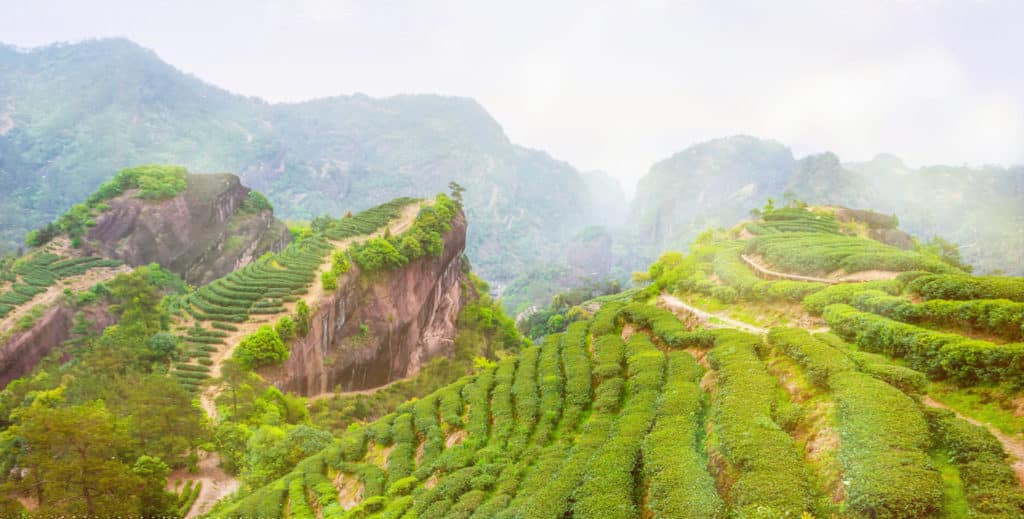
We recently spent time in Yunnan Province, China – the spiritual and geographical home of all pu-erh tea. We visited tea sellers, walked among ancient tea trees, and sat with people who have spent their entire lives working with this extraordinary tea. Much of what follows comes not just from research, but from those conversations. When we talk about sheng and shou, we are talking about something we have seen made.

It Starts With the Same Leaf 

One of the most important – and most often overlooked – facts about pu-erh is that both sheng and shou begin with the exact same raw material: large-leaf tea from the Yunnan province of China, most often from the Camellia sinensis var. assamica plant. Specifically, the leaf is sun-dried after picking, creating what is called maocha (rough tea). At this point, sheng and shou diverge entirely. 

This matters because it means the profound difference in your cup is not about the origin or the leaf quality. It is purely about what happens after the leaf is picked. Both are 100% natural. Both come from the same ancient trees that have grown in Yunnan for hundreds – sometimes thousands – of years. When we were in Yunnan, we saw maocha being spread out to dry on large bamboo trays in the mountain air. That moment is where the two roads fork. 

A note on artificial flavouring 

You will sometimes find flavoured pu-erh teas – rose pu-erh, citrus pu-erh – that are blended with artificial or natural flavourings after processing. At Teapro, we do not stock these. We believe flavourings mask what makes pu-erh extraordinary in the first place: its natural depth, fermentation character and terroir. The flavour you taste in a good pu-erh should come entirely from the leaf, the processing and the ageing. Nothing else

Sheng Pu-erh: The Living Tea 

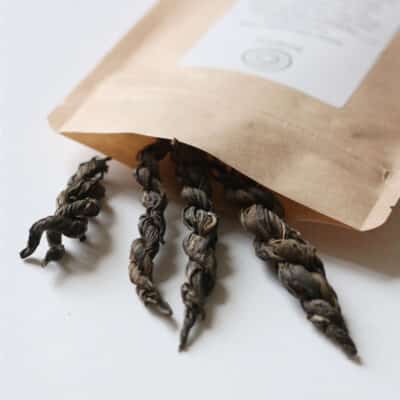
Sheng means “raw” or “green” in Mandarin, and that name is instructive. Young sheng pu-erh is alive in a way very few teas are – it is full of active enzymes and microbes that continue to transform the tea long after it has been compressed into a cake and sealed away. 

How sheng is made 

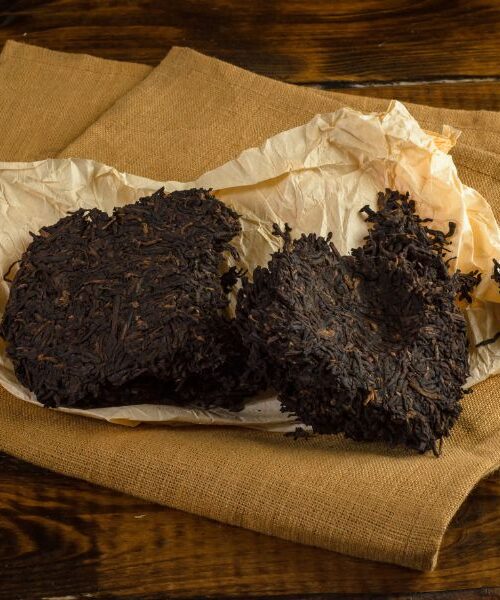
The process is beautifully minimal. Freshly picked leaves are withered briefly, then pan-fired at lower temperatures than a standard green tea (killing some but not all of the enzymes – this is key), then rolled, sun-dried, and compressed into discs, bricks or other shapes using steam. That is essentially it. The simplicity is the whole point. 

The low-temperature pan-firing is crucial. It halts the leaf’s natural oxidation enough to stop it becoming a black tea, but it does not fully neutralise the enzymes. This means the tea retains a living quality – it will continue to change over years and decades as oxygen slowly penetrates the wrapper, the microbes in the leaf do their work, and the chemistry inside the compressed cake evolves. 

What young sheng tastes like 

Young sheng (under five years old) is often misunderstood by first-time drinkers because it can be quite challenging. Expect prominent bitterness on the front of the palate, significant astringency, grassy or vegetal notes, and sometimes a floral edge that reminds you of green tea. There is a particular cooling sensation in the throat – tea drinkers call it “huigan” – that is associated with high-quality sheng. The bitterness should fade and return as sweetness. If it does not, it is a sign the tea needs more time. 

This is a tea that rewards patience and attention. If you approach a young sheng expecting something smooth and easy, you will likely be disappointed. If you approach it as a puzzle to solve – a tea to taste and consider carefully – it becomes one of the most intellectually engaging experiences in the tea world.

What aged sheng tastes like 

This is where things become extraordinary. A sheng pu-erh that has been properly stored and aged for fifteen, twenty or thirty years is almost unrecognisable from its young self. The harshness is gone. In its place: camphor and wood, dried plum and autumn leaves, a kind of primal forest depth that has no equivalent in any other tea. Aged sheng is one of the great flavour experiences in the world – comparable in complexity and conversation to a fine aged wine or a rare whisky. 

In Yunnan, we sat with sellers who opened old cakes from the 1990s. The smell that emerged when the wrapper was lifted was extraordinary – something between autumn mushrooms, dry wood and incense. This is what time does to a sheng. It is remarkable. 

Sheng and storage: the crucial variable 

How you store sheng changes everything about how it ages. Tea stored in traditional Cantonese or Hong Kong wet-storage conditions – high humidity, warmth – ages fast and develops a pronounced earthy character quickly. Tea stored in dryer Taiwanese or Kunming-style conditions ages more slowly, developing cleaner, more subtle complexity over a longer period. 

For UK pu-erh drinkers, this storage question is often an afterthought – and it should not be. A sheng cake stored in a damp UK garage and one stored in a cool, dry, odour-free environment will taste dramatically different a decade from now. If you are buying sheng to age at home, this deserves serious consideration.

Teapro perspective: why we stock sheng 

Sheng pu-erh is, in many ways, the most honest tea we sell. There is nowhere to hide with a quality sheng – the leaf, the processing and the storage all speak plainly in the cup. For a brand that believes the leaf should speak for itself, sheng is the ultimate expression of that philosophy.

One Thing That Affects Sheng Quality More Than Anything Else 

Before we get to the shou side of the comparison, there is one variable that came up more than any other when we spoke to tea growers in Yunnan – and it is worth flagging here because it directly affects what you taste and what you pay: tree age. 

The older a tea tree, the deeper its root system, the more mineral complexity in the leaf, and the better the balance between bitterness and sweetness in the cup. Ancient trees – some over a thousand years old – produce leaves with a stronger huigan (that returning sweetness in the throat) and far greater capacity for multiple steepings.

Where a young plantation sheng might give you four or five infusions, a quality ancient tree sheng can give twelve or more, with the flavour evolving rather than fading. One grower described old tree tea to us as “generous” – it keeps giving where younger trees exhaust themselves quickly. 

This is why you will see the terms gu shu (ancient tree) and tai di cha (plantation tea) on sheng labels – and why the price difference between them is real and justified. 

What to look for on labels: gu shu vs tai di cha 

When buying sheng pu-erh, you will often see the terms gu shu (ancient tree, typically 100+ years old), da shu (big tree, typically 30-100 years), and tai di cha (terrace/plantation tea, cultivated trees in rows, often under 30 years).

These are not marketing terms – they describe genuinely different teas. Gu shu commands a significant premium and is worth it for serious drinkers. Tai di cha is much cheaper and perfectly fine for everyday drinking.

Be sceptical of anything labelled gu shu at a very low price. We cover this in full – along with the famous mountains of Yunnan, terroir, wild forest harvesting and how to buy wisely – in our dedicated guide to raw sheng pu-erh. 

Shou Pu-erh: The Engineered Shortcut 

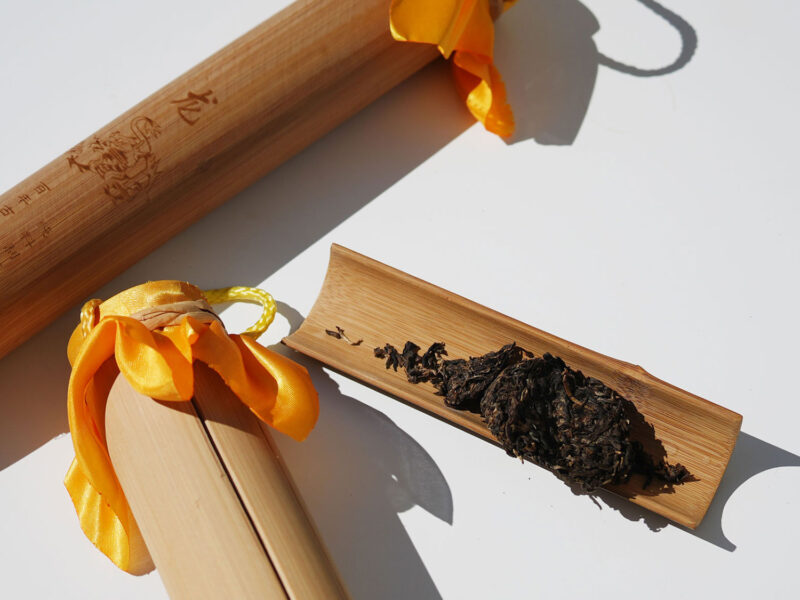
Shou pu-erh was invented in 1973 – and that date is important. By the early 1970s, aged sheng pu-erh had become deeply fashionable in Hong Kong and Taiwan, but genuine aged cakes were expensive and scarce.

Producers at the Kunming Tea Factory (now known as Menghai) began experimenting with a way to replicate the deep, earthy, smooth character of aged sheng without waiting decades for it to develop naturally. 

The result was the wo dui process – pile fermentation – and it changed pu-erh forever. 

The 1973 Revolution: How Shou Pu-erh Was Invented

As the economies of Hong Kong and Japan boomed in the early 1970s, demand for the dark, smooth taste of aged pu-erh far outstripped the supply of naturally-aged Sheng cakes, which require decades to mature 3 .

In response, the Kunming and Menghai Tea Factories studied the “wet storage” techniques of Cantonese merchants and engineered the Wo Dui (渥堆) or “wet piling” technique. This process uses controlled heat, moisture, and microbial action to compress decades of natural aging into just 45–60 days, creating a new, affordable, and consistent product for the mass market .

The result was Shou (ripe) pu-erh, a tea that mimics the smooth, earthy profile of aged Sheng without requiring decades of patience. It was a revolution in tea production, and it created two entirely different categories of pu-erh that persist to this day.

What shou tastes like 

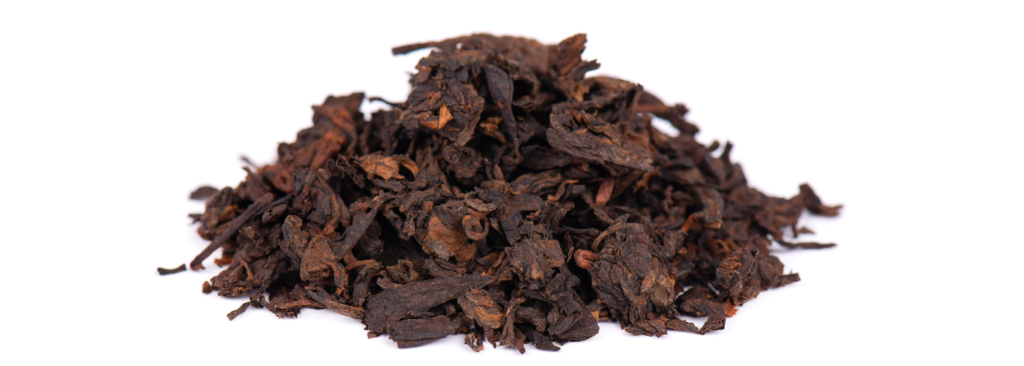
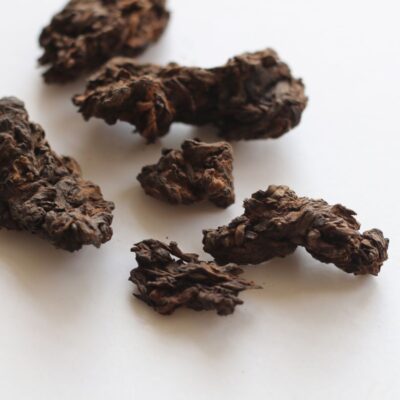
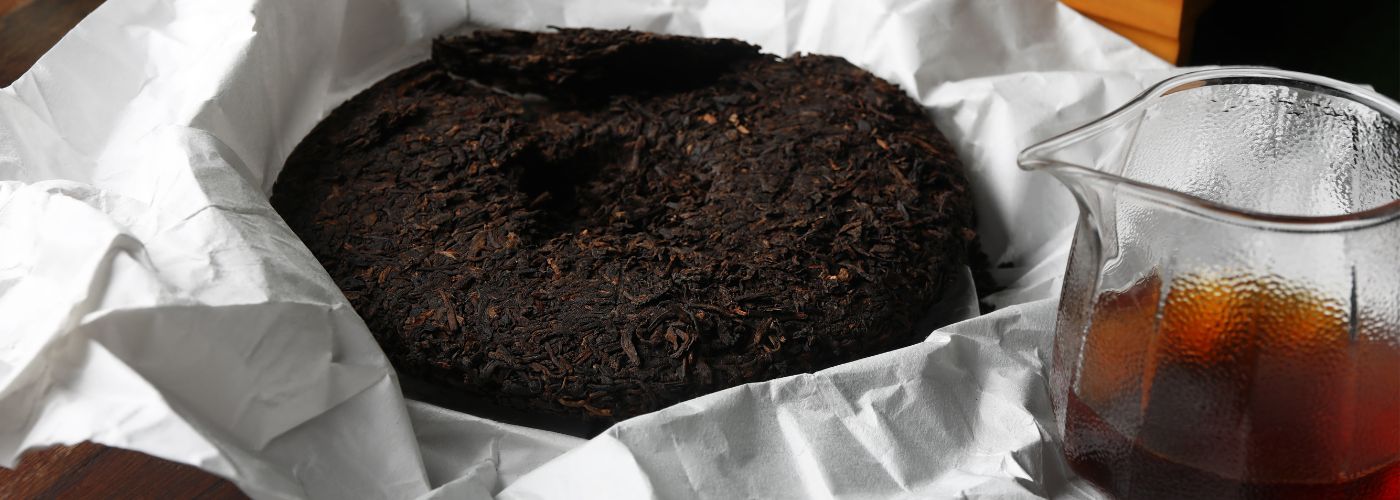
The flavour profile of shou is one of the most distinctive in the tea world. Expect: deep earth, forest floor, autumn leaves, wet wood, dark chocolate, coffee, dried longan fruit, and a warming, almost viscous body. The texture is often described as “thick” or “coating” – it lingers in the mouth and has a genuine warmth that makes it particularly popular in cold weather. 

There is very little bitterness in a well-made shou. The astringency that characterises young sheng is almost entirely absent. This is why shou is often recommended as the better entry point into pu-erh – it is simply more accessible, more immediately enjoyable, and far less demanding of the drinker. 

Does shou age well? 

This is a nuanced question. Shou does improve with a few years of rest – the fermentation by-products settle, the flavour clarifies and deepens, and the earthiness becomes less raw and more refined. However, shou does not have the same extraordinary ageing ceiling as sheng. After about seven to ten years, most shou reaches a plateau. The profound, decades-long transformation that makes aged sheng so extraordinary is simply not possible with shou, because the microbial activity that drives that transformation was largely completed during the wo dui process. 

In practical terms: if you buy a shou cake to enjoy over the next few years, ageing it briefly before opening is worthwhile. Treating a shou the same way you would a sheng – buying it to age for twenty years – is not going to yield the same rewards. 

Lorem ipsum dolor sit amet, consectetur adipiscing elit. Ut elit tellus, luctus nec ullamcorper mattis, pulvinar dapibus leo.

 Shou Pu-erh (Ripe): The Accessible Gateway

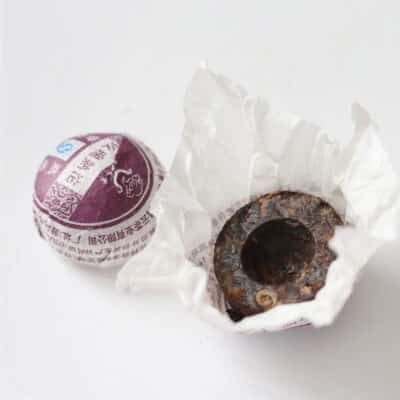
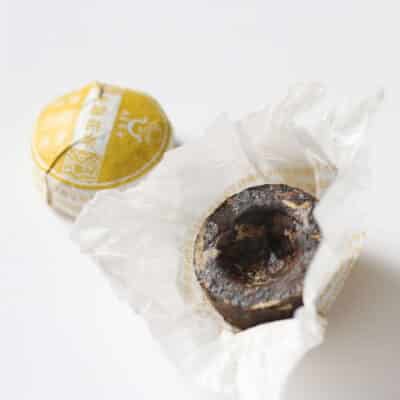
Shou means “ripe” or “cooked.” It was engineered to deliver the profile of aged Sheng without the wait.

For UK drinkers new to pu-erh, Shou is the recommended starting point. It is consistently dark, smooth, and earthy from the first sip. The flavour profile is typically described as dark chocolate, mushroom, damp forest floor, and autumn leaves. That last description sounds off-putting, but in practice, it’s remarkably pleasant, in the way that aged cheese smells funky but tastes wonderful.

Fresh Shou (0–2 years) often carries a slightly “fishy” or “swampy” odour called Dui Wei, a remnant of the wet pile. This dissipates within 3–5 years, leaving a clean, sweet earthiness. Unlike Sheng, Shou does not gain significant complexity after 15–20 years; it simply becomes smoother.

Sheng vs Shou: The Full Comparison 

Here is everything you need to know in a single reference table:

Sheng vs Shou Pu-erh Comparison
Sheng (Raw) Shou (Ripe) Key Difference
Processing Sun-dried, compressed - no extra steps Pile-fermented for 45-60 days Shou is made to mimic aged sheng
Age to drink Young (1-5 yrs) or aged (10-30+ yrs) Ready to drink after 1-2 years Sheng transforms; shou is stable
Flavour profile Floral, bitter, grassy, astringent; evolving Deep, earthy, dark, smooth, coffee-like Sheng is light to complex; shou is bold
Colour in cup Pale yellow-gold (young), amber (aged) Deep reddish-brown to near-black Visual tell at a glance
Caffeine Higher (similar to green tea) Moderate (processing reduces some caffeine) Sheng is the stronger pick-me-up
Gut benefits Lighter on digestion when young Strongly associated with digestive ease Shou wins for those with sensitive stomachs
Ageing potential Extremely high - the whole point Limited - diminishing returns after ~10 yrs Never age shou like you would sheng
Price range Budget to extraordinarily expensive (aged) Generally more affordable Old sheng cakes can cost hundreds
Best for beginners With guidance - young sheng can be harsh Yes - a gentler introduction to pu-erh Start with shou if you are new

The Flavour Journey: What to Expect as Both Teas Age 

One of the most extraordinary things about pu-erh – and the thing that most surprises new drinkers – is how dramatically both sheng and shou evolve over time. This is not like most teas, which are best drunk fresh and within a year of production. Pu-erh is more like wine than it is like green tea. 

Sheng (Raw) - Flavour by Age
Shou (Ripe) - Flavour by Age
Young Sheng (1-5 yrs): Grassy, floral, bitter, light stone fruit, vegetal, astringent
Young Shou (1-3 yrs): Earthy, petrichor, mushroom, dark chocolate, coffee, slight must
Transitional Sheng (5-15 yrs): Honey, dried fruit, light spice, less bitterness, warming
Rested Shou (3-7 yrs): Smooth dark fruit, molasses, clean earth, warming depth
Aged Sheng (15+ yrs): Camphor, leather, dried plum, wood, deep complexity - extraordinary
Older Shou (7+ yrs): Refined, cleaner, hints of dried longan and forest floor

How to Brew Sheng vs Shou: The Practical Differences 

Brewing pu-erh – particularly if you are used to a simple mug and teabag – requires a slightly different approach. The good news is that it is not complicated once you understand the logic. 

What you will need 
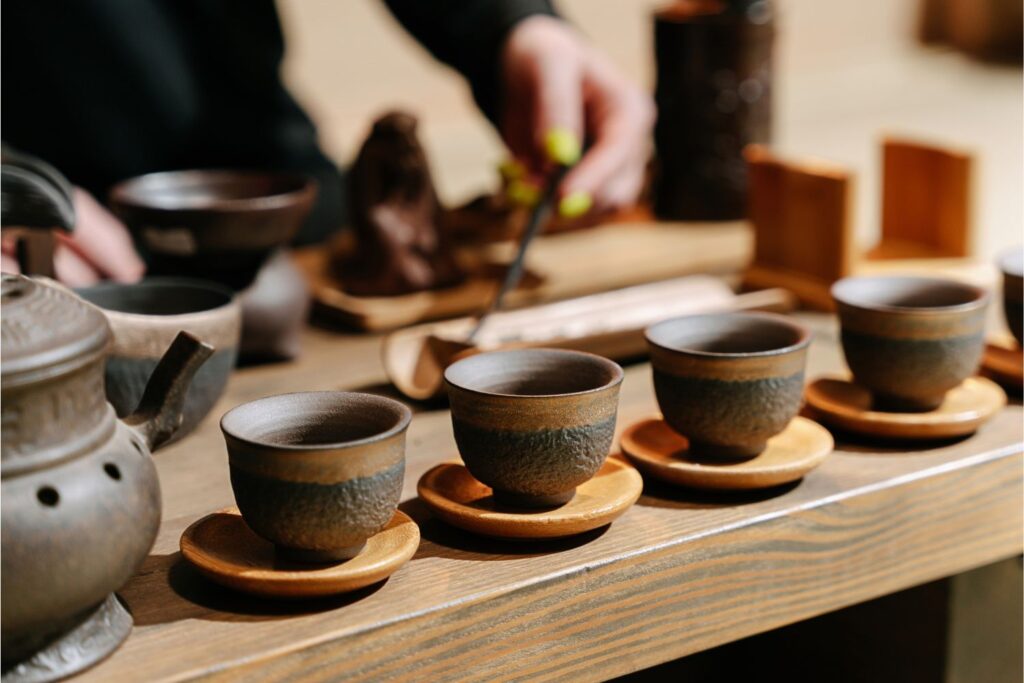
  • A gaiwan (lidded brewing bowl) or a small clay Yixing teapot – 100-150ml is ideal 
  • A fair cup or sharing pitcher to hold the brewed tea 
  • Your pu-erh cake or loose pu-erh leaves 
  • A pu-erh pick (if brewing from a compressed cake) to gently break off leaves without crushing them 
  • Good water – filtered is best; UK tap water varies considerably 


Brewing sheng pu-erh 
  • Water temperature: 90-95 degrees Celsius (not full boiling, especially for young sheng which can become harsh and bitter) 
  • Leaf ratio: approximately 5-7g per 100ml 
  • Rinse first: pour boiling water over the leaves, swirl briefly (5-10 seconds), and discard. This is called the “awakening rinse” – it opens up the compressed leaves and removes any dust 
  • First infusion: 20-30 seconds. Sheng opens slowly 
  • Subsequent infusions: add 10-15 seconds each time. Quality sheng will give 8-12 infusions easily 
  • Pay attention to the bitterness. In a good young sheng, the bitter note should convert to sweetness – this is the huigan (returning sweetness) that experienced drinkers look for 


Brewing shou pu-erh 
  • Water temperature: full boiling, 100 degrees Celsius – shou can handle and benefits from the full temperature 
  • Leaf ratio: approximately 5-7g per 100ml 
  • Rinse first: as with sheng, always rinse shou before drinking. With shou, it is particularly important – it removes some of the earthier fermentation character that settles during storage 
  • First infusion: 15-20 seconds – shou brews faster than sheng 
  • Subsequent infusions: add 10 seconds each time. A good shou will give 6-8 solid infusions 
  • The liquor should be deep reddish-brown to near-black. If it is pale, you need more leaf or longer steeping 

Teapro brewing tip: trust the rinse 

New pu-erh drinkers often skip the rinse because it feels wasteful. Do not skip it. The rinse is not optional for either sheng or shou – it is the step that separates a good brew from a great one. Think of it as the tea clearing its throat.

More From Yunnan: The Vintage Flight and the Quality Conversation 

We have woven our Yunnan visit throughout this article – the maocha drying trays, the wo dui piles, the ancient forests near Jingmai – but there are a couple of moments worth sharing in full because they capture something important about how the people who actually make this tea think about it. 

One of the most striking things was how the sellers and producers in Yunnan talk about the two types of tea quite differently. When they discuss sheng, they use language around time, investment and patience. One seller showed us cakes from three separate vintages of the same mountain – 2005, 2015 and 2024 – as if presenting a wine flight. The 2005 was something extraordinary: smooth, complex, layered in a way that only time creates. The 2024 was rough and promising, all potential. 

When they discuss shou, the language is warmer and more immediate. It is the tea you drink now. The tea for winter. The tea for your grandmother (several sellers made this observation independently – shou is considered particularly gentle on older stomachs). There is no shame or hierarchy in this distinction; they are simply different tools for different moments. 

We also found that the quality range within each category is vast. Cheap shou made from lower-grade maocha and a hurried wo dui process can be quite unpleasant – muddy, astringent in an unpleasant way, with a persistent off-note. Quality shou, made carefully from good maocha with a properly managed fermentation and adequate resting time, is genuinely beautiful. The same is true for sheng. Price and source matter enormously in pu-erh in a way that is less true for many other tea types. 

Which One Should You Start With? 

If you are completely new to pu-erh, our honest recommendation is to begin with shou. It is more accessible, more forgiving, more immediately rewarding. You do not need to understand ageing to enjoy it. You do not need to tolerate bitterness to find it beautiful. Brew a decent shou on a cold evening with a little dark chocolate and it is one of the most satisfying cups you will have. 

Once you have developed an appetite for the earthier, deeper end of the tea world, try a quality young sheng. Then try a slightly older one. Begin to notice the difference that even a few years makes. And if you can ever get your hands on a cake from a trusted source that is fifteen years or older – do. It will be a revelatory experience. 

A note for connoisseurs who may already be familiar with both: if you are looking to build a small pu-erh collection, consider holding a mix. Young sheng cakes bought now and stored well will reward you in ten years in a way that nothing else in the tea world can. Good shou is the daily companion – the tea you actually drink – while the sheng does its slow, patient work in the background. 

The Teapro pu-erh month 

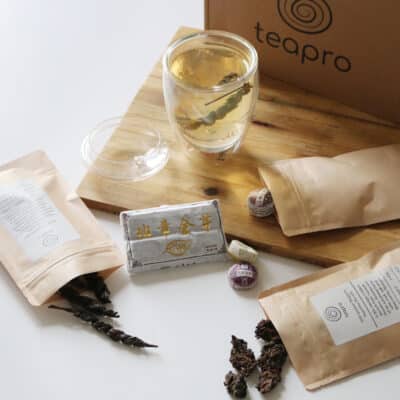
Pu-erh is one of the twelve tea types in our Become a Teapro subscription journey. When you receive your pu-erh month, you will get curated teas alongside detailed tasting notes, brewing guides and the education you need to understand what is in your cup. It is the best way to try both types with expert context rather than guesswork. 

Common Questions Answered

This is a common framing and it is not quite fair. Shou is not trying to deceive anyone – it is a distinct product with its own character. The wo dui process creates compounds and flavours that do not exist in young sheng and are genuinely different from aged sheng, not just similar. Think of shou as its own category, not a budget imitation.

You can rest shou for a few years and it will improve. But the extraordinary decades-long transformation of aged sheng is not possible with shou – the microbial work that drives that transformation was largely completed in the wo dui pile. Do not buy shou expecting it to become aged sheng. It will not.

Simply put: time, scarcity and storage costs. A sheng pu-erh cake that has been properly stored for twenty or thirty years represents a two-to-three decade investment in space, expertise and careful management. Good storage facilities in Yunnan, Guangdong and Taiwan are not cheap to run. And like any aged product – wine, whisky, cheese – genuine quality commands a premium. Be very sceptical of “aged sheng” sold cheaply. Either the age claim is false, the storage was poor, or the original leaf quality was low. 

Wet storage (also called traditional Hong Kong storage) refers to ageing pu-erh in high-humidity conditions – typically 75-85% relative humidity – which accelerates the ageing process significantly. It produces a more earthy, pronounced character with stronger fermented notes. Dry storage (Taiwanese or Kunming style) ages tea more slowly in controlled lower-humidity conditions, producing cleaner, more subtle complexity. Neither is universally “better” – they produce different results that suit different preferences.

Pu-erh – both sheng and shou – has been associated in preliminary research with digestive support, cholesterol management and gut microbiome health. Shou in particular is often recommended by Chinese medicine practitioners for digestive ease. However, we are a tea company, not a medical body, and we would not overstate what the science currently supports. What we can say with confidence is that both types of pu-erh are naturally fermented teas with complex microbial profiles, and that the health traditions around them in China stretch back centuries.

You can, though a small gaiwan or a 100-150ml clay pot gives you much better control over the ratio and steeping time, which matters a lot with pu-erh. If you are using a regular teapot, use less leaf than you think you need, try a shorter steep time, and always do the rinse first.

Summary: Sheng vs Shou at a Glance 

Sheng (raw) is the living tea – minimal processing, aged slowly over years or decades, starting bright and bitter and evolving into something extraordinary. Shou (ripe) is the engineered shortcut – pile fermentation over 45-60 days creates a smooth, deep, earthy tea that is ready to drink far sooner. Neither is better; they are different experiences for different moments. If you are new, start with shou. When you are ready for something more demanding and transformative, explore sheng. The complete pu-erh world is available to you once you understand the difference.

Loading...
Price range: £12.00 through £125.00
Loading...
Price range: £12.00 through £89.00
Loading...
Loading...
Price range: £37.00 through £60.00

Teapro co-founder. Favourite tea - Long Jing Dragon Well Green Tea. Obsessed with film, photography and travelling.

No Comments

Post A Comment