16 Jun The 5 Best Oolong Teas for Beginners in the UK
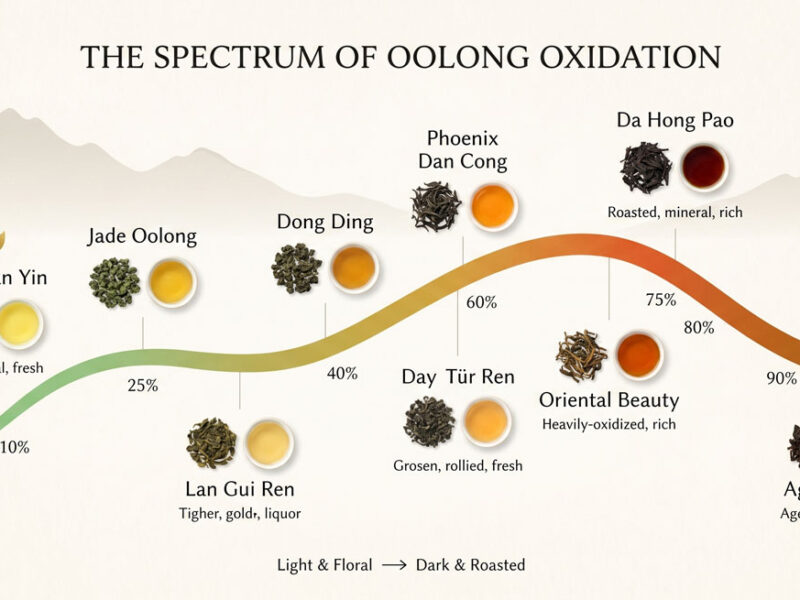
Best oolong teas for beginners are the ones that win you over from the very first cup, and oolong is the most rewarding corner of the tea world to start in. Sitting between green and black tea, it offers an extraordinary range of flavours, from creamy and floral to deep and roasted, all under one name.
That variety can feel overwhelming at first, so we have chosen five genuinely beginner-friendly oolongs from the Teapro range, arranged as a journey from the softest, sweetest cup to the boldest.
Each one is a pure, single-origin tea with nothing artificial added, so what you taste is the leaf itself. For the full picture of this remarkable tea type, you can also explore our complete oolong (wulong) tea guide.
Table of contents
What is oolong tea?
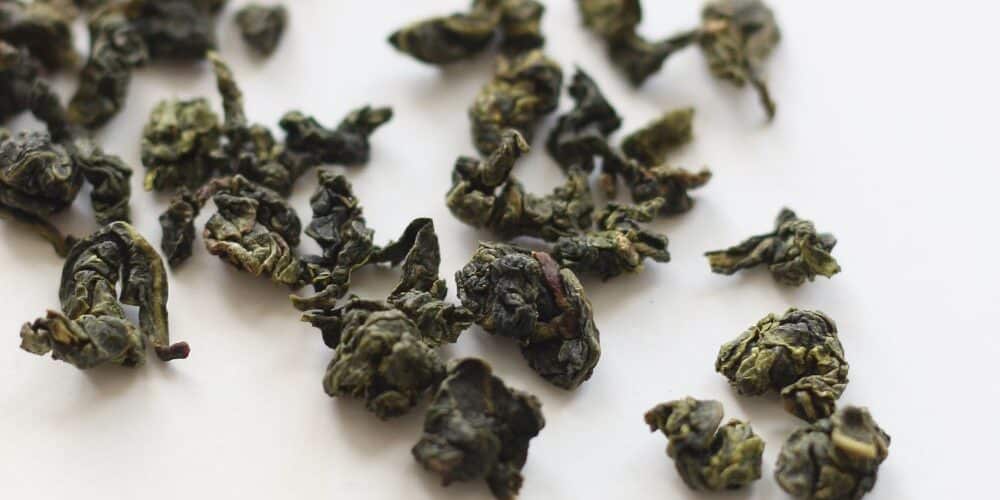
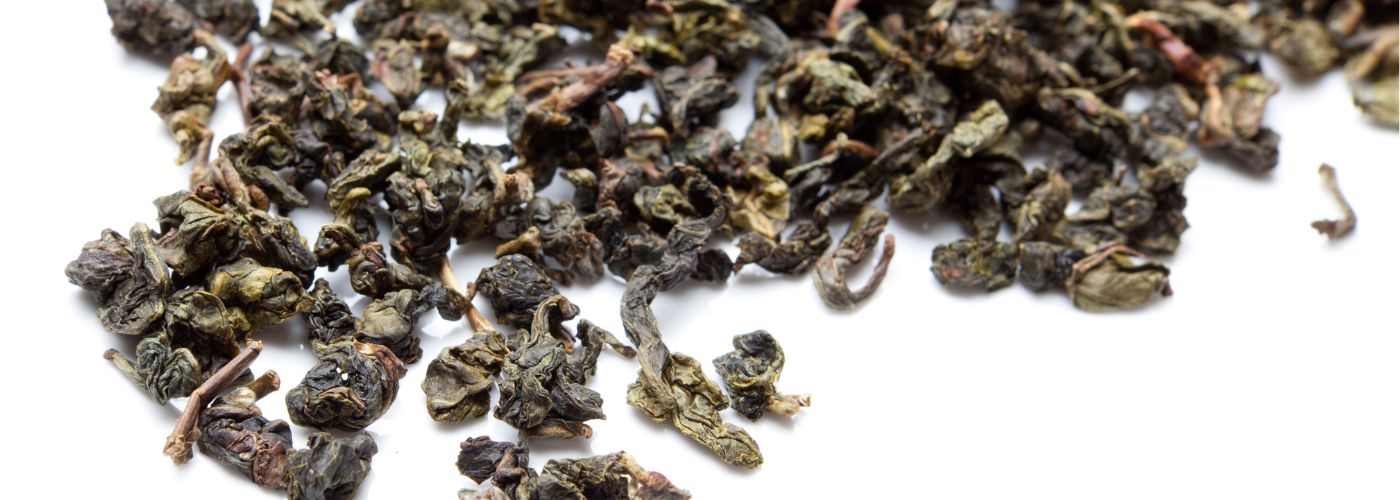
Oolong (also written wulong, meaning black dragon) is a partially oxidised tea, which places it on a spectrum somewhere between green tea and black tea.
Where green tea is barely oxidised and black tea is fully oxidised, oolong can be anywhere from around 10% to 80% oxidised, and it may also be roasted to varying degrees.
Those two dials, oxidation and roast, are why no two oolongs taste quite alike. A light oolong can be fresh and floral like a spring meadow, while a dark, roasted one can taste of toasted grain, stone fruit and minerals.
It is the most varied tea category there is, and that is exactly what makes it so fun to explore.
If you’re curious about what oolong can do for your health, our deep-dive into oolong tea benefits looks at what the science actually says.
Beyond general wellness, clinical data archived by the National Institutes of Health highlights oolong’s particular efficacy in improving lipid metabolism, managing weight, and supporting cardiovascular health.
What makes a good oolong for beginners?
A good first oolong should be forgiving and immediately enjoyable, so you fall for the category before you start fine-tuning your technique.
We looked for three things:
| What makes a good oolong for beginners: | |
|---|---|
| Naturally approachable flavour | Sweet, creamy or gently floral, rather than challenging or astringent. |
| Forgiving to brew | Teas that taste good even if your water is a little hot or your timing is not perfect. |
| Pure and single-origin | Real tea with no artificial flavourings, so you learn what genuine oolong actually tastes like. |
The five below are ordered from the softest and sweetest to the boldest, so you can start wherever feels right and work along as your palate grows.
The 5 best oolong teas for beginners
1. Jin Xuan Milk Oolong – the creamy crowd-pleaser
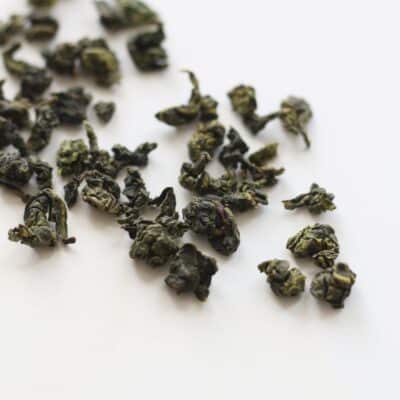
If you want the easiest possible introduction, start here. Jin Xuan Milk Oolong is a lightly oxidised Taiwanese oolong famous for its naturally creamy, buttery, lightly vanilla character.
Crucially, that milkiness comes from the Jin Xuan cultivar itself, not from any added flavouring, so it is smooth and layered rather than cloying. It needs no acquired taste and no milk, just hot water and a moment to enjoy it. This is the oolong most likely to make a green or black tea drinker say “oh, I get it now”.
2. Lan Gui Ren Ginseng Oolong – sweet and uplifting
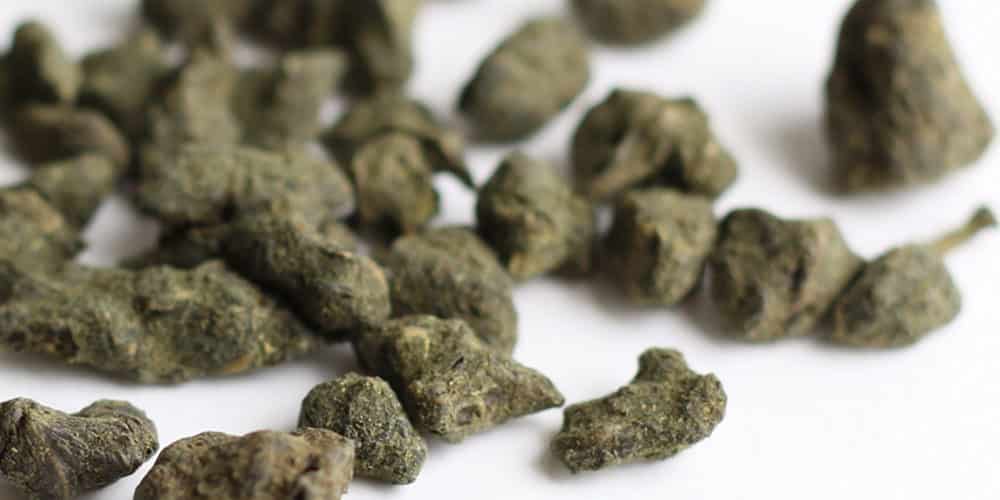
Lan Gui Ren (often called Ginseng Oolong, or “orchid honoured guest”) is rolled oolong dusted with powdered ginseng and liquorice root, giving it a gentle, lingering natural sweetness and a famously long, cooling aftertaste. It is smooth, a little exotic and very easy to like, which makes it a lovely second step.
A small note: because it contains ginseng and liquorice, anyone pregnant, on medication, or with high blood pressure may prefer to enjoy it occasionally and check with their doctor.
This precaution is echoed by the British Heart Foundation, which warns that even modest amounts of glycyrrhizin-the natural compound found in liquorice root-can actively raise blood pressure and cause fluid retention.
For a broader look at safe daily intake, see our science-backed guide on how much tea you should drink a day.
3. Iron Goddess of Mercy (Tie Guan Yin) – the floral classic
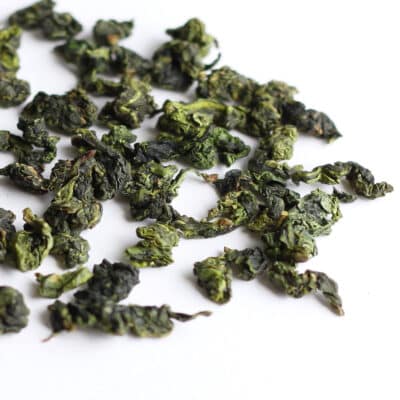
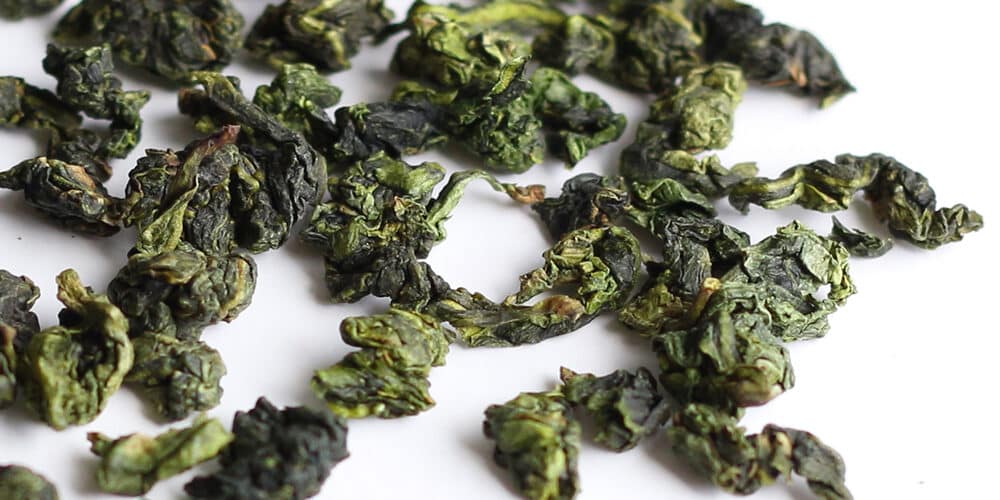
Perhaps the most famous oolong of all, Iron Goddess of Mercy (Tie Guan Yin) comes from Anxi in Fujian and, in its modern lightly oxidised style, offers a beautiful orchid fragrance, a yellow-green cup and a delicate, refreshing, slightly sweet flavour.
It is the textbook example of a floral oolong, endlessly re-steepable, and a wonderful next step for anyone moving up from green tea. If you only learn one oolong by name, make it this one.
4. Anxi Ben Shan – the floral all-rounder
Anxi Ben Shan is a close cousin of Tie Guan Yin from the same celebrated Anxi region, and it is one of the tea world’s quiet bargains. It shares that fresh, orchid-like florality and smooth sweetness, with a slightly fuller, rounder body.
If you enjoy Iron Goddess of Mercy, Ben Shan is the natural companion that helps you start noticing the subtle differences between cultivars, the first real step from tea drinker towards tea pro.
To understand exactly what separates a light oolong from a dark one, our beginner’s guide to oxidation levels is the perfect next read.
5. Da Hong Pao – the bold, roasted finale
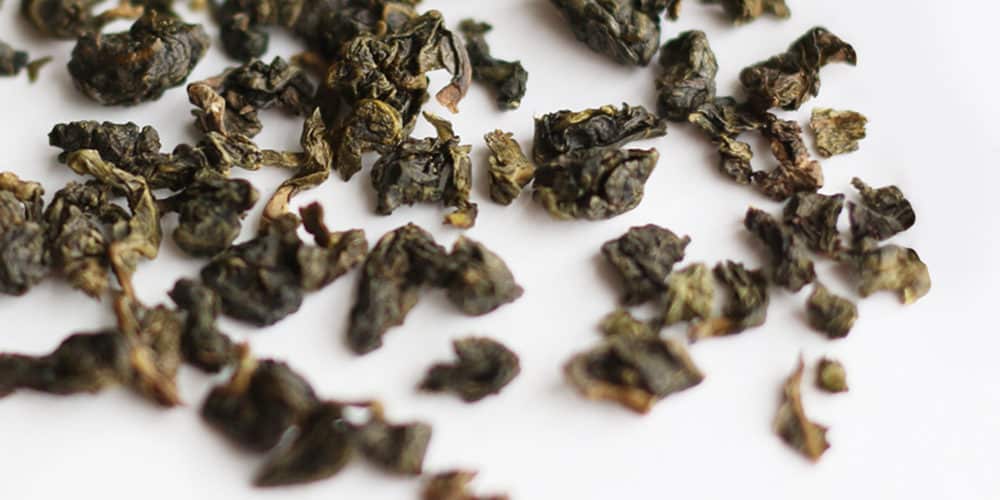
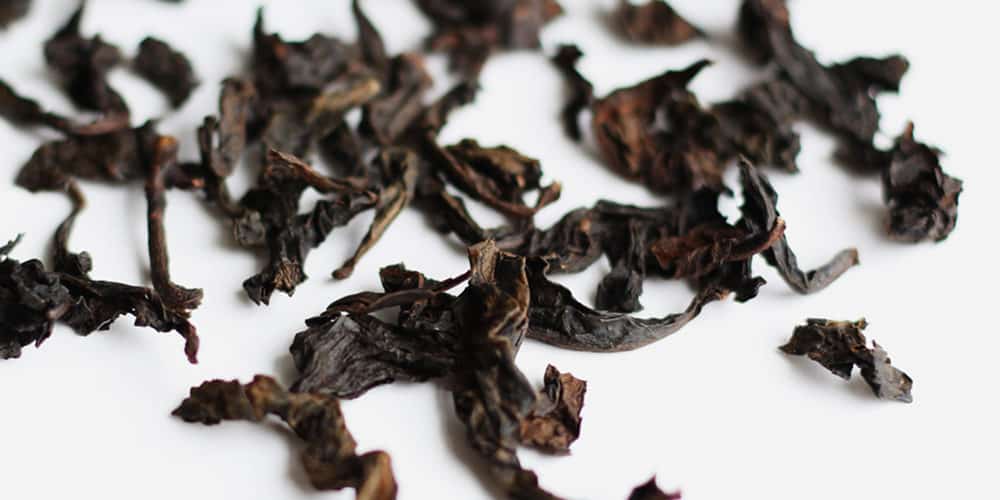
When you are ready for something with real depth, Da Hong Pao (Big Red Robe) is the legendary Wuyi rock oolong to reach for.
Roasted and more oxidised, it is rich, smooth and full-bodied, with toasty, mineral and dark stone-fruit notes and almost no astringency.
It is the most “coffee-like” tea in the oolong world, which makes it a brilliant choice for coffee or black tea drinkers, and a satisfying place to end the beginner journey. Forgiving, warming and deeply moreish.
According to medical reviews, the natural combination of caffeine and antioxidants in oolong tea provides a sustained boost to mental alertness and cognitive function without the sharp crashes often associated with coffee.
For the full story behind this legendary tea, read about our Da Hong Pao adventure – from the Wuyi cliffs to your cup.
Quick comparison table
| Oolong | Style | Tastes like | Best for |
|---|---|---|---|
| Jin Xuan Milk Oolong | Light, unroasted | Creamy, buttery, vanilla | Total beginners |
| Lan Gui Ren (Ginseng) | Light, sweetened with ginseng | Sweet, smooth, cooling finish | A sweet tooth |
| Iron Goddess of Mercy | Light, floral | Orchid, fresh, delicate | Green tea drinkers |
| Anxi Ben Shan | Light, floral | Floral, rounded, smooth | Exploring cultivars |
| Da Hong Pao | Roasted, darker | Toasty, mineral, stone fruit | Coffee and black tea drinkers |
How to brew oolong tea (the easy way)
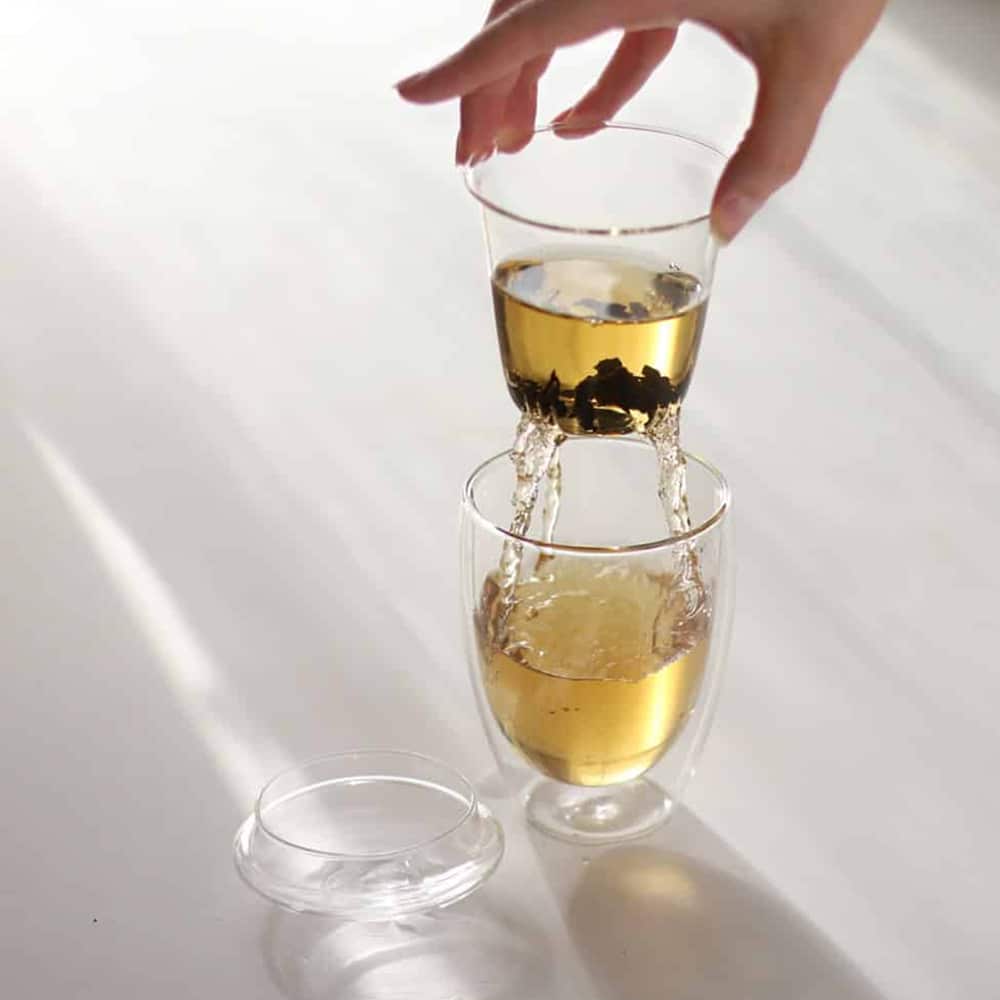
Oolong is wonderfully forgiving, and one of its great joys is that good leaves can be re-steeped several times, each infusion revealing something new.
Here is a simple western-style method to start with:
| Brewing step | What to do and why |
|---|---|
| Water temperature | Around 85 to 95 degrees Celsius. Lighter, floral oolongs prefer the cooler end; roasted ones like Da Hong Pao are happy hotter. Avoid a fierce rolling boil. |
| Leaf quantity | About 2 to 3g (roughly one heaped teaspoon) per 200ml of water. |
| Steeping time | 2 to 3 minutes for the first steep, then taste. Good loose leaf oolong can be re-steeped 3 to 5 times, so do not throw the leaves away. |
| Re-steeping | Add a little time with each steep. You will notice the flavour evolve from cup to cup, which is half the fun. |
A note on purity: why real beats flavoured
Milk oolong is the cautionary tale here. The market is flooded with cheap “milk oolongs” made by spraying artificial dairy flavouring onto low-grade tea, and they taste one-dimensional and cloying.
Genuine Jin Xuan, like ours, gets its creaminess from the cultivar itself, so it is subtle, layered and real.
This is the heart of what we do at Teapro: we source pure, single-origin teas and let the leaf speak for itself, because artificial flavourings mask the very thing you are trying to taste. Learning oolong on real, unflavoured tea is the fastest way to train your palate, and the whole Teapro oolong range is built on that principle.
Frequently asked questions
Jin Xuan milk oolong is the easiest starting point, thanks to its naturally creamy, sweet flavour that needs no acquired taste. From there, a floral Tie Guan Yin (Iron Goddess of Mercy) is the classic next step.
Oolong sits between green and black tea, typically around 30 to 50mg of caffeine per cup, less than coffee. The exact amount varies with the tea and how you brew it.
Use water at around 85 to 95 degrees Celsius and about 2 to 3g of leaf per 200ml. Steep for 2 to 3 minutes, taste, and re-steep the same leaves several times, adding a little time with each infusion.
It is best enjoyed without milk, especially the light, floral oolongs, where milk would mask the delicate flavours. Genuine milk oolong is naturally creamy on its own and needs nothing added.
Good quality loose leaf oolong can usually be re-steeped 3 to 5 times, and sometimes more. Each steep releases different flavours, so it is well worth brewing the same leaves again.
It can be. Cheaper milk oolongs are sprayed with dairy flavouring, but a genuine Jin Xuan gets its creamy character from the cultivar itself, with no added flavourings. Always check the ingredients say only tea.
The bottom line
The best oolong teas for beginners are the ones that win you over from the first cup, and these five do exactly that, from the creamy comfort of Jin Xuan to the roasted depth of Da Hong Pao. Start soft, follow your taste, and let each tea teach you something new about this wonderfully varied category.
When you are ready to go further, the full Teapro oolong (wulong) collection is waiting, and every cup takes you one step closer from tea drinker to tea pro.

Teapro co-founder. Favourite tea - Long Jing Dragon Well Green Tea. Obsessed with film, photography and travelling.


No Comments