29 May Matcha and L-Theanine: Why It Gives You Calm, Focused Energy Without Jitters
You’ve probably heard it said that matcha gives you energy without the crash. But what’s actually happening inside your body when you drink it – and why does it feel so different from a flat white? The answer comes down to one remarkable amino acid: L-theanine.
The relationship between matcha and L-theanine is what makes this energy feel calm, clear and focused rather than wired and jittery.
In this guide, we’ll break down the science clearly and honestly, explain why the quality and purity of your matcha matters more than most people realise, and give you the knowledge to taste – and feel – the difference for yourself.
Table of contents
1. What is L-theanine and where does it come from?
2. The L-theanine and caffeine combination explained
3. What ‘calm energy’ actually means – and the science behind it
4. Why matcha contains more L-theanine than regular green tea
5. How artificial flavourings and low-grade matcha affect all of this
6. How to brew matcha to maximise L-theanine
7. Who benefits most from matcha calm energy?
8. Frequently asked questions
9. Your next step
What is L-Theanine and Where Does It Come From?
L-theanine is a naturally occurring amino acid found almost exclusively in the leaves of Camellia sinensis – the tea plant. It was first isolated by Japanese scientists in 1949, and since then a growing body of research has examined what it does to the human brain and nervous system.
Crucially, L-theanine is not a stimulant. It doesn’t rev you up on its own. Instead, it promotes a state of relaxed alertness – raising alpha brain wave activity, which is associated with a calm, focused mental state.
Think of it as the counterbalance sitting quietly inside every bowl of matcha, waiting to work alongside the caffeine.
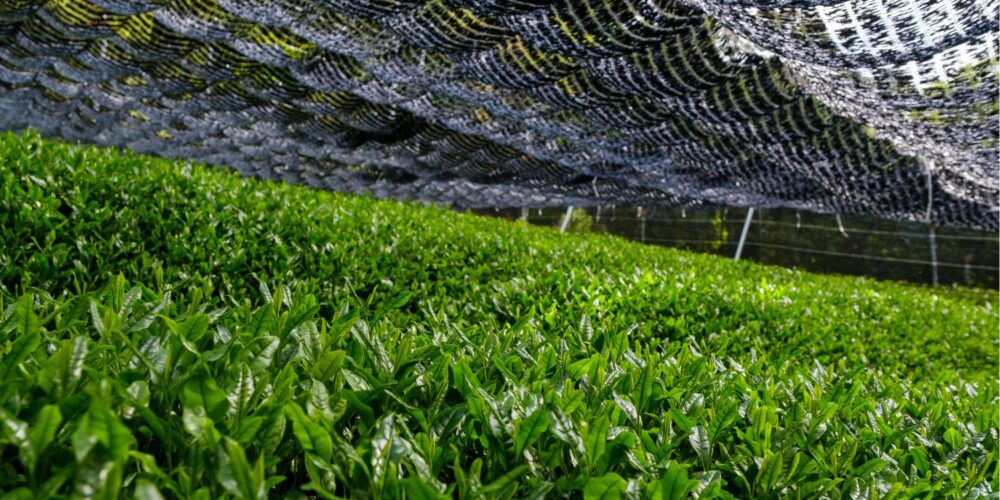
The tea plant produces L-theanine in its roots and transports it up into the leaves. Shading the plant – which is done for the final three to four weeks before matcha is harvested – slows photosynthesis and causes the plant to retain significantly more L-theanine in its leaves.
This is why shade-grown matcha is consistently richer in this amino acid than standard green tea.
The L-Theanine and Caffeine Combination Explained
Coffee and matcha both contain caffeine – but they don’t feel the same. The reason is that matcha contains L-theanine in a ratio that modifies how the caffeine is experienced.
Here is what each one does on its own:
Caffeine on its own:
Blocks adenosine receptors (the chemical that makes you feel sleepy), increases adrenaline, raises heart rate and blood pressure. Great for a short burst of energy – but can cause anxiety, a racing heart, and an inevitable crash.
L-theanine on its own:
Promotes alpha brain wave activity. Reduces the physical signs of stress. Creates a sense of calm without sedation.
Together, L-theanine appears to smooth the edges of caffeine’s stimulant effect. The energy is still there – but it arrives more gently, lasts longer, and doesn’t come with the spike-and-crash pattern that many people experience with coffee.
SSeveral published studies support this effect, including a well-cited 2008 study in Nutritional Neuroscience which found that the combination improved both speed and accuracy on attention tasks compared to either compound alone.
A 2021 systematic review in Cureus further confirmed these cognitive-enhancing outcomes across multiple trials.
This is the matcha calm energy L-theanine caffeine relationship in action – not a marketing claim, but measurable physiology.
What ‘Calm Energy’ Actually Means – and the Science Behind It
The phrase ‘calm energy’ sounds like wellness copy. But there is a neurological basis for it that is worth understanding – particularly if you are someone who has been put off caffeine because of anxiety or poor sleep.
Alpha brain waves sit in the 8–12 Hz frequency range. They are most associated with a relaxed but alert mental state – the kind of focused calm you might experience during meditation, a long walk, or deep creative work.
Research has shown that L-theanine increases alpha wave activity within 30 to 40 minutes of ingestion. A 28-day randomised, double-blind, placebo-controlled trial published on PubMed also found that L-theanine supplementation significantly improved cognitive attention and reduced perceived stress scores.
Combine that with the alertness and cognitive lift that caffeine provides – without the anxiety response that often accompanies a strong coffee – and you have a very different experience of stimulation.
The energy is real. The focus is real. But the jitteriness, the elevated heart rate, the mid-morning slump – those are significantly reduced.
For health-conscious people who have moved away from coffee for exactly these reasons, matcha is not just a trend. It is a physiologically sensible alternative – provided the matcha is the right quality.
The calm focus, the clean energy, the absence of jitters: these come from the leaf itself. That same purity is what makes matcha a powerful ingredient beyond the cup – including for your skin. Read about how matcha and collagen work together to improve skin health for another dimension of its benefits.
Matcha “Land of Fire” Ceremonial Grade Matcha Green Tea
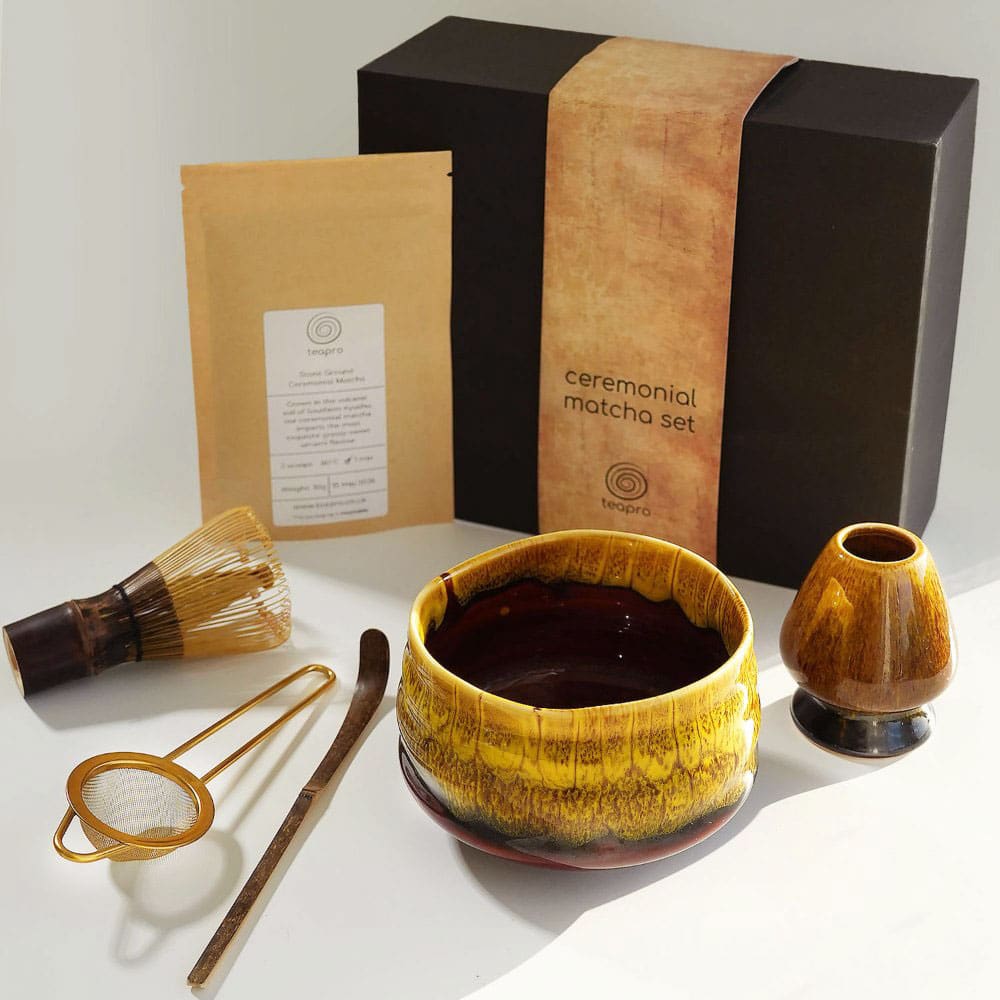
Premium Ceremonial Matcha Set – Yellow Matcha Gift Set
Why Matcha Contains More L-Theanine Than Regular Green Tea
Not all green tea is created equal – and not all matcha is either. The L-theanine content in your cup depends heavily on how the tea was grown and processed.
Matcha is made from shade-grown tencha leaves, ground into a fine powder. The shading process – typically three to four weeks before harvest – is the critical variable.
When sunlight is reduced, the plant cannot convert L-theanine into catechins (the bitter antioxidants produced through photosynthesis). The result: L-theanine accumulates in the leaf.
A good quality ceremonial-grade matcha can contain anywhere from 25 to 46 mg of L-theanine per gram.
Regular steeped green tea – even from the same cultivar – typically contains far less, both because the leaves are not shaded and because you are drinking an infusion rather than consuming the whole leaf.
When you drink matcha, you consume the entire leaf in powdered form. Every compound – the L-theanine, the antioxidants, the chlorophyll, the natural umami – goes directly into your cup. Nothing is left behind in a strainer.
How Artificial Flavourings and Low-Grade Matcha Affect All of This
This is where quality becomes more than a preference – it becomes a practical concern.
A significant proportion of matcha available in the UK – especially in flavoured tea blends, matcha lattes, and ‘matcha-flavoured’ products – contains either very low-grade culinary matcha or artificial flavourings designed to mimic the taste of matcha.
These products may look green. They will not deliver the same nutritional or neurological profile.
Low-grade matcha is typically made from older, coarser leaves harvested later in the season and grown in full sun. The L-theanine content is substantially lower.
The taste is harsh and grassy rather than sweet and umami-rich. Artificial flavourings mask this – they make something taste ‘like matcha’ without delivering what makes matcha worth drinking.
Understanding the difference between grades is key to getting the most from every cup. Explore our full breakdown of matcha grades from everyday delight to ceremonial elegance to find the right fit for you.”
Matcha “Land of Fire” Ceremonial Grade Matcha Green Tea
At Teapro, our position on this is clear: artificial flavourings mask the real taste of tea. We source pure, single-origin matcha because we believe you should be able to taste – and feel – exactly what you’re drinking.
The calm focus, the clean energy, the absence of jitters: these come from the leaf itself, not from an ingredient list.
Not all matcha is the same – learn how grades differ and what to look for in our guide to matcha grades at Teapro.
How to Brew Matcha to Maximise L-Theanine
The way you prepare matcha affects how much L-theanine ends up in your cup. These simple steps help you get the most from every serving.
| Step | Why it matters |
|---|---|
| Use water at 70-80 degrees Celsius - not boiling | Boiling water denatures delicate amino acids including L-theanine and creates a bitter, flat cup. Water just off the boil - or boiled and rested for two to three minutes - is ideal. |
| Sift your matcha before whisking | Clumps mean uneven suspension. Sifting takes ten seconds and makes a real difference to texture and extraction. |
| Use approximately 1 to 1.5 grams per serving | This is roughly half a teaspoon. More than this can tip the caffeine content higher and alter the balance with L-theanine. |
| Whisk in a W or M motion - not in circles | A bamboo chasen creates the emulsified froth that gives matcha its characteristic texture. A standard whisk or milk frother will work but won't replicate the result. |
| Drink it within a few minutes of preparation | Matcha oxidises quickly once mixed with water. The fresher the bowl, the better the flavour and the more intact the compounds. |
The way you prepare matcha affects how much L-theanine ends up in your cup. Having the right tools makes a genuine difference too – see our guide to finding your perfect matcha tools to set yourself up properly from the start.
Premium Ceremonial Matcha Set – Blue Matcha Gift Set
Want to go deeper on technique? Our complete matcha guide covers every step of the process – from selecting the right grade to traditional preparation methods – in full detail.
Read the full guide here: The Complete Matcha Green Tea Guide – Teapro
Who Benefits Most from Matcha Calm Energy?
Matcha is not for everyone in the same way – but the L-theanine and caffeine combination tends to work particularly well for a few specific groups.
| Who benefits | Why matcha works for them |
|---|---|
| People who are sensitive to caffeine | If coffee makes you anxious, raises your heart rate, or keeps you awake at night, the modulating effect of L-theanine may make matcha a genuinely better fit. The caffeine is still present - typically 30 to 70 mg per serving depending on grade and preparation - but it arrives differently. |
| People building a morning wellness ritual | Many of our customers have replaced their morning coffee with matcha as part of a deliberate shift toward a calmer, more intentional start to the day. The ritual of preparation is itself part of the value. |
| People who want sustained focus without peaks and crashes | The slow, steady release profile of caffeine in the presence of L-theanine makes matcha well-suited to work that requires extended concentration - writing, studying, creative work. |
| Connoisseurs who want to understand what they're tasting | L-theanine is directly responsible for the sweet, umami quality of high-grade matcha. Understanding this amino acid helps you understand why good matcha tastes the way it does - and why low-grade or artificial matcha products fall so short. |
Many of our customers have replaced their morning coffee with matcha as part of a deliberate shift toward a calmer, more intentional start to the day.
If weight management is also part of your wellness goals, find out how matcha supports it in our guide to matcha and fat-burning power for weight loss.
Matcha “Land of Fire” Ceremonial Grade Matcha Green Tea
Frequently Asked Questions
The effect is backed by genuine scientific research. Multiple peer-reviewed studies have examined the L-theanine and caffeine combination and found measurable improvements in attention, alertness, and reaction time – alongside reductions in the stress and anxiety responses often associated with caffeine alone. The ‘calm energy’ description is a useful shorthand for a physiological reality. That said, individual responses vary, and the quality of the matcha you use makes a significant difference to how much L-theanine you’re actually consuming.
Matcha without jitters is a common experience – and the reason is largely the presence of L-theanine. Jitteriness from coffee typically results from the rapid spike in adrenaline and the blocking of adenosine receptors without a counterbalancing calming mechanism. L-theanine does not block caffeine’s stimulant effect but appears to reduce the anxiety and physiological stress response it can trigger. The result is stimulation that feels cleaner and more controlled.
It depends on the grade and origin of the matcha, as well as your serving size. A typical ceremonial-grade matcha prepared with 1 gram of powder contains roughly 25 to 45 mg of L-theanine. Culinary-grade or lower-quality matcha will contain considerably less. This is one reason why sourcing matters – the amino acid profile of your matcha is directly tied to how it was grown and processed.
If you’re using pure, high-quality matcha powder, yes – the L-theanine is present regardless of how you prepare it. However, many commercial matcha latte products and mixes use low-grade culinary matcha, added sugar, and artificial flavourings. These will not deliver the same L-theanine content or the same calm energy effect. Check the ingredient list and, where possible, source your matcha separately and add it yourself.
Yes, in most cases. Matcha is made from shade-grown leaves specifically cultivated to retain L-theanine, and because you consume the whole leaf as a powder rather than an infusion, you get significantly more of the compound per serving. Regular green tea has L-theanine too – but at a lower concentration, and you leave a proportion of it in the leaves you discard.
Significantly. The L-theanine content of matcha is directly related to how it was grown – particularly whether the plants were shade-grown and for how long. Ceremonial-grade, single-origin matcha from established Japanese growing regions will consistently outperform lower-grade alternatives on L-theanine content. Artificial flavourings and blended matcha products can mimic the taste of good matcha while delivering a fraction of the compounds that make it valuable.
Your Next Step
Understanding L-theanine changes how you experience matcha. Once you know what you’re tasting – that sweet, almost savoury quality, that clean clarity – you start to notice its absence in low-grade or artificial products.
Once you understand what good matcha tastes like, you’ll want to use it in more ways than one. For a delicious place to start, try our collection of 7 best matcha pancake recipes — a simple way to bring ceremonial-quality matcha into your morning routine.
If you’re ready to explore matcha beyond the bowl, we have plenty of inspiration. From indulgent treats to refreshing drinks, discover 9 unique matcha dessert recipes for every sweet tooth, 9 iced matcha recipes for warmer days, or try something visually stunning with our two-tone matcha latte recipe.
And you start to appreciate why sourcing, growing method, and preparation all matter.
If you want to go further – understanding cultivars, how shade-growing affects flavour, how to identify ceremonial versus culinary grade, and how to taste the difference – our complete guide covers everything you need.
Or, if you’re ready to begin your tea adventure in full, our ‘Become a Teapro’ 12-box subscription takes you through 12 essential tea types – matcha included – with the knowledge, provenance, and brewing guidance that turns a tea drinker into a tea pro.

Teapro co-founder. Favourite tea - Long Jing Dragon Well Green Tea. Obsessed with film, photography and travelling.
- Tatjana

- Tatjana



No Comments