What Is Green Tea? The Complete Guide
Green tea is one of the most consumed drinks on earth – and one of the most misunderstood. Most people have tried it. Very few have tasted it properly. This guide is here to change that.

Whether you’ve only ever had a green tea bag from a supermarket shelf, or you’re curious about the difference between a gyokuro and a dragonwell, this is your complete reference.

We’ll cover what green tea actually is, how it’s made, why it’s good for you, how to brew it without bitterness, and how to start developing a real palate for it.

No artificial flavourings. No shortcuts. Just the real thing – explained properly.

What is green tea?

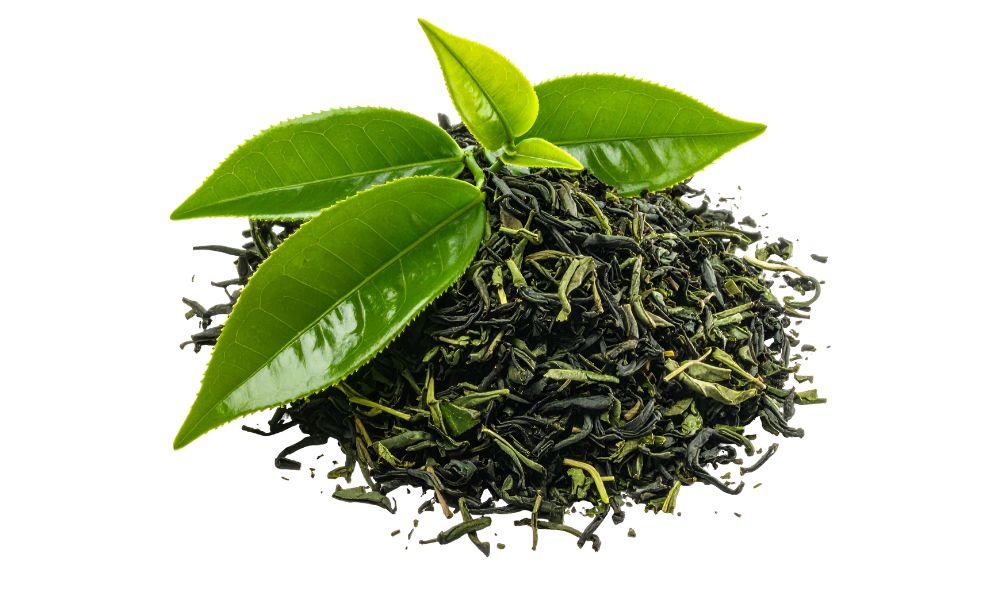
Green tea is a type of tea made from the leaves of the Camellia sinensis plant – the same plant that produces black tea, oolong, white tea and pu-erh. What makes green tea green isn’t a different plant variety – it’s what happens (and crucially, what doesn’t happen) during processing.

The key difference is oxidation. When tea leaves are harvested, they begin to oxidise – the same process that turns a cut apple brown. Black tea is fully oxidised. Oolong is partially oxidised. Green tea is not oxidised at all.

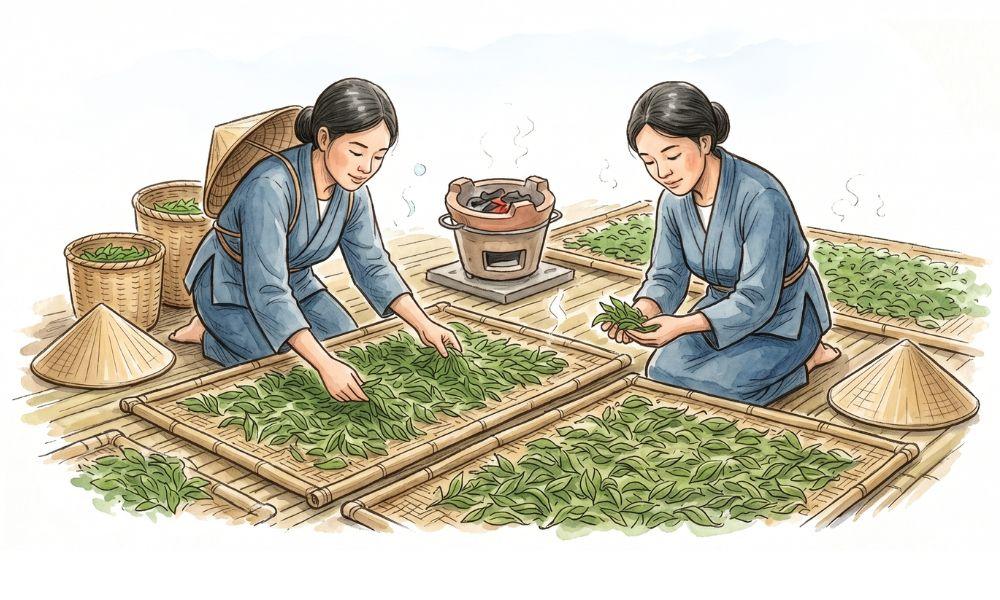
The leaves are heated very soon after picking – either by steaming or pan-firing – to stop oxidation in its tracks. This preserves the green colour, the grassy flavours, and much of the plant’s natural chemistry.

The Teapro principle: Green tea should taste like the leaf – fresh, clean, and full of character. Artificial flavourings mask what’s already there. A good pure green tea from a quality origin has more complexity than any blend could manufacture.

Green tea has been cultivated for thousands of years, primarily in China and Japan, where distinct traditions, processing methods and tea cultures have developed side by side.

Today it’s grown across Asia – from the mist-covered mountains of Zhejiang province to the high-altitude gardens of Darjeeling – and the differences in terroir, variety and craft create an enormous range of flavours.

Quick facts
Fact Detail
Plant species Camellia sinensis - the same plant used for all true teas
Oxidation level None - leaves are heat-treated immediately after harvest
Origins China and Japan - two distinct traditions with very different results
Years cultivated Approximately 3,000 years - first recorded in Chinese texts
Varieties Over 1,000 named varieties exist across Asia
Global ranking Second most consumed beverage after water

How is green tea made?

Understanding how green tea is made is the fastest way to understand what you’re tasting. The journey from fresh leaf to dry tea involves a small number of steps – but the choices made at each step shape the flavour completely.

Harvesting

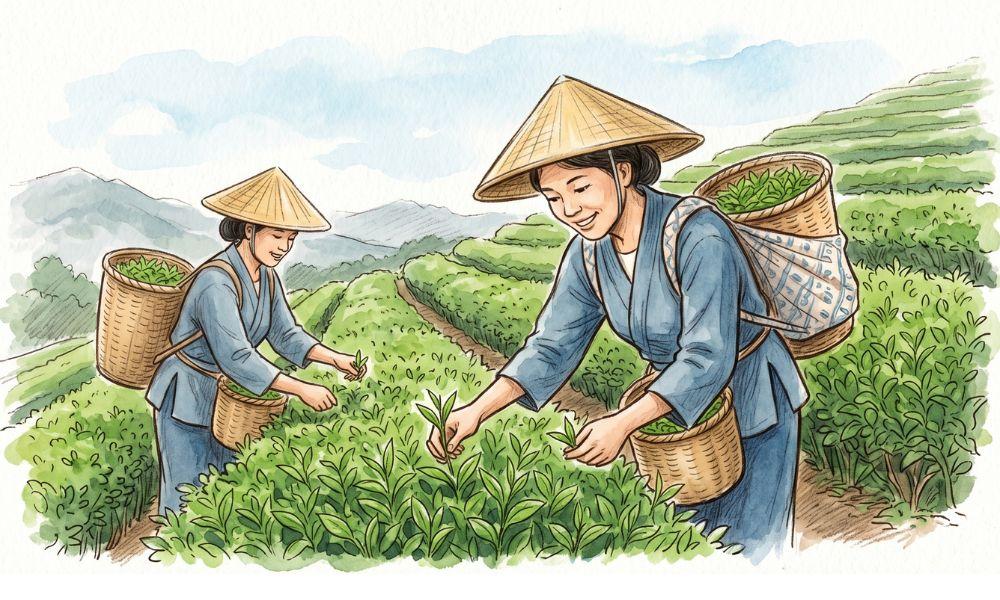
Leaves are picked by hand or machine. The finest green teas use only the youngest growth – typically the top two leaves and the bud. The earlier in spring the harvest, the more concentrated the flavour and the more amino acids the leaf contains. First-harvest teas are often labelled ‘first flush’ or ‘shincha’ in Japan.

Withering (sometimes)

Some green teas are briefly laid out to soften before the next step. This isn’t always done – particularly in Japanese processing, where leaves move quickly to the heating stage to preserve maximum freshness.

Heating – the critical step

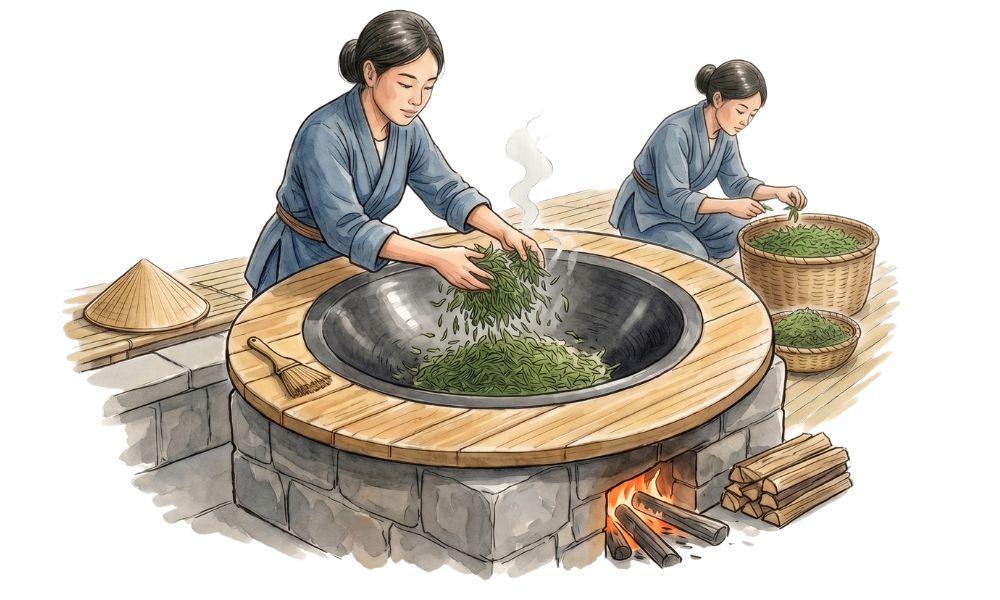
This is where green tea diverges from all other teas. Heat is applied rapidly to deactivate the enzymes that cause oxidation. There are two main methods – steaming (Japanese tradition) and pan-firing (Chinese tradition) – that produce profoundly different flavours.

Rolling and shaping

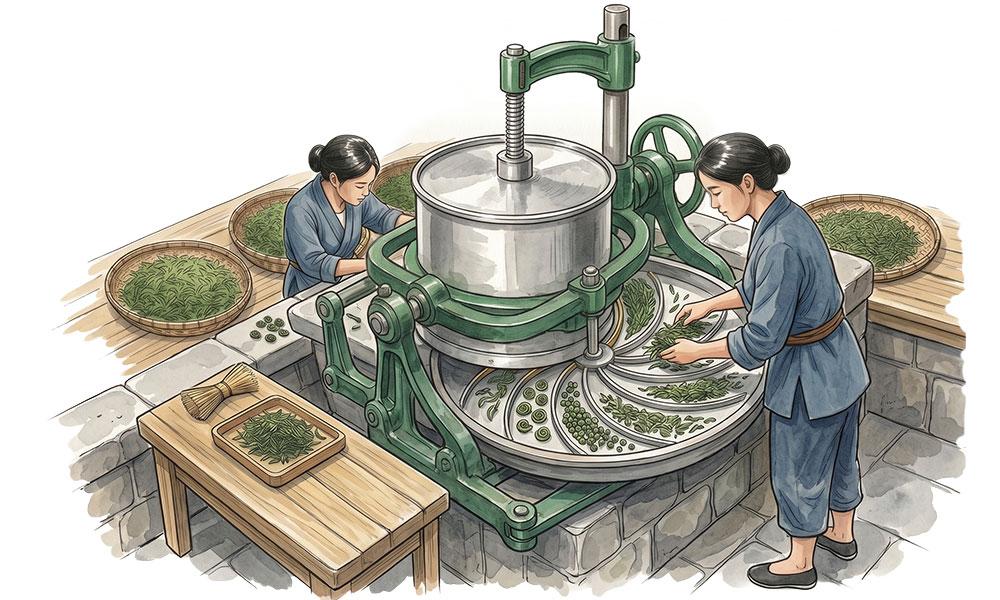
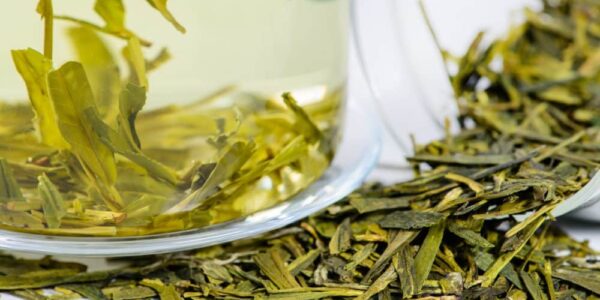
Leaves are rolled, twisted or pressed into their final shapes – needle, ball, flat or twisted. Rolling breaks the cell structure slightly, affecting how the tea releases its compounds when brewed. Tightly rolled teas tend to open slowly and reward multiple steeps.

Drying

The tea is dried to reduce moisture to below 5%, which stabilises it for storage and shipping. The method of drying can add further character – some teas are charcoal-dried, which adds depth.

Sorting and grading

Leaves are sorted by size, sometimes blended across grades, and inspected before packing. At Teapro, every tea we carry has been tasted and approved – not just bought on paper.

Steamed vs pan-fired – the most important distinction in green tea
Feature Steamed (Japanese style) Pan-fired (Chinese style)
Main countries Japan, Korea China, Taiwan
Flavour profile Grassy, marine, umami, seaweed Toasty, nutty, vegetal, sweet
Colour of liquor Bright jade green Yellow-green to golden
Examples Sencha, Gyokuro, Matcha Dragonwell, Biluochun, Gunpowder
Typical aroma Fresh-cut grass, seaweed, ocean Toasted chestnuts, butter, flowers
Bitterness tendency Lower (especially gyokuro) Variable - lower in high-grade versions

Types of green tea

The variety within green tea is vast – arguably more varied than any other tea category. Here are the styles you’re most likely to encounter, and what makes each one worth knowing.

Name Origin Method Caffeine Flavour notes
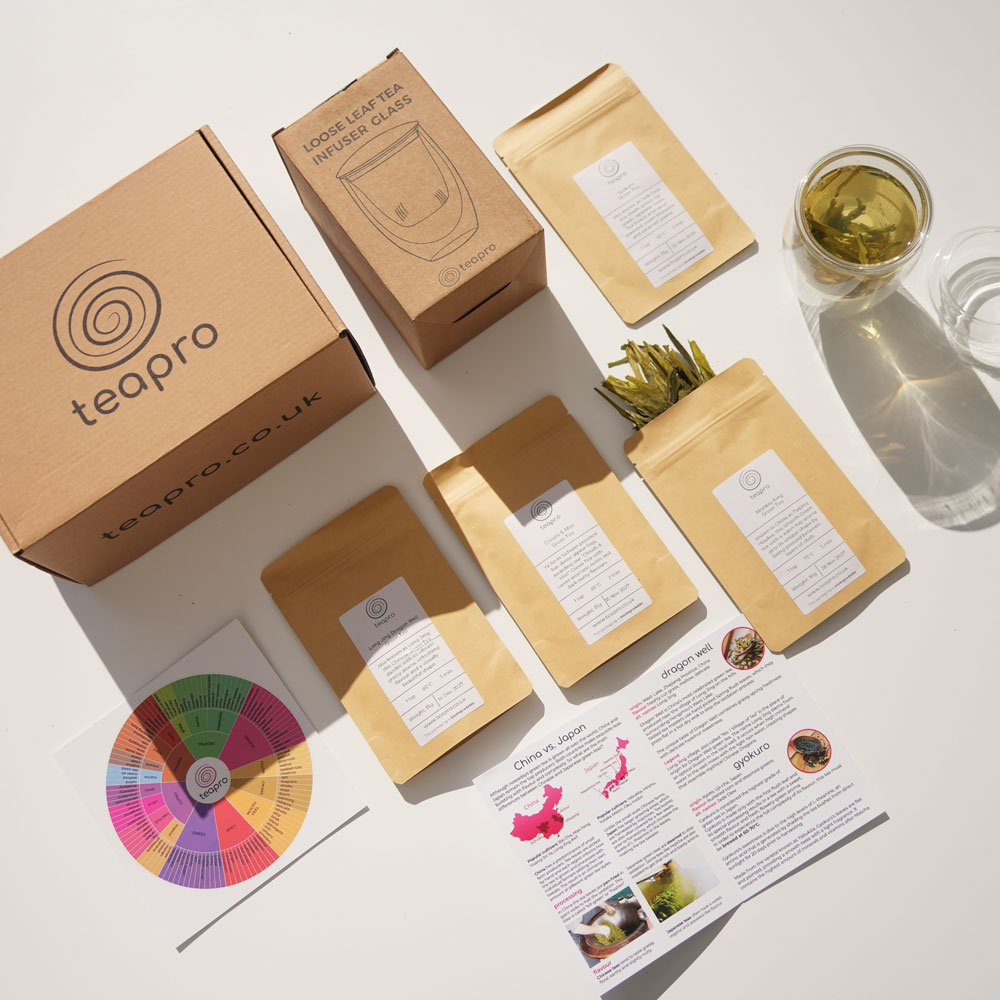
Sencha Japan Steamed Medium Grassy, sweet, umami - great starting point
Gyokuro Japan Steamed Med-high Deep umami, sweet, marine - shade-grown, premium
Matcha Japan Steamed + ground High Creamy, rich, vegetal - whole leaf consumed
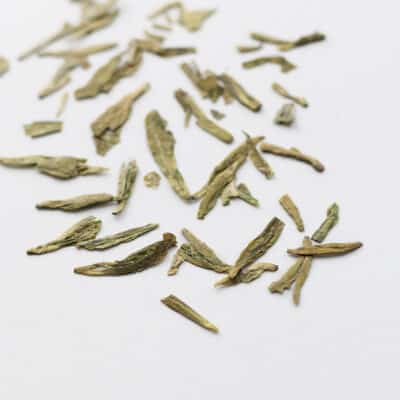
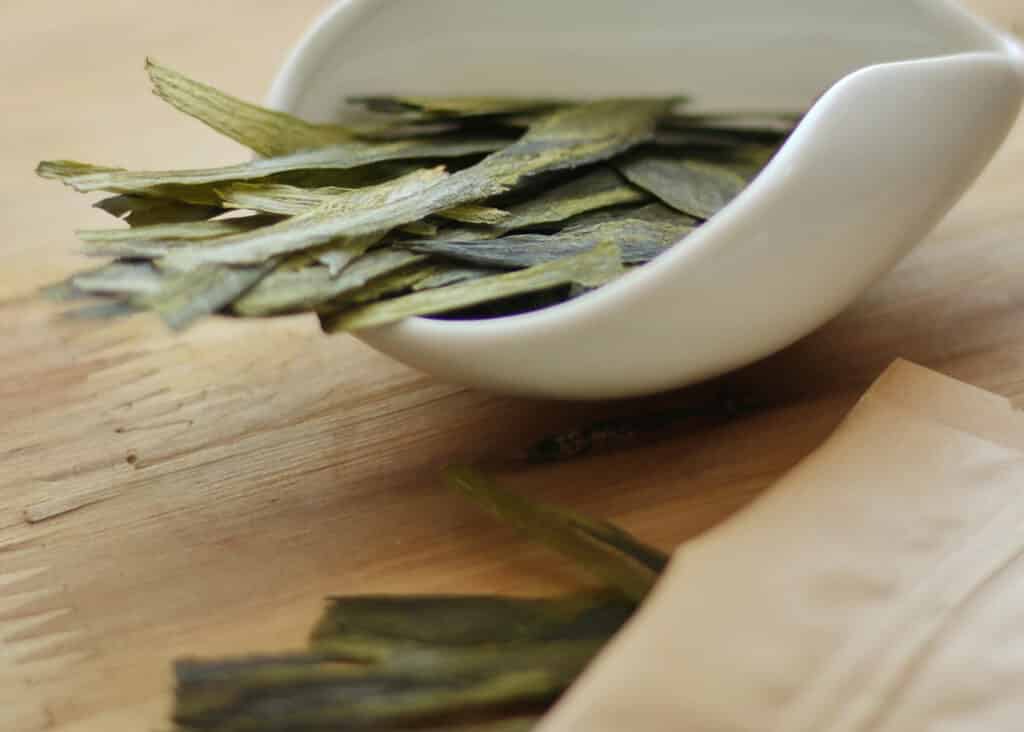
Dragonwell China (Zhejiang) Pan-fired Low-med Toasty, smooth, chestnut, orchid
Biluochun China (Jiangsu) Pan-fired Low-med Floral, fruity, delicate - grown near fruit trees
Hojicha Japan Steamed + roasted Very low Toasty, warm, coffee-adjacent - ideal for evenings
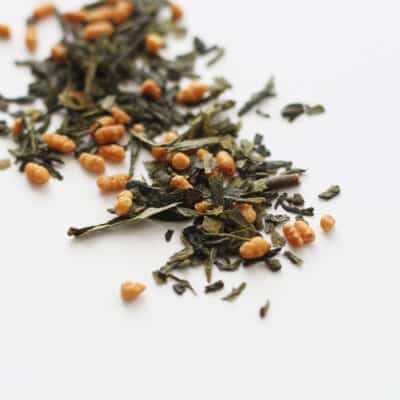
Genmaicha Japan Steamed + rice Low Popcorn sweetness, grassy, comforting
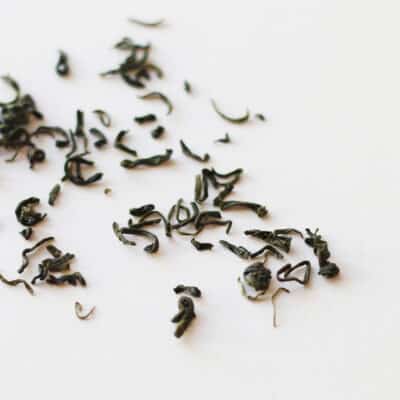
Gunpowder China Pan-fired Medium Bold, slightly smoky, robust
Clouds and Mist (Yun Wu) China (Jiangxi) Pan-fired Low-med Mellow, sweet, slightly smoky - grown at high altitude in mist
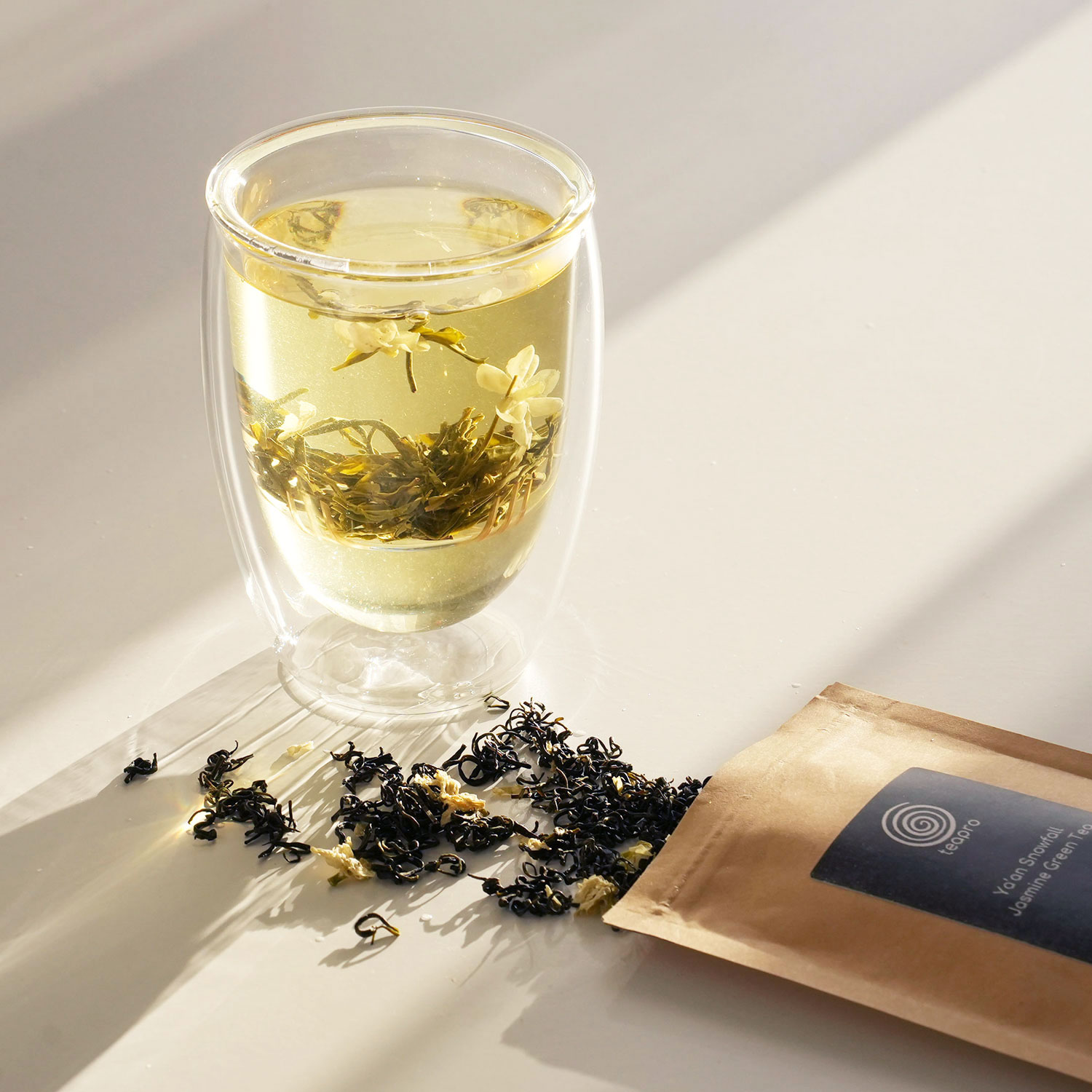
Phoenix Eye Jasmine Green Tea China (Fujian) Pan-fired + scented Low-med Floral, jasmine-forward, sweet - scented with fresh jasmine blossoms
Monkey King (Taiping Houkui) China (Anhui) Pan-fired Low-med Orchid, sweet, clean, lingering - large flat leaves, delicate and rare

At Teapro, we source single-origin green teas direct from farms – so when you taste a Dragonwell, you’re tasting that garden, that harvest. Not a blended, artificially flavoured approximation of what green tea is supposed to taste like.

Health benefits of green tea

Green tea has been studied more extensively than almost any other plant-based food or drink. The research is substantial – though it’s worth being clear about what is well-evidenced, what is promising, and what is overstated.

Key compounds and their evidence
Compound What it is Evidence Key benefit
EGCG Epigallocatechin gallate - the main catechin Strong Antioxidant, anti-inflammatory, metabolic support
L-theanine Amino acid unique to tea and some mushrooms Strong Calm focus, reduced stress, improved cognition with caffeine
Caffeine Natural stimulant, lower than coffee Established Alertness - with less jitter due to L-theanine interaction
Polyphenols Plant compounds including catechins Good evidence Gut health, cardiovascular markers, cell protection
Fluoride Naturally occurring mineral in tea leaves Established Dental health support

The L-theanine + caffeine effect – why green tea feels different to coffee

L-theanine, the amino acid in tea, modifies how your brain processes caffeine. Together they produce what researchers describe as ‘alert calm’ – the focused, clear-headed state without the spike and crash that comes from coffee.

Shaded teas like gyokuro and matcha contain the highest concentrations of L-theanine, because shading increases amino acid production in the leaf. If you’ve ever wondered why a bowl of matcha feels different to an espresso despite containing caffeine – this is why.

Important note: Green tea is a food, not a medicine. The evidence suggests regular, long-term consumption as part of a healthy lifestyle. At Teapro, we’ll never make medical claims – we’re here to help you enjoy tea properly.

Pure vs flavoured – does it matter for health?

Yes – potentially. Artificial flavourings are added to mask or replace the natural chemistry of the leaf. When a green tea is flavoured with artificial compounds, it tells you something about the quality of the base leaf (good teas don’t need masking). You’re paying for the flavouring, not the tea – and the flavouring adds none of the beneficial compounds that make green tea interesting.

Caffeine in green tea

Caffeine content in tea varies enormously depending on type, grade, brewing temperature, steeping time and how many times you re-steep the leaves. Here’s a practical comparison.

Source Approx. caffeine Notes
Espresso (single) 60-75mg Small volume, high concentration
Filter coffee 95-140mg Varies widely by roast and brew method
Matcha (1 tsp) 60-80mg Whole leaf consumed - highest green tea caffeine
Gyokuro 45-60mg Shading increases caffeine and L-theanine together
Sencha 30-50mg Standard Japanese green - moderate caffeine
Dragonwell / Chinese greens 25-45mg Generally lower than Japanese equivalents
Hojicha 5-15mg Roasting destroys most caffeine - ideal for evenings

If you’re sensitive to caffeine but love green tea, hojicha is excellent. If you want the calm-focus effect, stick with gyokuro or a good sencha. If you want caffeine comparable to coffee, matcha is your answer.

How to brew green tea properly

Most people who say they don’t like green tea have only ever had it made wrong. Bitterness in green tea is almost always a brewing error – not a property of the tea. Get the temperature right and most of the problems disappear.

The single biggest mistake: Using boiling water. Boiling water (100C) scorches green tea leaves and releases bitter tannins and catechins aggressively. Green tea wants 70-80C water. At that temperature, you get sweetness and umami first – with very little bitterness.

Brewing guide by tea type
Tea type Water temp Leaf amount Steep time Re-steeps
Gyokuro 50-60C 4-5g per 100ml 90 seconds 3-4 times
Matcha (usucha) 70-75C 1.5-2g (1 tsp) Whisk immediately No re-steep
Sencha 70-75C 2-3g per 200ml 60-90 seconds 2-3 times
Dragonwell / Chinese greens 75-80C 2-3g per 200ml 2-3 minutes 2-3 times
Hojicha 85-90C 3-4g per 200ml 1-2 minutes 1-2 times
Genmaicha 80C 2-3g per 200ml 1-2 minutes 2 times

How to achieve the right temperature without a thermometer

  1. Boil, then cool

Water loses roughly 8-10C per minute in an open kettle. For 80C water, wait 3-4 minutes after boiling. For 70C, wait 5-6 minutes.

  1. Pour between vessels

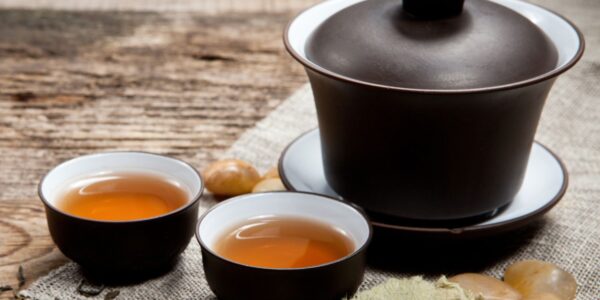
Each pour between a cup or jug drops the temperature by about 8-10C. Boiling water poured twice reaches roughly 80C. Three pours reaches roughly 70C. The traditional Japanese method – no equipment needed.

  1. Use a temperature-control kettle

If you brew green tea often, a variable-temperature kettle is genuinely worth it. Set to 75C and remove all guesswork. A good one costs under £40.

Cold brew green tea

Cold brewing produces naturally sweeter, less bitter green tea – and makes your leaves go further. Add 4-5g of green tea to 500ml of cold filtered water, refrigerate overnight (8-12 hours), and strain. The cold water extracts more L-theanine and less bitter compounds, producing a smooth, sweet cup that’s excellent in summer.

What does green tea taste like?

Green tea has a wider flavour range than most people expect. Here are the primary flavour families and what creates them.

Flavour note What causes it Which teas Intensity
Umami / brothy L-theanine - amplified by shading and lower temperatures Gyokuro, Matcha Pronounced
Grassy / vegetal Chlorophyll and volatile compounds preserved by steaming Sencha, most Japanese greens Moderate-high
Toasty / nutty Maillard reaction from pan-firing Dragonwell, Chinese greens Moderate
Marine / seaweed Specific amino acids - more prominent in shade-grown Gyokuro, high-grade Sencha Subtle
Floral / sweet Terpene compounds - highest in spring first-flush Biluochun, young Dragonwell Delicate
Bitterness Catechins from over-brewing or too-hot water Any green tea if brewed incorrectly Avoidable
Roasted / smoky Post-processing roasting applied to the leaf Hojicha, Gunpowder Pronounced

How to taste green tea like a Teapro

  1. Smell first

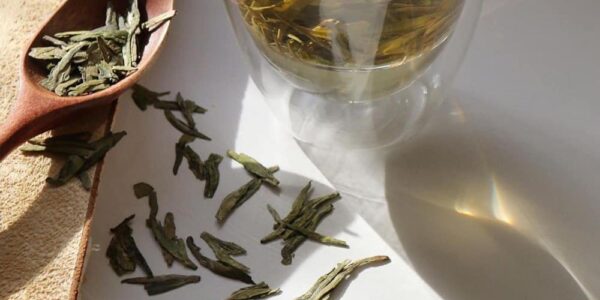
Before tasting, cup your hands around the cup and inhale. What you smell sets your expectation and primes your palate. Note whether it’s grassy, toasty, sweet, oceanic.

  1. First sip – don’t swallow immediately

Let the liquid cover your whole tongue. Notice sweetness at the front, any bitterness at the back, and umami on the sides. The aftertaste (‘hui gan’ – returning sweetness in Chinese tea culture) is often the best part.

  1. Notice the texture

Good green tea has body – a slight thickness in the mouth, particularly in gyokuro and matcha. Thin, watery texture usually means insufficient leaf or too much water.

  1. Wait for the finish

The best green teas have a long, lingering sweetness. Cheap tea tastes of nothing after swallowing. Notice how long the flavour lasts.

Green tea vs other teas

All true teas come from the same plant – so what actually makes them different? Processing is everything.

Tea type Oxidation Flavour profile Caffeine level Key compound
Green tea None (0%) Grassy, fresh, vegetal, umami Low-medium EGCG catechins, L-theanine
White tea Minimal (5-10%) Delicate, floral, honey-like Very low High antioxidants - least processed
Oolong Partial (15-85%) Huge range - floral to roasted Medium Varied - depends on oxidation level
Black tea Full (100%) Bold, malty, astringent High Theaflavins - formed during oxidation
Pu-erh Post-fermented Earthy, woody, complex, aged Medium Unique aged compounds, probiotics

How to buy green tea well

The green tea market ranges from genuinely excellent to genuinely terrible – and the price difference is often surprisingly small. Here’s what to look for.

Look for Avoid
Loose leaf rather than teabags - whole leaves brew better and you can see what you're buying Fannings and dust in teabags - lowest grade tea, high bitterness
Single-origin labelling - country, region, sometimes farm and harvest date Vague labelling - 'green tea blend' tells you nothing
No artificial flavourings in the ingredients list Added flavourings, natural or artificial - they mask the real tea
Harvest date - green tea is best within 12-18 months of harvest No date information - old tea loses its freshness and complexity
Colour: bright green (not dull or brown) Dull, brown or grey-green leaves - often old or poorly stored
Aroma: should smell fresh, green and alive when you open the bag No aroma or a flat, hay-like smell - the tea has gone stale

The Teapro standard: Every green tea we source is single-origin, naturally pure, and tasted before we list it. We include origin information, harvest details and brewing guidance with everything we sell – because you should know exactly what you’re drinking.

Frequently asked questions

The evidence is modest. Some studies suggest that the EGCG in green tea may modestly support metabolic rate and fat oxidation – but the effect is small and shouldn’t be the reason you drink it. Drink it because it tastes extraordinary and makes you feel alert and calm. If it also slightly supports your metabolism, consider that a bonus.

Some people find that green tea on an empty stomach causes nausea – this is due to the caffeine and tannins interacting with an empty digestive system. If that affects you, have it after a light meal or snack.

Most research looking at health benefits uses 3-5 cups per day as its benchmark. Drink as much as you enjoy rather than treating it as medicine. High-quality loose leaf is also more flavourful, which means you’re often happy with less.

Yes and no. Green tea retains more catechins (particularly EGCG) because it hasn’t been oxidised. Black tea has different polyphenols – theaflavins – formed during oxidation, which also have antioxidant properties. Both are nutritionally interesting, just in different ways.

Almost always yes – in terms of flavour, quality and value for money. Teabags typically contain fannings (tiny broken pieces of low-grade tea) which brew quickly, bitterly and with little complexity. Loose leaf uses whole or large pieces of leaf, allows multiple steeps, and is often cost-competitive over time.

In almost every case: water that’s too hot or steeping time that’s too long. Try 75C water and a 60-90 second steep. If you don’t have a thermometer, boil and then wait 5 minutes before brewing. Good quality green tea brewed correctly should not be bitter.

The fundamental difference is processing method. Japanese green teas are almost universally steamed – creating grassy, marine, umami flavour. Chinese green teas are almost universally pan-fired – creating toasty, nutty, sometimes floral notes. Neither is superior. Exploring both is one of the pleasures of getting into green tea properly.

About Teapro

Teapro is a UK-based premium loose leaf tea brand. We source the purest single-origin teas and natural herb blends we can find. We believe artificial flavourings mask the real taste of tea – so wherever possible, we let the leaf speak for itself.

Our ‘Become a Teapro’ 12-month subscription is the only structured tea education programme of its kind in the UK – covering green, black, herbal, chai, oolong, pu-erh, yerba, matcha, fruit, white, magic and rooibos.

Teapro co-founder. Favourite tea - Long Jing Dragon Well Green Tea. Obsessed with film, photography and travelling.

No Comments

Post A Comment