Monk Fruit Tea (Luo Han Guo): The Naturally Sweet Tea That Contains No Sugar
Imagine a tea that tastes sweet, properly sweet, with nothing added to it. No sugar, no syrup, no artificial sweetener. Just hot water poured over a dried fruit. That is monk fruit tea, and once you understand what makes it sweet, it becomes one of the most quietly remarkable drinks in the herbal world.


At Teapro we are drawn to teas that do not need dressing up, and monk fruit is the purest example we can think of. It is naturally hundreds of times sweeter than sugar, yet it brings no sugar to your cup at all.

Here is what it is, where it comes from, how to brew it properly, and why so many people are swapping their afternoon sweet treat for a pot of it.

What’s in This Guide

What is monk fruit tea?

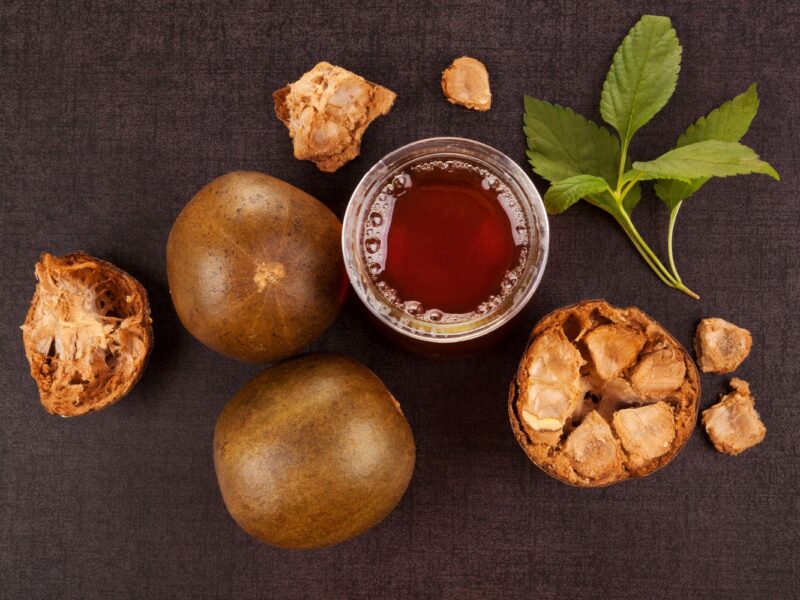
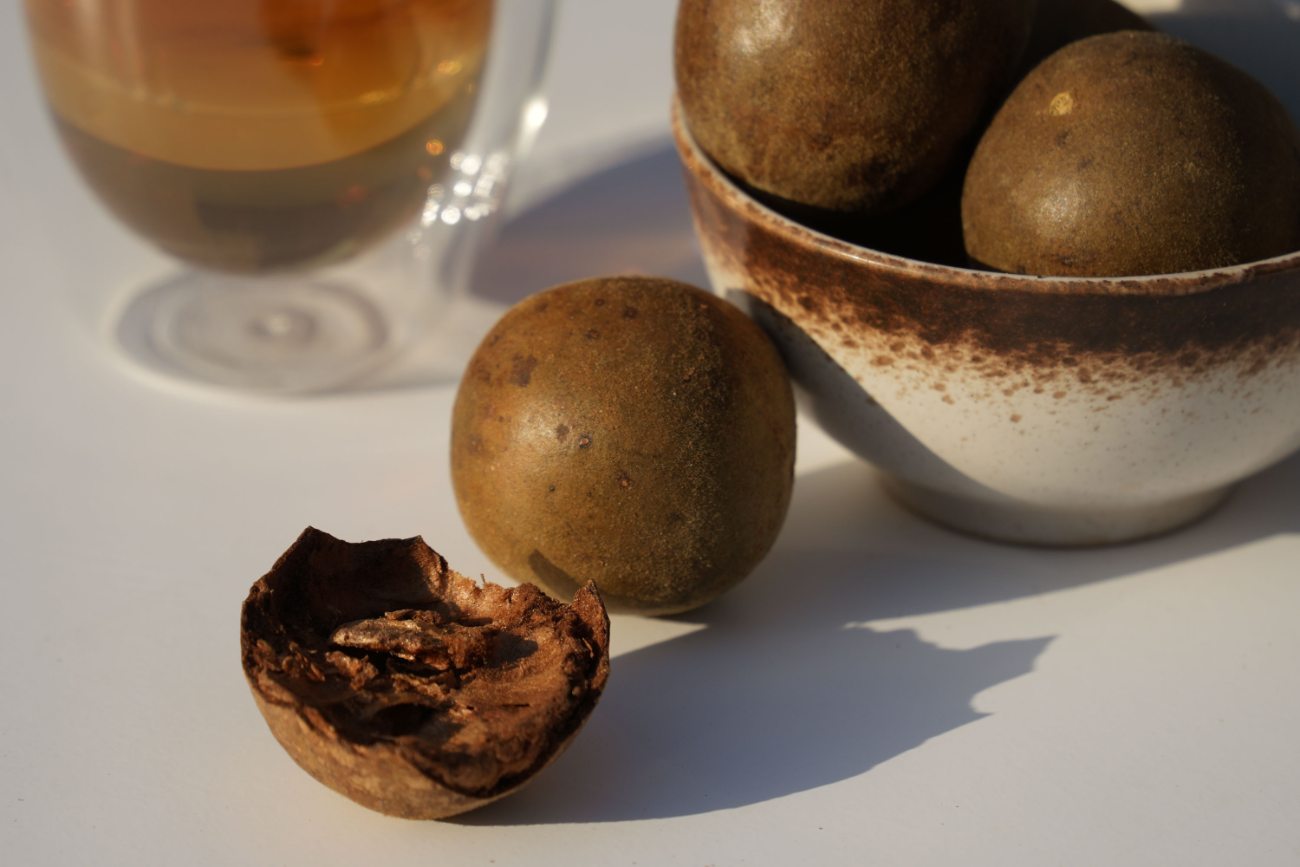
Monk fruit tea is a herbal infusion made from the dried fruit of Siraitia grosvenorii, a climbing vine in the gourd family, the same botanical family as cucumbers and melons. In China, where it has been grown for centuries, it is known as luo han guo.

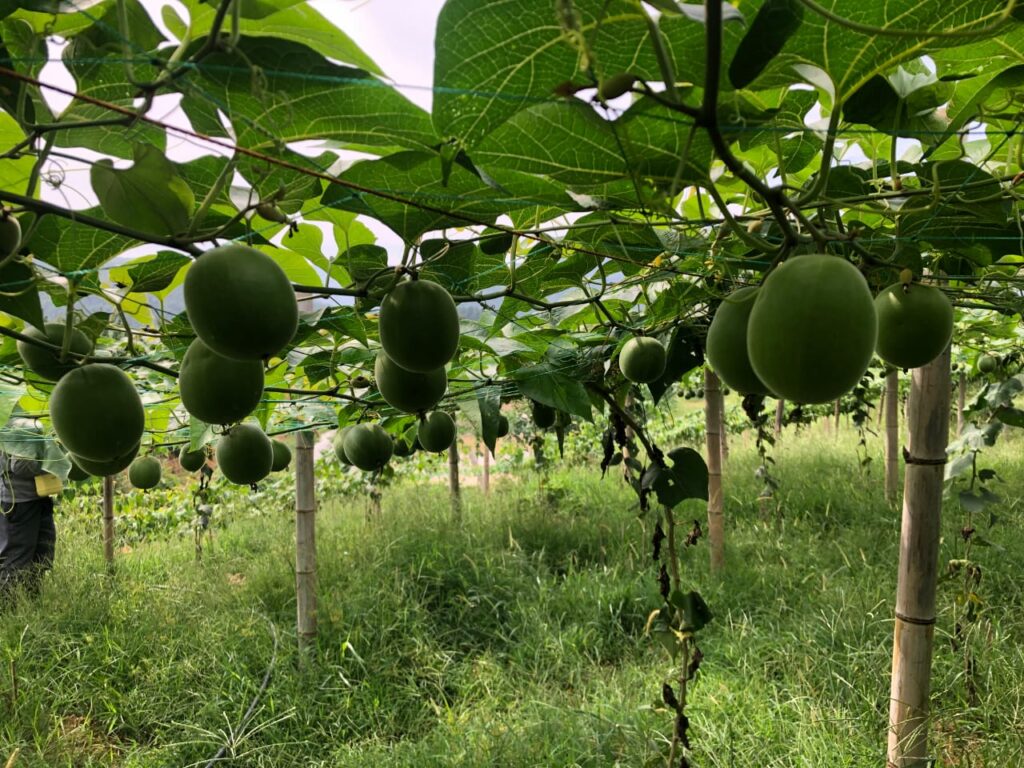
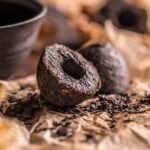
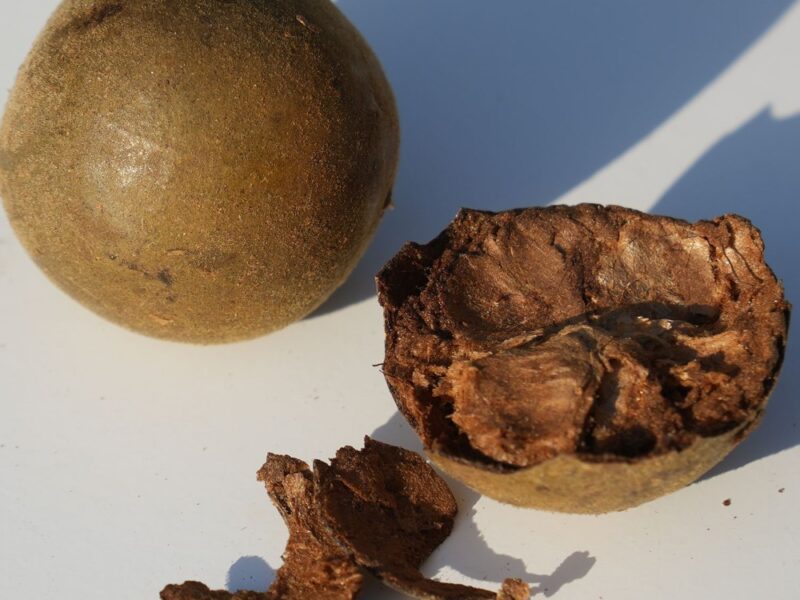
The fruit itself is small and round, roughly the size of a golf ball, ripening from green to a soft brown. It is rarely eaten fresh, because it spoils quickly once picked. Instead it is carefully dried, and that dried fruit is what you steep to make the tea.

Because it is a fruit infusion rather than a true tea leaf, monk fruit tea is naturally caffeine-free, which makes it an easy choice at any hour, including the evening.

The story behind the name

Monk fruit earns its English name from the Buddhist monks who are believed to have first cultivated it, in the hills around Guilin in southern China, with written records reaching back to the 13th century.

Its Chinese name, luo han guo, translates roughly as “arhat fruit,” an arhat being a monk who has reached enlightenment.

For most of its history the fruit stayed a regional secret, difficult to grow and prized locally. It only travelled west in the twentieth century, and it was not until the 1980s that scientists finally worked out the source of its extraordinary sweetness.

the story behind the name - what is monk fruit tea

For a brand that loves the stories behind a cup, monk fruit is a good one: a fruit tended by monks, kept quiet for the better part of a thousand years, now sitting on shelves around the world.

Where it grows

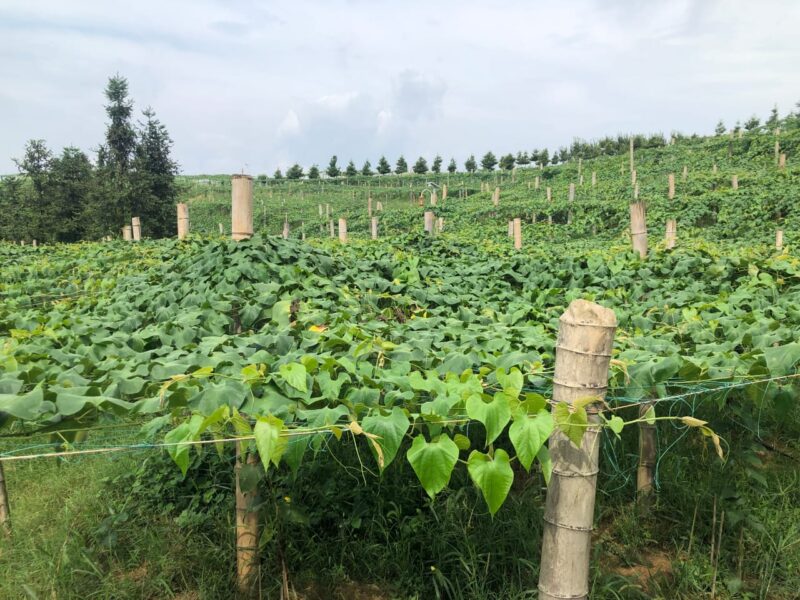
Monk fruit is one of the most geographically concentrated crops on earth. Around 80 percent of the world’s supply still comes from Guangxi province in southern China, with smaller pockets in neighbouring Guangdong, Hunan and Jiangxi.

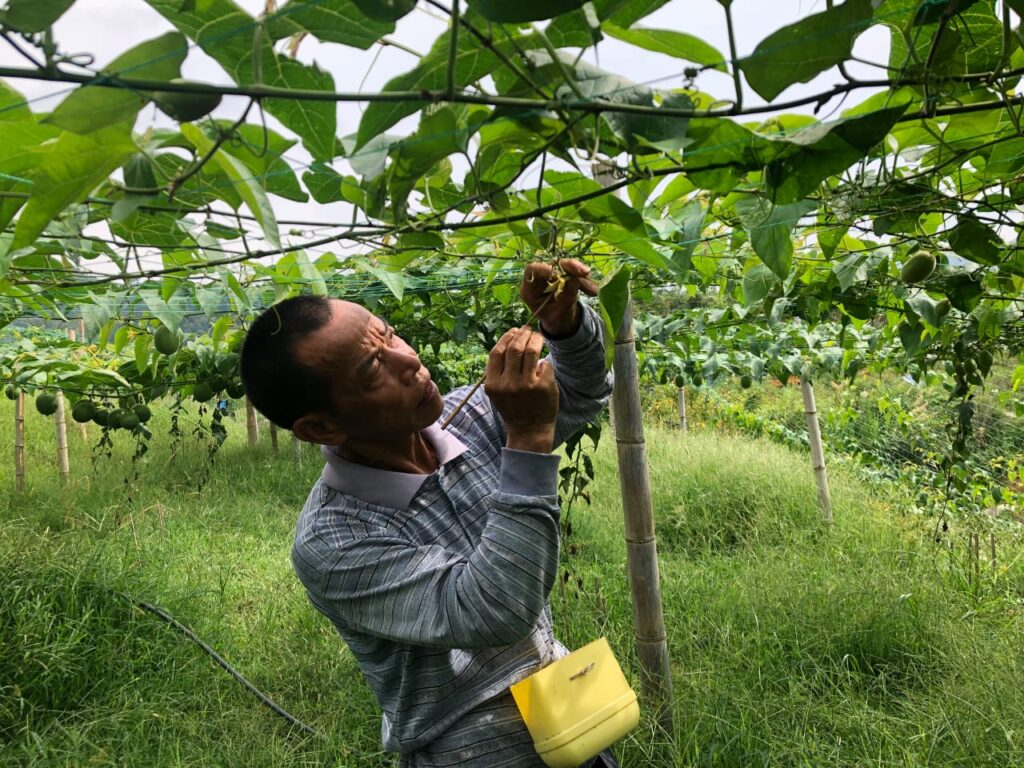
Monk fruit harvest (luo han guo) -what is monk fruit tea

The vine is fussy: it needs a particular combination of altitude, humidity and temperature found in only a handful of misty mountain regions, which is part of why it has never become a commodity crop.

The fruits ripen and are harvested in the warm months, roughly July to September, then dried for storage and trade. That difficulty of cultivation, and the careful drying it demands, is exactly the kind of craft we think is worth paying attention to.

Why it is so sweet, with no sugar

This is the part that surprises people. The sweetness of monk fruit does not come from sugar at all. It comes from a group of natural compounds called mogrosides, and in particular one called mogroside V.

Mogrosides are remarkable for two reasons.

First, they are intensely sweet: by weight, monk fruit’s sweet compounds are estimated to be somewhere between 200 and 300 times sweeter than table sugar.

Second, the body does not process them as a carbohydrate the way it processes sugar, so they contribute virtually no calories and do not raise blood sugar in the way sugar does.

That unusual combination is why monk fruit has become one of the fastest-growing natural sweeteners in the world, and why people reducing their sugar intake have taken such an interest in it.

It is worth being clear about one thing, because the supermarket aisle muddies it.

The little sachets labelled “monk fruit sweetener” are usually a concentrated mogroside extract blended with a bulking agent such as erythritol.

Loading...
monk fruit tea Luo Han Guo what does it taste like - what is monk fruit tea
Price range: £4.00 through £15.00

Monk fruit tea is something simpler and older: the whole dried fruit, steeped in water, sweetness and all.

What does monk fruit tea taste like?

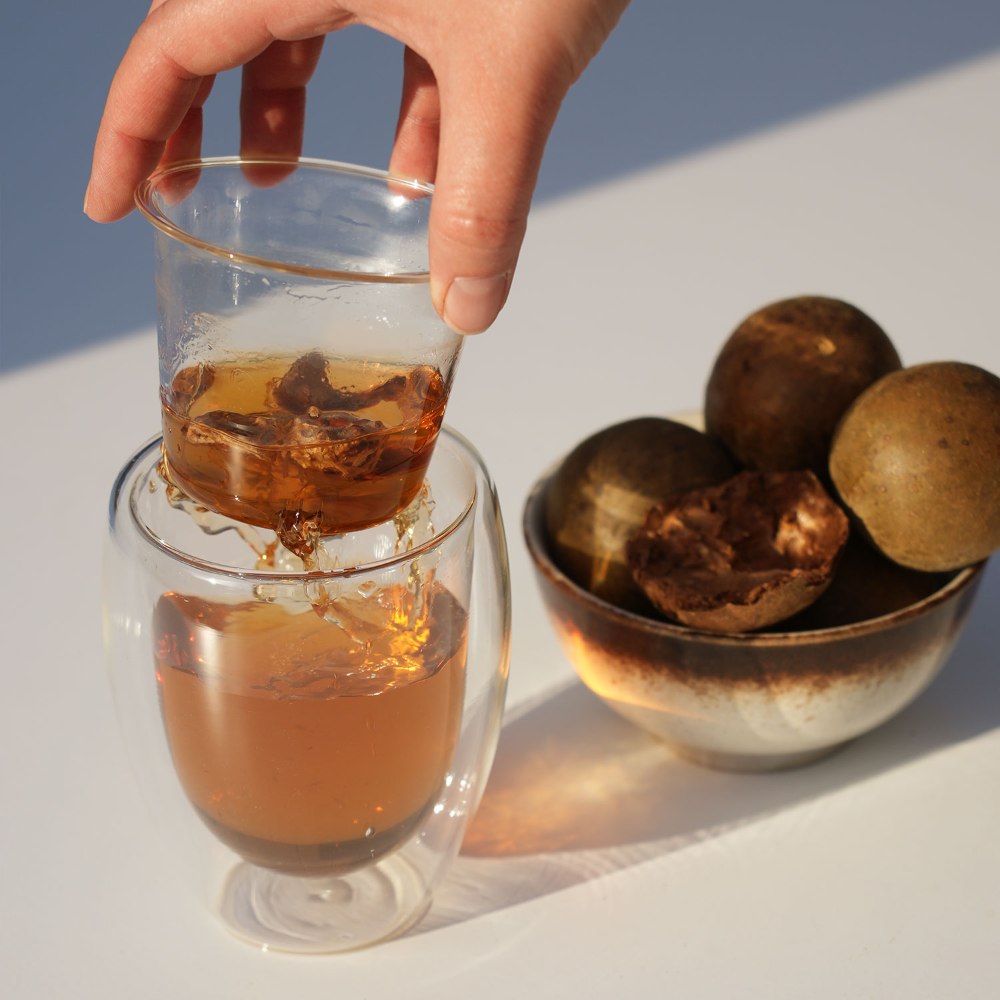
Monk fruit tea is sweet and round, with a deep, almost caramel or dried-fruit quality and a faintly cooling, liquorice-like note on the finish.

It is darker and richer than you might expect from something so sweet, closer to a gentle fruit cordial than to sugar water.

Some people drink it on its own as a naturally sweet treat; others use a little of it to sweeten other teas without reaching for sugar at all.

How to brew monk fruit tea

Monk fruit is forgiving and easy to brew. Here is the simple method:

Step What to Do
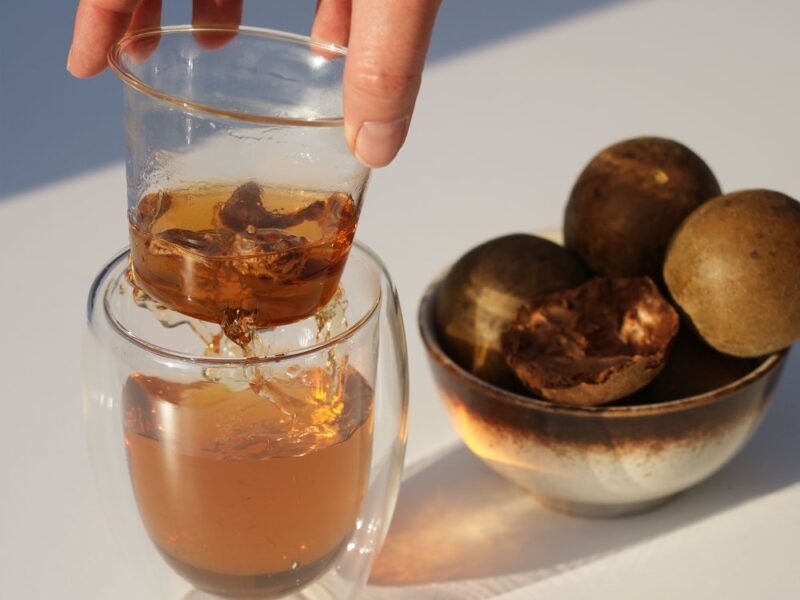
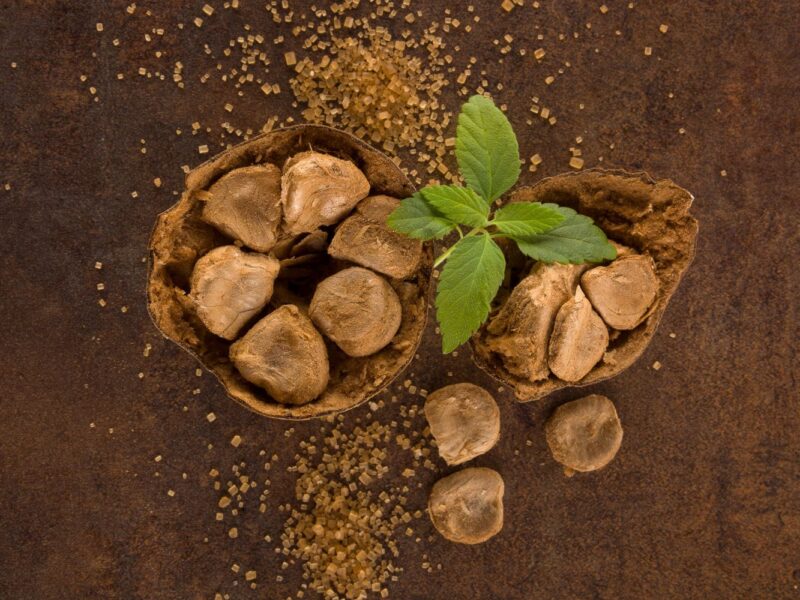
1. Break the fruit Take one dried monk fruit and crack it open into a few pieces, shell and all. A whole fruit makes a large pot, so half a fruit is plenty for one or two cups.
2. Add hot water Place the pieces in a teapot or saucepan and pour over freshly boiled water, around 200ml per cup.
3. Steep or simmer For a quick cup, steep for 5 to 10 minutes. For a deeper, sweeter brew, simmer gently for 10 to 15 minutes.
4. Strain and enjoy Pour through a strainer. The liquor will be a rich amber-brown and pleasantly sweet, with no need for anything added.

A few ways to make it your own: chill the brew over ice for a naturally sweet iced tea, add a slice of ginger or a few goji berries while it simmers, or brew it strong and use a splash to sweeten a plain green or black tea.

One dried fruit can often take a second steep, so do not throw it away after the first pot.

Why people drink monk fruit tea

The most straightforward reason is the obvious one: it is a warm, comforting, naturally sweet drink with no sugar and no caffeine, which is a rare and welcome combination.

For anyone trying to cut back on sugar without giving up the ritual of something sweet in the afternoon, it is a genuinely satisfying swap.

There is also a long tradition behind it. In China, luo han guo has been brewed for centuries as a soothing warm drink, particularly valued in the colder, drier months and traditionally associated with the throat and chest.

These are heritage uses rather than proven medical benefits, and monk fruit tea is best thought of as a lovely drink to enjoy rather than a remedy.

Monk fruit tea can be enjoyed as part of a healthy lifestyle, anyone with specific health concerns should consult a qualified healthcare professional.

Monk fruit versus other sweeteners

If you have looked into natural sweeteners, you have probably met stevia too. The two are often compared, and both are plant-derived and very sweet.

The difference most people notice is taste: stevia can carry a bitter aftertaste that some find off-putting, whereas monk fruit tends to taste cleaner and rounder. Monk fruit’s sweetness, again, comes from its mogrosides, and as a whole-fruit tea it brings that sweetness in its most natural form.

Compared with sugar, the appeal is simple. Sugar brings calories and a blood-sugar rise; a cup of monk fruit tea brings the sweetness without either.

As with anything, moderation is sensible, and the goal over time is often to enjoy sweetness in smaller amounts rather than to chase it.

Is monk fruit tea safe and caffeine-free?

Monk fruit has been consumed safely in China for centuries, and the concentrated extract has been granted “Generally Recognised as Safe” status by the US Food and Drug Administration and approved as a sweetener in countries including Japan, Canada and Australia.

European regulators have taken a more cautious view of the purified extract. There are no widely reported side effects from the fruit itself, though some blended sweetener products contain sugar alcohols like erythritol that can cause mild digestive discomfort in larger amounts, so it is always worth reading the label.

And yes, because it is a fruit infusion and not a true tea leaf, monk fruit tea is naturally caffeine-free.

Frequently asked questions

No. Monk fruit tea is made from a dried fruit, not a tea leaf, so it is naturally caffeine-free and can be enjoyed at any time of day, including before bed.

Its sweetness comes from natural compounds called mogrosides, not from sugar. The body does not process them as a carbohydrate, so the tea is naturally sweet while contributing virtually no sugar or calories.

Sweet and rounded, with a rich, almost caramel or dried-fruit character and a faint cooling, liquorice-like note on the finish. It is closer to a gentle fruit cordial than to sugar water.

Crack one dried monk fruit into pieces, add freshly boiled water (about 200ml per cup), and steep for 5 to 10 minutes or simmer for 10 to 15 for a deeper brew. Strain and enjoy. It needs no sweetening.

Often yes. A single dried fruit holds plenty of sweetness and will usually give a good second steep before its flavour fades.

Monk fruit has a long history of safe use, but as with any herbal tea it is sensible to check with your doctor or midwife if you are pregnant, breastfeeding or taking medication.

Not quite. Monk fruit sweetener is usually a concentrated extract blended with a bulking agent. Monk fruit tea is the whole dried fruit steeped in water, in its most natural form.

A naturally sweet way to drink the real thing

Monk fruit is the kind of tea we love at Teapro: nothing artificial, nothing added, just a remarkable fruit doing what it does naturally. It is proof that you do not need a sachet of sweetener to enjoy something genuinely sweet, you just need to understand what you are drinking.

Ready to taste it for yourself? You can shop our monk fruit tea here, dried whole so you get the fruit exactly as nature made it.

And if you would like to explore more teas that let the ingredient speak for itself, browse our Herbal Tea collection and our Caffeine-Free teas, or take the journey from tea drinker to tea pro with Become a Teapro, our 12-box guided tea education. The more you understand about what is in your cup, the better every cup tastes.

Loading...
Loading...
herbal tea gift box - herbalism
Price range: £19.50 through £36.50

Teapro co-founder. Favourite tea - Long Jing Dragon Well Green Tea. Obsessed with film, photography and travelling.

No Comments

Post A Comment