How to Brew Blooming Tea: Getting the Best Display and the Best Flavour

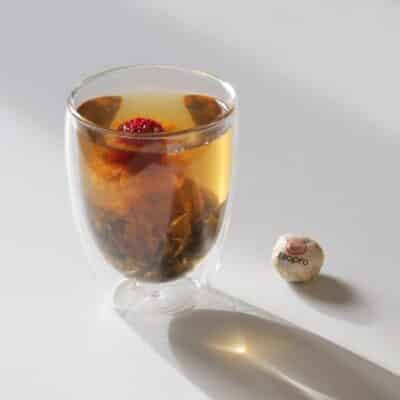
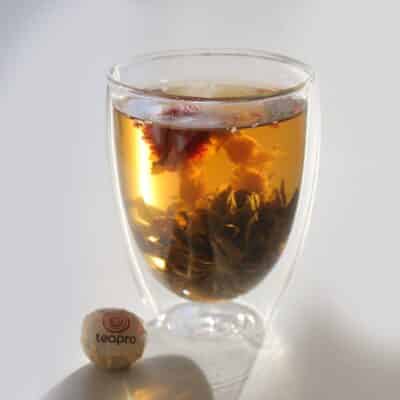
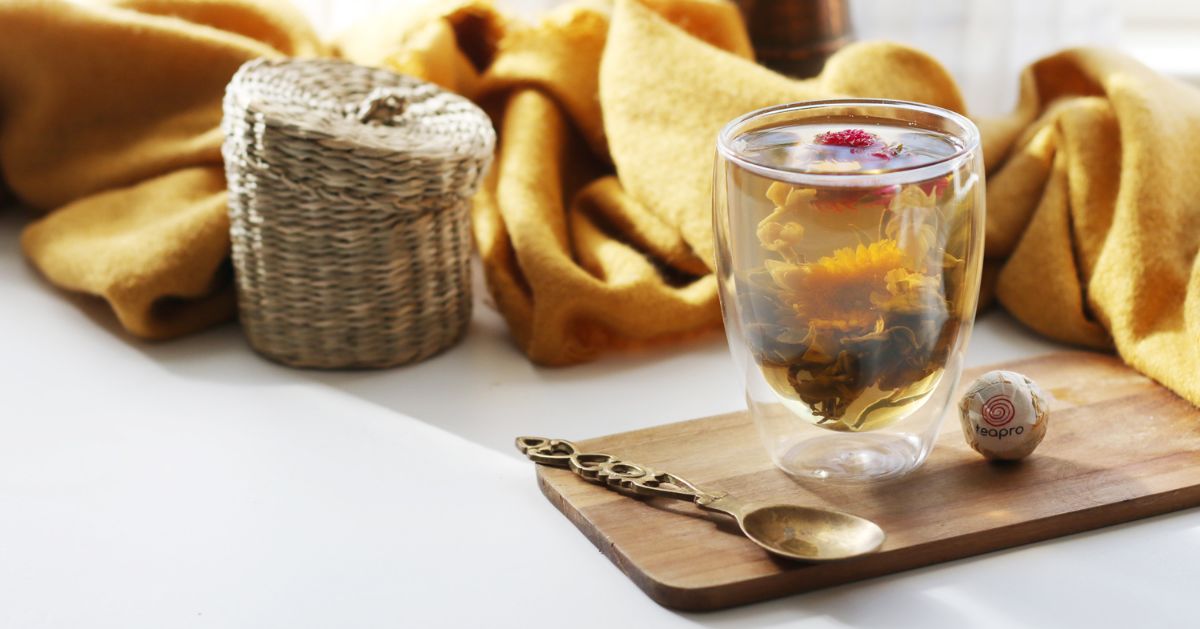
How to brew a blooming tea? There is a moment – a few seconds after you pour hot water over a blooming tea ball – when the bundle begins to unfurl. The tightly bound leaves loosen, a flower emerges, and the whole thing rises gently through the water like something waking up.

It is, genuinely, one of the most beautiful things you can watch happen in a teacup.

But here is the problem. Most people don’t really know how to brew blooming tea and end up either with something bitter and flat, or miss “the blooming moment” entirely.

Getting both the display and the flavour right at the same time is not difficult – once you understand what is actually happening in the cup. 

This guide will walk you through everything: temperature, vessel choice, timing, water quality, and how to coax the very best taste from a tea that is as much experience as it is drink.

If you want to understand what blooming tea actually is before you brew it, start with our complete guide: What is Flowering Tea? The Complete Guide. Come back here when you are ready to brew. 

Start with the right vessel – this is not optional 

Blooming tea is designed to be watched.

The entire point of the handcrafted bundle – leaves stitched around a dried flower – is that it performs as it brews.

If you brew it in an opaque mug, you lose the experience entirely.

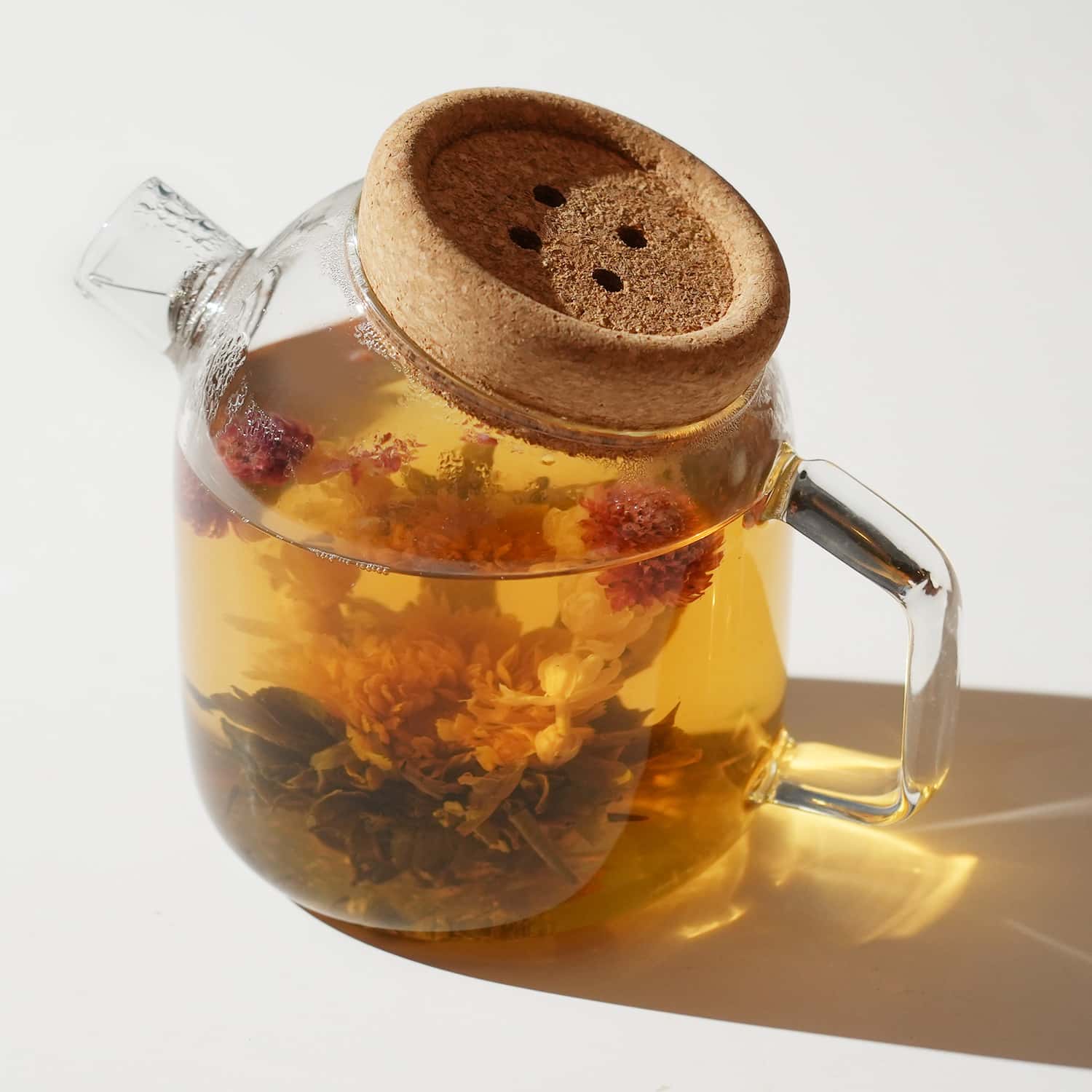
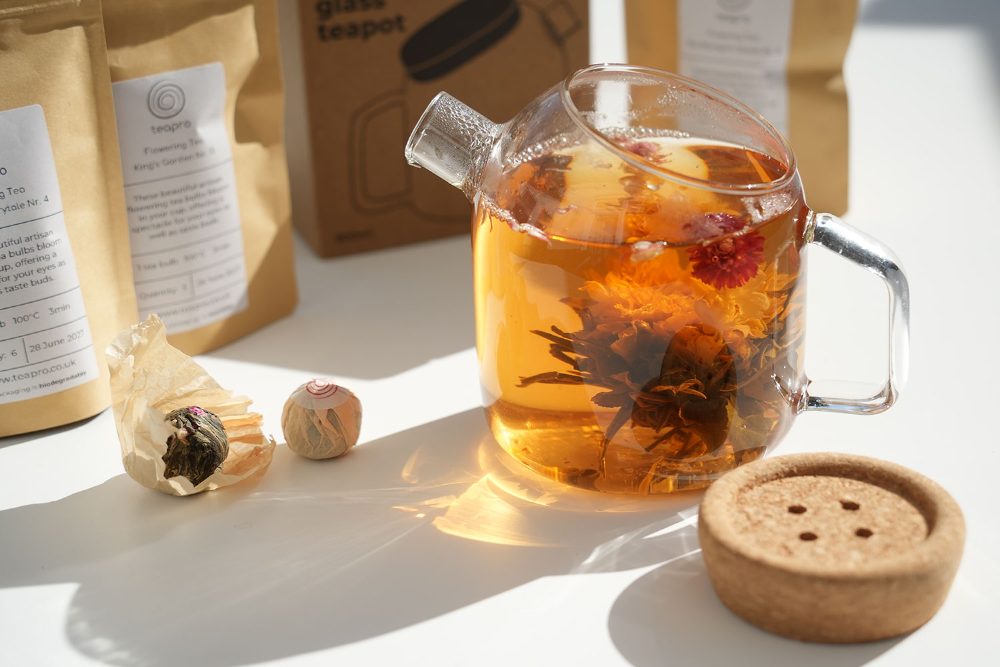
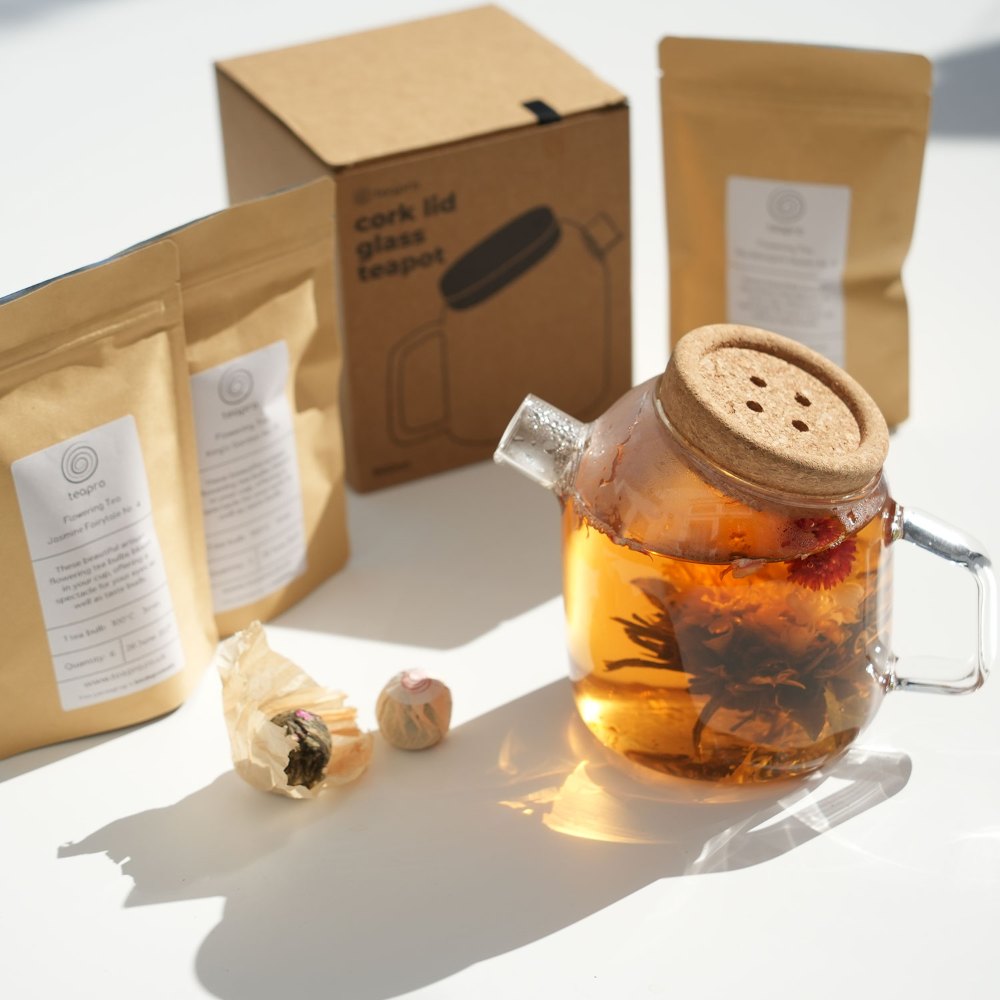
Use a glass teapot or a tall glass. Borosilicate glass is ideal because it handles heat without cracking.

You want something tall enough that the bloom has room to rise and open fully – a flat, wide vessel cuts the drama short.

A glass mug works at a pinch, but a tall glass teapot is the gold standard. 

Why does this matter for flavour too? Because a glass vessel lets you observe the colour of the brew as it steeps, which is one of the best indicators of when to stop. You are looking for a pale gold or amber colour. The moment it tips toward dark brown, you have gone too far. 

Water temperature: the single most important variable 

Blooming tea is most commonly built around white or green tea leaves. Both of these are sensitive to high temperatures.

Use boiling water – 100C – and you risk scorching the leaves before they have had a chance to open, producing a harsh, astringent brew that tastes nothing like it should. 

The correct temperature for most blooming teas is 80-85C. If you do not have a temperature-controlled kettle, boil the water and then let it stand for 3-4 minutes before pouring. This is enough to drop the temperature to the right range.

A quick temperature guide for how to brew blooming tea 

  • White tea base blooms: 75-80C 
  • Green tea base blooms: 80-85C 
  • Mixed or unknown base: 80C is a safe starting point 
  • Never use boiling water directly – the flavour will suffer 


The lower temperature is also kinder to the flower at the centre of the bloom. Delicate flowers – jasmine, osmanthus, marigold – can wilt and discolour if hit with water that is too hot.

The visual display is part of what you are paying for with a quality blooming tea. Protect it. 

How to place and pour – the technique that makes the difference 

Place the blooming tea ball in the bottom of your glass vessel before you pour. Do not drop it in from a height – set it down gently. The bundle is handmade and tightly wound, and a rough start can cause it to unfurl unevenly.

Pour the water slowly and steadily down the side of the glass, not directly onto the bundle.

This achieves two things: it avoids displacing the bloom before it has anchored itself, and it allows the heat to distribute evenly through the water before the leaves begin to absorb it.

flowering tea

Watch what happens in the first 30 seconds. The outer leaves will begin to loosen. Within a minute, the bundle will start to rise.

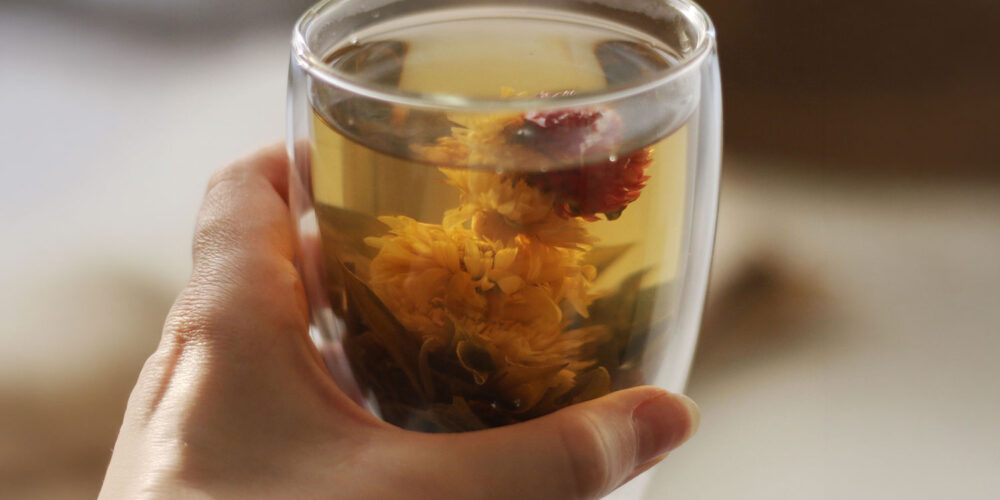
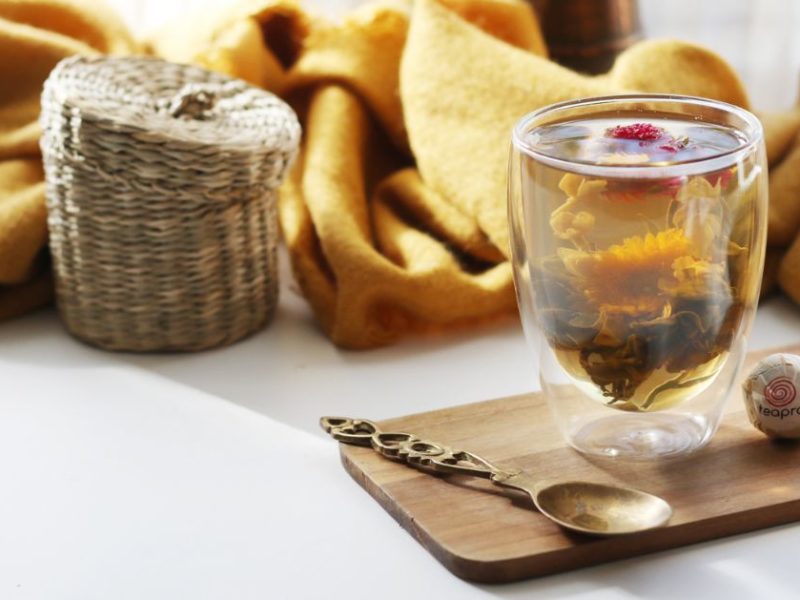
Within 2-3 minutes, the flower should be fully visible and the bloom should be open. This is your window for the best visual experience. 

Steeping time: when to drink, when to stop 

Most blooming teas are ready to drink after 3-5 minutes. The leaves will have opened fully, the colour of the liquor will be pale to medium gold, and the flavour will be at its cleanest and most delicate. 

Do not leave it much longer than 5 minutes for your first cup.

flowering tea - how to brew blooming tea

The longer white and green tea leaves steep – even at lower temperatures – the more they release tannins, and tannins at high concentrations produce bitterness.

The tea is still drinkable at 7-8 minutes, but you will notice a shift.

Signs the brew is ready 

  • The bloom is fully open and floating upright 
  • The liquor is pale gold or light amber – not dark 
  • The aroma is floral and light, not sharp or astringent 
  • The taste is clean, with a gentle sweetness and no harsh finish 

Signs you have over-brewed 

  • The liquor has gone a deep amber or brown 
  • The taste is noticeably bitter or dry at the back of the throat 
  • The aroma has sharpened from floral to tannic 


If you have over-brewed, do not discard the bloom. Add more hot water at the correct temperature and allow the remaining flavour to mellow. The second steep of a blooming tea is often softer and more approachable than the first.
 

Water quality: the part most people ignore 

The flavour of blooming tea is subtle. White and green tea bases do not have the robustness to overpower the water they are brewed in. If your tap water is heavily chlorinated or high in minerals, you will taste it. 

Filtered water makes a genuine difference here. It does not need to be expensive mineral water – a simple jug filter is enough to remove the chlorine that masks the floral notes you are trying to taste.

If you have ever brewed a high-quality tea and thought it tasted flat, water quality is often the culprit. 

Soft water produces a brighter, cleaner flavour. Hard water can create a slightly chalky finish that dulls the more delicate aromatic notes. If you are in a hard water area, filtered water is worth the effort. 

Loading...
Price range: £6.50 through £38.00
flowering teas
Price range: £6.50 through £38.00

Can you re-steep a blooming tea ball? 

Yes – and you should. A quality blooming tea ball can be steeped 2-3 times before the flavour fades completely. The second steep will be lighter in flavour and colour, which makes it ideal if you found the first steep a little strong. The flower will remain largely intact and the display continues. 

For the second steep, reduce the temperature slightly – drop to 75-78C – and pour again. Steep for 2-3 minutes. You will get a paler, more delicate cup that still carries the floral character. 

By the third steep, most of the flavour will be gone, but the bloom itself is still beautiful. Some people keep the wet bloom in a small dish of cold water for a few hours just to enjoy the visual.

Serving blooming tea: a few things worth knowing 

Blooming tea is traditionally served without milk – the whole point of the experience is the clarity of the liquor and the floating bloom. Milk would defeat both. 

It is caffeine-containing, particularly if the base is green tea, so it is worth factoring that in if you are serving it in the evening. A white tea base is lower in caffeine and a gentler option for later in the day. 

Blooming tea makes an extraordinary centrepiece for a dinner table or a gift. A clear glass teapot, a lit candle beneath it, and a rising bloom is one of the most visually striking things you can put in front of a guest.

It consistently surprises people who have never seen it before. 

flowering tea gift set - best flowering tea gift

The honest truth about blooming tea flavour and display 

Here is something worth understanding before you buy: the blooming tea brewing guide above will make the most of any bloom you use – but the quality of what you start with matters enormously.

Blooming tea is primarily a visual experience, and the flavour from commercially produced blooms can range from genuinely lovely to barely-there. 

A well-made bloom built on good white tea leaves will taste light, floral, and slightly sweet. A poorly made one will taste like warm, faintly scented water.

The difference comes down to the provenance of the leaves and whether artificial flavourings have been used to compensate for low-quality base material. 

This is the Teapro standard: the experience should be beautiful and the tea should taste like something worth drinking. Pure leaves, no artificial flavourings, and full transparency about what you are actually steeping. Both things are possible when the ingredients are honest. 

Loading...
magic tea gift box - tea gift sets - tea gifts
Price range: £20.00 through £37.00
flowering tea gift set
Price range: £45.00 through £50.00

Quick-reference blooming tea brewing guide 

Brewing FactorRecommendation
Vessel Tall glass teapot or glass mug - clear glass only
Water temperature 80-85°C (boil and rest for 3-4 minutes)
Water quality Filtered if possible
Steeping time 3-5 minutes for first steep
Re-steeping 2-3 times, lowering temperature slightly each time
Serving No milk, enjoy the display before you drink

 Frequently asked questions

Use water at 80-85C. Boil your kettle and let it rest for 3-4 minutes before pouring. Boiling water at 100C is too hot for the white and green tea leaves most blooming teas are built on – it scorches the leaves, dulls the flavour, and can damage the flower at the centre of the bloom.

Steep for 3-5 minutes for your first cup. The liquor should be pale to medium gold. If it has gone dark amber, you have left it too long. Do not worry – add a little more hot water and the flavour will soften. From the second steep onward, 2-3 minutes is usually enough.

Technically yes, but you will miss the point. The bloom is designed to be watched. Use a clear glass teapot or tall glass – borosilicate glass is best because it handles heat safely. If all you have is a mug, a clear glass one is better than ceramic or opaque porcelain. 

A good quality blooming tea ball can be steeped 2-3 times. Each steep produces a lighter, more delicate cup. Lower the temperature slightly with each re-steep – dropping to around 75-78C for the second and third – and shorten the steeping time to 2-3 minutes.

Yes. Most blooming teas are built on white or green tea leaves, both of which contain caffeine – though generally less than black tea or coffee. White tea base blooms tend to be lower in caffeine than green tea base blooms. If you are sensitive to caffeine, avoid brewing blooming tea in the evening. 

Bitterness in blooming tea is almost always caused by one of two things: water that is too hot, or steeping for too long. Both cause the leaves to release excess tannins. Try dropping your water temperature to 80C and pulling the cup after 3-4 minutes. If the problem persists, check your water quality – heavily mineralised tap water can also produce a harsh finish.

A well-brewed blooming tea should not need sweetening. The natural flavour – when the leaves are pure and the brewing is right – has a gentle floral sweetness of its own. If you find the flavour thin or flat, it is more likely a sign of low-quality leaves or over-brewing than a reason to add sweetener. That said, a small amount of honey in the second steep is a pleasant variation. 

Yes – cold-brewed blooming tea is a beautiful summer option. Place the bloom in cold filtered water and leave it in the fridge for 6-8 hours. The bloom will open slowly and the resulting liquor is very clean and delicate. The display is less dramatic in cold water, but the flavour is softer and naturally sweet. 

The most common flowers used in blooming tea are jasmine, osmanthus, globe amaranth, lily, and marigold. The choice of flower affects both the visual and the aroma of the brew. Jasmine adds a classic floral fragrance; osmanthus gives a subtle apricot note; globe amaranth produces a vivid pink colour in the liquor. For a full breakdown of what to expect, read our complete guide to flowering tea. 

It is one of the most striking tea gifts you can give. The visual element makes it genuinely memorable – watching the bloom open in a glass teapot is an experience most people have never had. A quality blooming tea paired with a glass teapot makes a thoughtful, beautiful, and educational gift that goes well beyond a standard box of teabags. 

Want to understand the full story of how blooming tea is made, where it comes from, and what to look for when you buy? Read our complete guide: What is Flowering Tea? The Complete Guide. 

Knowing what you are tasting – and why – is how you go from tea drinker to tea pro. That is what we are here for. 

About Teapro 

Teapro is a UK-based premium loose leaf tea brand. We source the purest single-origin teas and natural herb blends we can find. We believe artificial flavourings mask the real taste of tea – so wherever possible, we let the leaf speak for itself. 

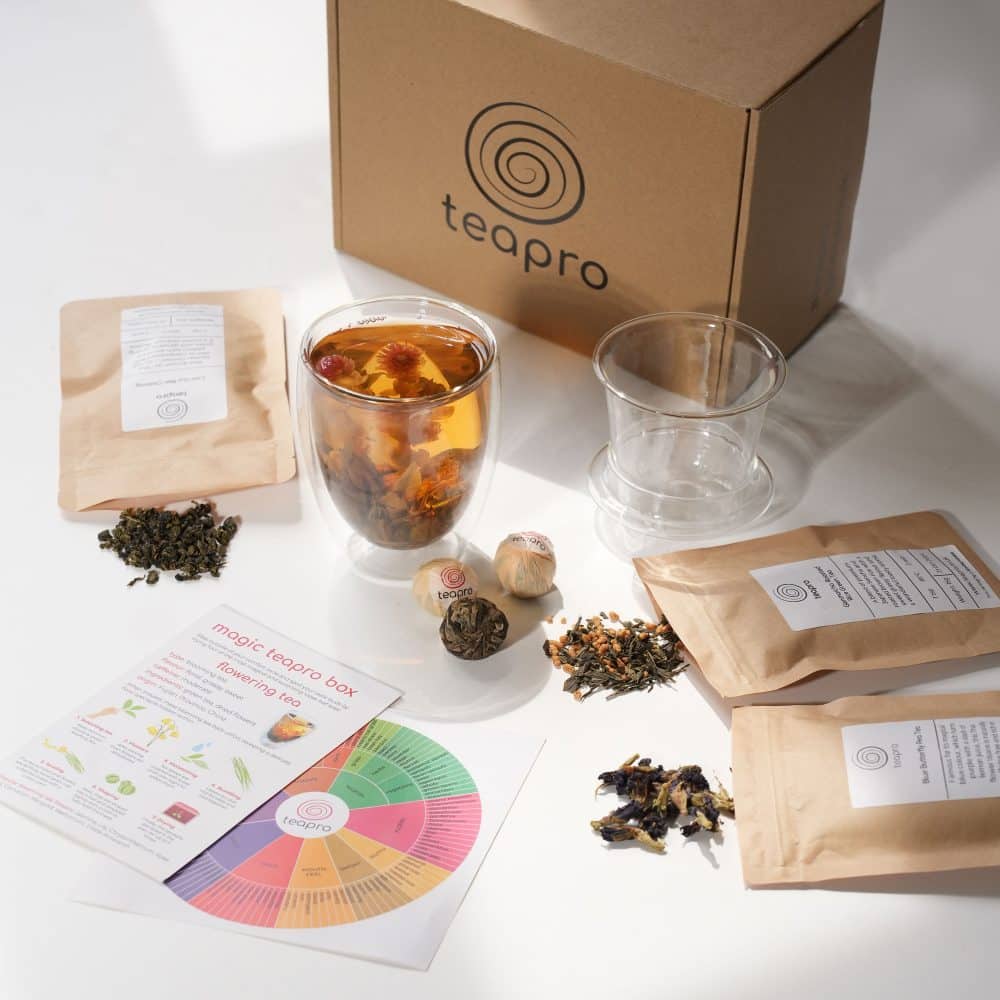
Our ‘Become a Teapro’ 12-box subscription is the only structured tea education programme of its kind in the UK – covering green, black, herbal, chai, oolong, pu-erh, yerba, matcha, fruit, white, magic and rooibos. The flowering teas are inside the “magic” tea box. 

Loading...
Loading...
magic tea gift box - tea gift sets - tea gifts
Price range: £20.00 through £37.00

Teapro co-founder. Favourite tea - Long Jing Dragon Well Green Tea. Obsessed with film, photography and travelling.

No Comments

Post A Comment