21 May Rooibos Tea Benefits: What the Science Says About Red Bush

If you’ve ever been handed a cup of rooibos and thought, “is this actually good for me?” – you’re asking exactly the right question.
The rooibos tea benefits conversation has exploded in wellness circles over the past few years, but the science behind red bush tea is often misrepresented.
Some claims go too far. Others undersell what is genuinely a remarkable plant.
At Teapro, we believe you deserve to understand what you’re drinking – not just enjoy it. So let’s look at what the research actually says about rooibos, what’s proven, what’s promising, and what’s still being studied.
What Makes Rooibos Different from Every Other Tea
Before we get into the benefits, one thing is worth understanding: rooibos is not a “true” tea.
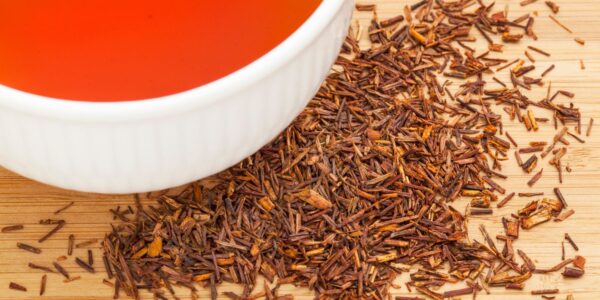
It’s an herbal tisane made from the leaves of Aspalathus linearis, a shrub that grows only in the Cederberg mountains of South Africa.
That narrow geographic origin matters – it means rooibos contains compounds found nowhere else on earth.
The two most notable are aspalathin and nothofagin – rare antioxidants that exist only in the rooibos plant. Scientists have looked for them in other plants and found nothing.
Alongside these, rooibos also contains well-studied antioxidants like quercetin, orientin, luteolin, and chrysoeriol. That combination is what makes the red bush tea benefits conversation so interesting.
If you’d like to learn more about Rooibos,
The Science Behind Rooibos Tea Benefits
A Rare and Powerful Antioxidant Profile
The headline finding on rooibos is consistently the same: it is rich in antioxidants, including compounds unique to this plant. Antioxidants neutralise free radicals – unstable molecules that damage cells, accelerate ageing, and play a role in chronic disease.
Research has shown that regular consumption of rooibos can meaningfully increase the body’s overall antioxidant capacity. The rare flavonoid aspalathin, found only in rooibos, is particularly studied for its ability to reduce oxidative stress – the cellular wear-and-tear that underlies many modern health concerns.
One important distinction worth knowing: green rooibos (unfermented) contains significantly more aspalathin than the red, fermented version most people are familiar with.
Fermentation develops the familiar earthy sweetness and deep red colour, but it also reduces aspalathin content. If antioxidant concentration is your priority, green rooibos is worth exploring.
Heart Health – the Most Studied Area
The rooibos and heart health research is among the most encouraging in the field. A widely referenced 2011 study tracked 40 adults who were at risk of cardiovascular disease.
After drinking rooibos daily for six weeks, participants showed meaningful improvements in their cholesterol profiles – including a reduction in LDL (bad) cholesterol and an increase in HDL (good) cholesterol.
The mechanism appears to involve chrysoeriol, a flavonoid in rooibos that helps inhibit angiotensin-converting enzymes (ACEs). ACEs are associated with elevated blood pressure – the same pathway targeted by a common class of blood pressure medications. Rooibos appears to have a mild, natural ACE-inhibiting effect.
It’s worth being clear: rooibos is not a treatment for cardiovascular disease. But as part of a health-conscious daily routine, the evidence is genuinely encouraging.
Blood Sugar and Metabolic Health
Aspalathin – that rare, rooibos-exclusive antioxidant – has attracted significant attention for its potential role in metabolic health.
Research from Stellenbosch University found that aspalathin can improve glucose uptake and insulin secretion, a dual action that helps to stabilise blood sugar levels.
A 2024 and 2025 research review by the South African Rooibos Council (SARC) highlighted consistent findings across animal and mechanistic studies: rooibos extracts showed promise in improving glucose tolerance, reducing insulin resistance, and moderating the blood sugar spikes that occur after meals.
The honest caveat: most of this research has been conducted in laboratory and animal settings. Human clinical trials are in progress – researchers at CPUT (Cape Peninsula University of Technology) are now leading the first large-scale human studies on rooibos and cardiovascular and metabolic health.
The direction of the research is encouraging, but definitive conclusions for humans are still ahead.
Anti-Inflammatory Properties
Chronic low-grade inflammation is increasingly linked to a range of modern health conditions – from joint pain to digestive issues to accelerated ageing.
Rooibos contains multiple polyphenols with anti-inflammatory properties, and research has consistently found it may help moderate inflammatory pathways in the body.
A 2024 systematic literature review (published in the peer-reviewed journal Beverages) examined all human studies on rooibos and health outcomes through October 2024.
The review found associations between rooibos consumption and improved cardiovascular, metabolic, and anti-inflammatory outcomes – while noting that more large-scale human trials are needed to establish causality definitively.
Digestive Comfort
Rooibos is very low in tannins – significantly lower than black or green tea. This matters because high tannin intake can cause nausea, interfere with iron absorption, and irritate the gut lining in sensitive individuals. Rooibos sidesteps these concerns almost entirely.
Traditionally across South Africa, rooibos has long been used to ease infant colic, stomach cramps, and digestive discomfort. While formal clinical studies on this specific use are limited, the anti-inflammatory and antispasmodic properties of rooibos polyphenols offer a plausible mechanism – and its low tannin content makes it among the gentlest options in any tea cupboard.
Stress and Calm – Without the Caffeine
One of the most practical rooibos tea benefits is simply this: it is completely caffeine-free, naturally. Not decaffeinated through a chemical process – never caffeinated to begin with.
This makes rooibos genuinely suitable for any time of day, including late evenings, and for people who are sensitive to caffeine or actively reducing their intake.
Many people also report that rooibos has a calming effect. Research into its potential anxiolytic (anxiety-reducing) properties is still in early stages, but the absence of caffeine alone makes it a useful tool for winding down without sacrificing a warm, satisfying drink.
Skin and Ageing
Oxidative stress is one of the main drivers of skin ageing. The antioxidant activity in rooibos – particularly from quercetin and aspalathin – has made it a growing area of interest in dermatological research.
Early studies have found potential associations between rooibos and improved skin health outcomes, and rooibos extracts increasingly appear in skincare formulations.
Drinking rooibos regularly as part of a wellness ritual won’t replace a good skincare routine – but the research suggests it contributes meaningfully to the internal antioxidant activity that supports healthy skin over time.
Rooibos Health Benefits at a Glance
| Health Focus | Key Active Compounds | What the Science Says (Proven & Promising) | Current Research Status |
|---|---|---|---|
| Antioxidant Support | Aspalathin, Nothofagin, Quercetin | Neutralises free radicals and increases the body's overall antioxidant capacity. Reduces cellular oxidative stress. |
Strong.
Consistently proven to increase antioxidant capacity in the body.
|
| Heart Health | Chrysoeriol | Helps improve cholesterol profiles (reduces LDL/bad cholesterol, increases HDL/good cholesterol). Shows a mild, natural ACE-inhibiting effect to help manage blood pressure. |
Encouraging.
Backed by a notable 6-week human study on adults at risk of cardiovascular disease.
|
| Blood Sugar & Metabolic Health | Aspalathin | Improves glucose uptake, enhances insulin secretion, and helps moderate post-meal blood sugar spikes. |
Promising.
Well-documented in animal and laboratory settings; large-scale human trials are currently underway.
|
| Inflammation | Diverse Polyphenols | Helps moderate inflammatory pathways, which may aid in managing chronic low-grade inflammation. |
Positive.
Supported by a 2024 systematic literature review of human data through October 2024.
|
| Stress & Sleep Quality | None (Naturally Caffeine-Free) | Being 100% naturally caffeine-free makes it a perfect tool for winding down and supporting sleep without chemical decaffeination. |
Practical / Early Stage.
The physical absence of caffeine is a concrete benefit; direct anxiety-reducing studies are in early phases.
|
| Digestive Comfort | Low Tannins, Antispasmodic Polyphenols | Extremely gentle on the gut. Low tannin levels prevent nausea and won't interfere with iron absorption or irritate sensitive stomach linings. |
Mechanistic & Anecdotal.
Long history of traditional use for colic and cramps; low tannin levels are a verified physical fact.
|
| Skin & Ageing | Quercetin, Aspalathin | Contributes to internal antioxidant activity that combats the oxidative stress responsible for skin ageing. |
Early Stage.
Potential associations found in early dermatological and formulation research.
|
Green Rooibos vs Red Rooibos: Which Is Better for You?
This is a question worth answering clearly. Both types come from the same plant – the difference is process.
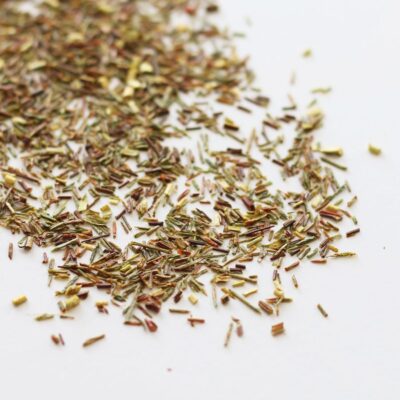
Green rooibos is unfermented – harvested and dried quickly to preserve more of its original compounds.
The result is a lighter, more grassy flavour and a significantly higher aspalathin content. Fermentation can reduce aspalathin by up to 90%.
If your priority is maximum antioxidant concentration, green rooibos is the stronger choice.
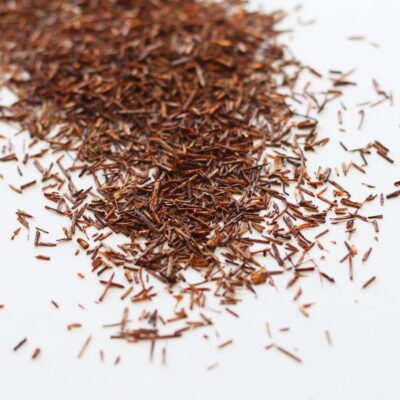
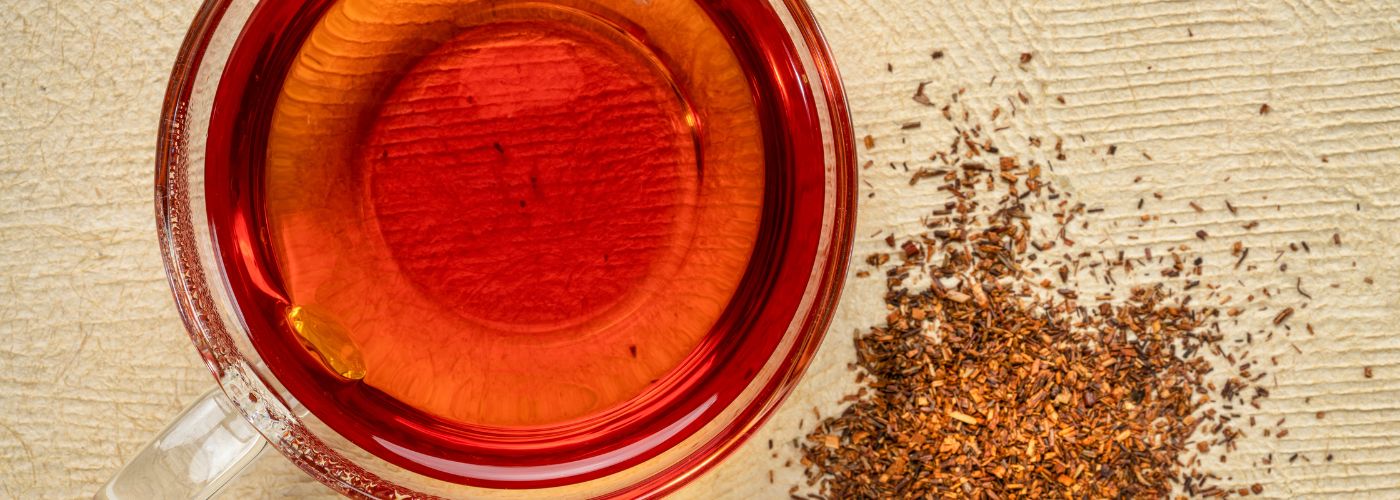
Red rooibos is fermented and oxidised, which develops its familiar earthy, sweet, slightly woody flavour.
It’s what most people picture when they think of rooibos.
If you prefer the classic flavour and are drinking rooibos as part of a balanced routine, red rooibos still delivers a meaningful polyphenol profile and all the benefits of being caffeine-free and low in tannins.
| Feature | Green Rooibos | Red Rooibos |
|---|---|---|
| Processing | Unfermented; harvested and dried quickly. | Fermented and oxidised. |
| Flavour Profile | Light, grassy, and fresh. | Earthy, sweet, and slightly woody. |
| Aspalathin Content |
Maximum concentration
(Preserves up to 90% more than red).
|
Lower (Fermentation reduces aspalathin content significantly). |
| Best For | Daily wellness routines prioritising peak antioxidant density. | Traditional enjoyment, natural sweetness, and comforting caffeine-free rituals. |
What the Research Doesn’t Say
Intellectual honesty is part of how we do things at Teapro.
So it’s worth being clear on what is not yet proven:
Rooibos is not a treatment for diabetes, heart disease, or any other condition.
Most of the metabolic and cancer-related research has been conducted on animals or in test tubes. Human clinical evidence is growing but not yet conclusive on many fronts.
Claims that rooibos “cures” anything should be treated with healthy scepticism.
What we can say with confidence is this: rooibos is a safe, naturally caffeine-free herbal tea with a genuinely interesting and unique antioxidant profile. The research direction is consistently positive, and it is an excellent daily addition to a health-conscious lifestyle.
Frequently Asked Questions
Rooibos is rich in antioxidants – including aspalathin, a compound found only in the rooibos plant – and research suggests it may support heart health, help stabilise blood sugar levels, reduce inflammation, and aid digestive comfort. It is also completely caffeine-free, making it suitable for any time of day. For a full breakdown, see the science section above.
Yes – rooibos is considered safe for daily consumption and contains no caffeine, very low tannins, and no artificial additives (in its pure form). It is suitable for adults, older children, and even breastfeeding mothers. There is no widely established upper limit for daily intake in healthy adults.
No. Rooibos is naturally and completely caffeine-free – not decaffeinated after the fact, but simply never caffeinated. This makes it one of the most versatile teas for drinking throughout the day, including in the evening.
Aspalathin is a rare antioxidant flavonoid found exclusively in the rooibos plant. It is not found in any other known plant. Research has linked it to improvements in glucose uptake, insulin sensitivity, and blood sugar stabilisation, as well as broader antioxidant and anti-inflammatory effects. Green (unfermented) rooibos contains significantly more aspalathin than red rooibos.
Green rooibos retains more aspalathin because it skips the fermentation process – fermentation can reduce aspalathin content by up to 90%. If maximising antioxidant intake is your goal, green rooibos has an edge. That said, red rooibos still contains meaningful polyphenols, tastes wonderful, and carries all the same caffeine-free, low-tannin benefits. Neither is wrong – it comes down to what you value in your cup.
Rooibos is not a sedative, but its complete lack of caffeine makes it a genuinely useful evening drink. Unlike black or green tea, you can enjoy a full cup of rooibos after dinner without worrying about sleep disruption. Some people find its warm, slightly sweet character an effective part of a wind-down routine.
They are quite different. Green tea (from the Camellia sinensis plant) is well-studied for its EGCG content and contains caffeine. Rooibos comes from a completely different plant, contains no caffeine, and is the only source of aspalathin. Both are rich in antioxidants, but their specific compounds and mechanisms are distinct. They complement each other well as part of a varied tea routine rather than competing directly.
There is no strong clinical evidence that rooibos directly causes weight loss. However, replacing sugary drinks or high-calorie beverages with plain rooibos (which has zero calories) is a straightforward and enjoyable swap. Some early research has explored rooibos and its effect on fat cell formation, but this is not yet established in human trials.
Our Complete Guide to Rooibos Tea covers everything from the Cederberg mountains of South Africa to step-by-step brewing instructions and tasting notes.
At Teapro, we source pure, single-origin rooibos – no artificial flavourings, no blending to mask the leaf. We believe the real taste of red bush tea is worth knowing.
And if you want the full story on what rooibos is, where it comes from, and how to brew it well, start with our Complete Guide to Rooibos Tea first.

Teapro co-founder. Favourite tea - Long Jing Dragon Well Green Tea. Obsessed with film, photography and travelling.


No Comments