05 Aug Green Tea Taste and Benefits: What Does Green Tea Actually Taste Like?
If you have only ever tried a tired, bitter bag of green tea from a corner shop’s bargain bin, it is easy to wonder what all the fuss is about. But ask any tea lover what does green tea taste like, and you will get a much more interesting answer than ‘bitter’.
Done well, green tea is grassy, sweet, savoury and even a little oceanic, all at once. Here is what green tea actually tastes like, why the benefits of green tea keep coming up in wellness conversations, and how to brew a cup worth genuinely enjoying.
Contents
What is Green tea?
Green tea vs regular tea
What does Green tea taste like?
Why does Green tea taste different depending on type?
5 Green tea varieties to try
What are the benefits of Green tea?
Pros and Cons of Green tea
Is bottled or flavoured Green tea good for you?
How to flavour Green tea naturally
How to cold brew Green tea
Can you eat Green tea leaves?
Frequently asked questions
Final thoughts
What is green tea?
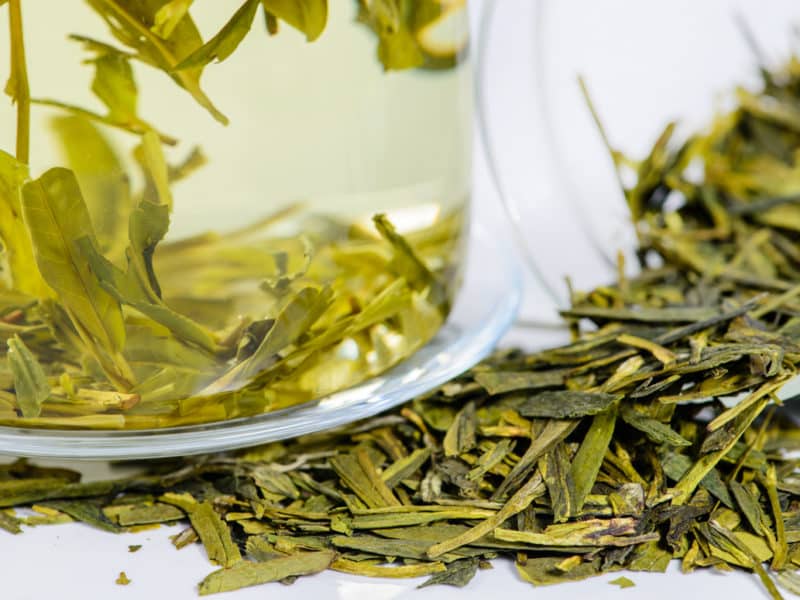
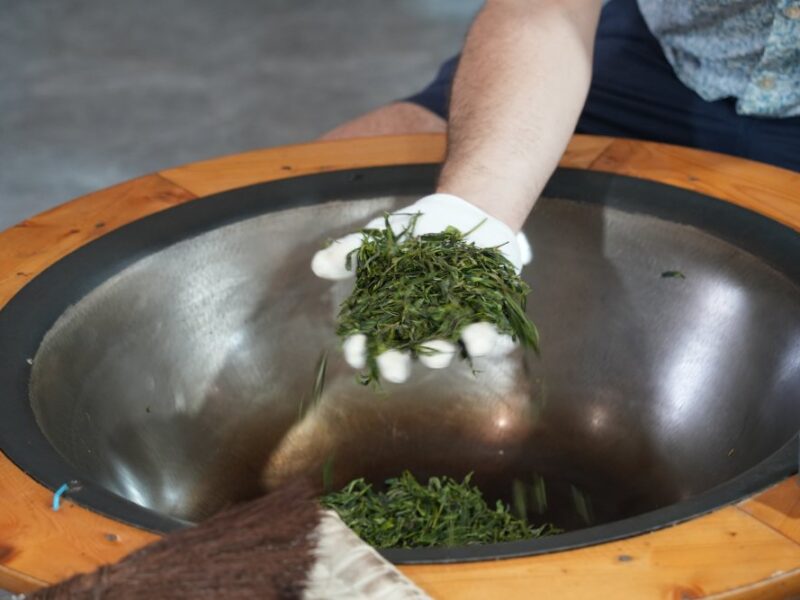
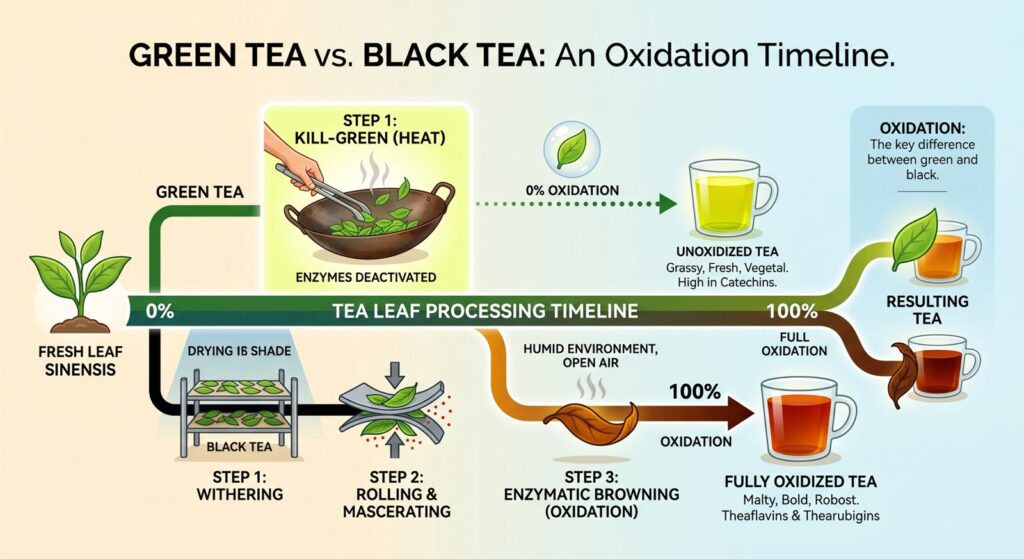
Green tea comes from the same plant as black, white and oolong tea, Camellia sinensis, but the leaves are picked and quickly heated, either by steaming or pan-firing, straight after harvest.
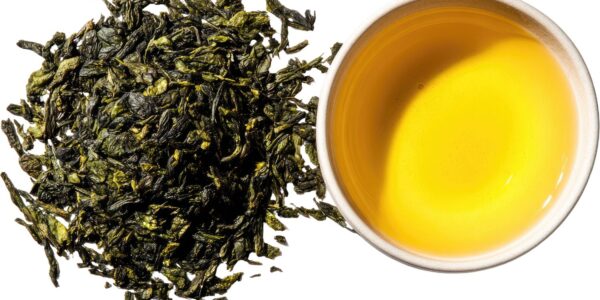
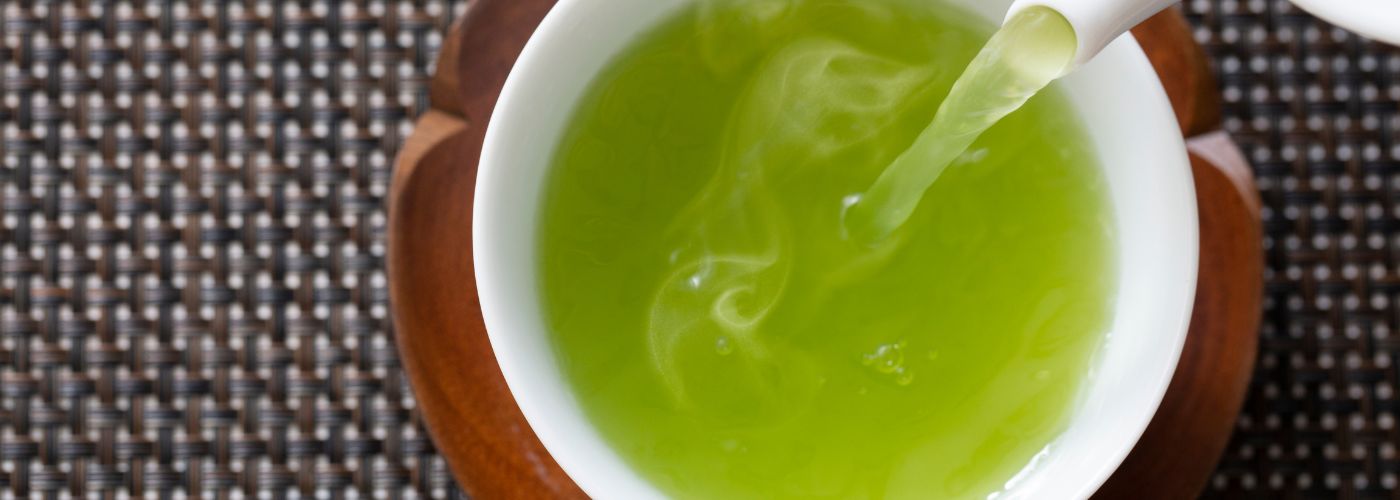
This stops the natural oxidation process that turns tea leaves darker and more robust in flavour, which is why green tea keeps its fresh, vegetal character and pale green-gold colour in the cup.
Green Tea vs Regular Tea
When people ask about green tea vs regular tea, they usually mean green tea versus traditional black tea, since both come from the same plant.
The key difference is oxidation.
Black tea is fully oxidised, giving it a darker colour, bolder body and often a maltier, more robust flavour.
Green tea is minimally oxidised, which preserves its lighter colour, fresher taste, and typically slightly lower caffeine content than a strong black tea.
Neither is inherently ‘better’ than the other, it really comes down to the flavour and ritual you’re after.
If you’d like to explore more about how these teas are grown, how they taste, and how to brew them properly, our full guides on Taiping Houkui (Monkey King) and Clouds and Mist cover each in detail.
What Does Green Tea Taste Like?
So, what does green tea taste like?
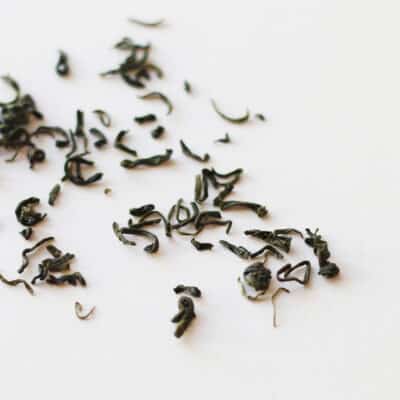
At its best, green tea taste is grassy and vegetal, often with notes of steamed spinach, sweet chestnut, or fresh-cut hay, alongside a natural sweetness and a light savoury, umami quality.
It should never be simply bitter.
Bitterness in green tea usually points to water that was too hot, or leaves that were steeped for too long, rather than being a natural characteristic of the tea itself.
Good quality, well-brewed green tea is genuinely delicious rather than something to push through for the health benefits.
Once you find a green tea that tastes good to your own palate, whether that’s a delicate Japanese sencha or a nutty, toasted Chinese green, the whole experience changes.
Why Does Green Tea Taste Different Depending on Type?
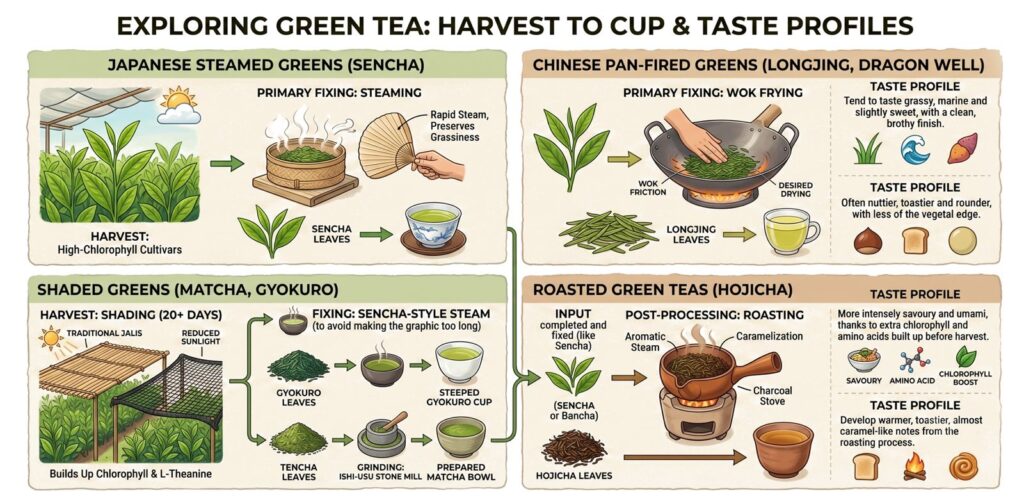
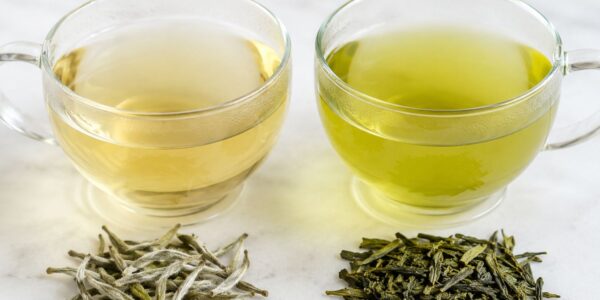
Green tea taste varies enormously depending on origin and processing style, which is part of what makes it such a rewarding tea to explore:
| Green Tea Style | Taste Profile |
|---|---|
| Japanese Steamed Greens (Sencha) | Tend to taste grassy, marine and slightly sweet, with a clean, brothy finish. |
| Chinese Pan-Fired Greens (Longjing, Dragon Well) | Often nuttier, toastier and rounder, with less of the vegetal edge. |
| Shaded Greens (Matcha, Gyokuro) | More intensely savoury and umami, thanks to extra chlorophyll and amino acids built up before harvest. |
| Roasted Green Teas | Develop warmer, toastier, almost caramel-like notes from the roasting process. |
This is exactly why ‘what does green tea taste like’ doesn’t have one single answer. The characteristics of green tea change with origin, cultivar, harvest time and how it’s processed, which is part of the fun of trying a few different styles.
5 Green Tea Varieties to Try
If you would like to taste the range for yourself, here are five green teas worth exploring, each with its own character:
| Green Tea | Description |
|---|---|
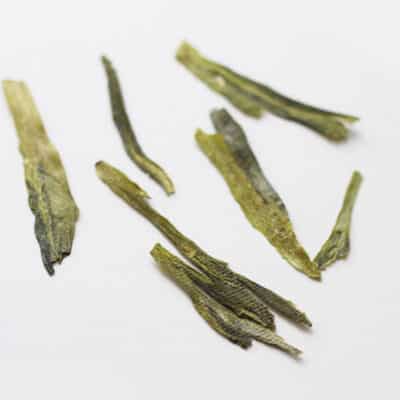
| Dragon Well (Longjing) | China's most celebrated green tea, hand-picked in spring from young, tender buds around Hangzhou's West Lake, then pan-fired into flat, spear-shaped leaves. Smooth and nutty, with a signature toasted chestnut note and a clean, refreshing finish. |
| Taiping Houkui (Monkey King) | A striking green tea from the Huang Shan mountains in Anhui province, known for its long, flat pressed leaves that unfurl dramatically as they steep. Light and floral, with a natural orchid aroma and a soft, sweet finish. |
| Clouds and Mist (Yun Wu) | A traditional Chinese tribute tea grown high in the misty mountains of Ya'an, Sichuan, once served to the emperor. Sweet and earthy, with roasted, nutty notes and a gentle hint of smokiness. |
| Gyokuro | Japan's highest-grade green tea, shade-grown for around three weeks before harvest to boost sweetness and umami. Rich, smooth and savoury, with a deep, fresh grass aroma, best brewed at a cooler temperature to bring out its natural sweetness. |
| Genmaicha | A comforting Japanese blend of green tea and roasted rice, some of which pops during roasting, giving it the nickname 'popcorn tea'. Mellow and nutty, with a toasty aroma that pairs well with food. |
Whichever style you start with, each brings something different to the cup, from Dragon Well’s toasty depth to Gyokuro’s rich umami sweetness.
If you’d like to explore either one in more depth, from where it’s grown to exactly how to brew it, our dedicated guides on Dragon Well and Gyokuro cover everything you need to know.
What Are the Benefits of Green Tea?
Alongside its flavour, green tea benefits are a big part of why so many people ask is green tea good for you.
Green tea naturally contains catechins, a group of antioxidants, including EGCG, which have been widely studied for their potential role in supporting general wellbeing as part of a balanced diet and lifestyle.
It also contains L-theanine, an amino acid that many people associate with a calm, focused feeling alongside its naturally occurring caffeine.
| Benefit | What It Means |
|---|---|
| Hydration | Contributes to your daily fluid intake, and is naturally low in calories when enjoyed without milk or sugar. |
| Antioxidants | Rich in polyphenols and catechins, which are widely studied antioxidant compounds. |
| L-Theanine and Caffeine | Contains L-theanine alongside a moderate amount of natural caffeine, often described as giving a steadier feeling than coffee. |
| Ritual Alternative | A satisfying, ritual-led alternative to sugary or highly processed drinks. |
These are general wellbeing associations rather than medical claims, and green tea should be enjoyed as part of an overall varied, balanced diet rather than as a treatment for any health condition.
If you have any specific health concerns, such as whether it’s safe to drink green tea while pregnant, it’s always best to check with your doctor or pharmacist.
Pros and Cons of Green Tea
Like any tea, there are a few pros and cons of green tea worth knowing about:
| Type | Details |
|---|---|
| Pro | A wide range of flavours to explore, from grassy and marine to nutty and roasted. |
| Pro | Naturally calorie-free when enjoyed without milk or sugar. |
| Pro | Contains L-theanine alongside its natural caffeine, which many people find gives a steadier feeling. |
| Con | Lower quality or over-steeped green tea can taste bitter or astringent. |
| Con | Still contains natural caffeine, so isn't suitable for everyone, particularly late in the day or during pregnancy without checking with a health professional first. |
Is Bottled or Flavoured Green Tea Good for You?
Is bottled green tea good for you, or is flavoured green tea healthy? This really depends on what’s been added.
Many bottled and flavoured green teas contain added sugar, sweeteners or artificial flavourings, which changes the overall picture considerably compared to a cup of pure, unsweetened loose leaf green tea.
At Teapro, we always favour pure, single-origin green tea with no artificial flavourings, so wherever possible, you’re tasting the leaf itself rather than an additive designed to mask it.
How to Flavour Green Tea Naturally
If you’d like to know how to flavour green tea without reaching for anything artificial, there are plenty of natural options:
| Method | How to Use It |
|---|---|
| Ginger or Citrus Peel | A slice of fresh ginger or a twist of citrus peel steeped alongside the leaves. |
| Fresh Mint | A few fresh mint leaves for a cooling, aromatic cup, similar to a classic green tea and mint blend. |
| Raw Honey | A touch of raw honey once brewed, stirred in off the leaf. |
| Cold Brewing | Steeping overnight in the fridge, which naturally softens bitterness and brings out more natural sweetness. |
How to Cold Brew Green Tea
Cold brewing is one of the easiest ways to enjoy a naturally sweeter, less bitter cup of green tea, since the cooler water draws out less of the tannins responsible for astringency.
Here is how to cold brew green tea at home:
| Step | What to Do |
|---|---|
| Step 1 | Add around 2 to 3 grams of loose leaf green tea (roughly one heaped teaspoon) per 250ml of cold or room temperature water. |
| Step 2 | Use filtered water where possible, since it will not compete with the tea's natural flavour. |
| Step 3 | Steep in the fridge overnight (although I tested cold-brewing for 2 & 4 hours too - check the video for results). |
| Step 4 | Strain the leaves once brewed. You can store the tea in the fridge for up to 2 to 3 days. |
| Step 5 | You can reuse the same leaves for a second cold steep, they will continue to release flavour, but it will be more subtle the second time round. |
Delicate green teas such as Gyokuro or Dragon Well are particularly well suited to cold brewing, since the lower temperature draws out their natural sweetness and umami character without any of the bitterness that can come from over-steeping in hot water.
Want to dive deeper into techniques? Read our complete guide to cold brewing tea at home.
Can You Eat Green Tea Leaves?
Is it okay to eat green tea leaves?
This really depends on the tea.
Traditionally, it is Longjing (Dragon Well) that is most associated with this practice, since it is made from very young, tender buds and leaf tips, hand-picked in early spring, which makes the leaf naturally soft enough to eat after steeping.
In some culinary traditions, brewed Longjing leaves are even used in salads or as a garnish.
Most other green teas use slightly more mature leaves, which tend to be fibrous and bitter on their own, so with those varieties, most people prefer to simply enjoy the brewed tea rather than the leaves themselves.
For a full breakdown of green tea types, origins and step-by-step brewing guidance, read our complete guide to Green Tea.
Frequently asked questions
Well-brewed green tea tastes grassy, vegetal and lightly sweet, often with savoury, umami notes. It should never taste simply bitter, that usually means the water was too hot or the tea was steeped too long.
Green tea naturally contains catechins and L-theanine, and contributes to your daily fluid intake as part of a balanced diet. It’s best enjoyed as part of an overall healthy lifestyle rather than viewed as a treatment for any condition.
Enjoyed without added sugar, green tea can be a satisfying, low-calorie part of a balanced diet. As with any caffeinated drink, moderation is key, and it’s worth checking with a health professional if you have specific concerns.
Green tea and black tea come from the same plant, but green tea is minimally oxidised, giving it a lighter colour and fresher, grassier flavour, while black tea is fully oxidised for a bolder, maltier taste.
Good quality green tea often has a natural, gentle sweetness, particularly in shaded styles like gyokuro, alongside its grassy and savoury notes. Bitterness is usually a brewing issue rather than a natural trait.
It depends on the tea. Longjing (Dragon Well) is traditionally the exception, since it’s made from very young, tender buds that are soft enough to eat after steeping. Most other green teas use slightly more mature leaves, which are fibrous and bitter, so they’re best left in the pot.
Yes. Steeping loose leaf green tea in cold water in the fridge for 6 to 12 hours produces a naturally sweeter, less bitter cup, since the cooler temperature draws out less tannin. It works particularly well with delicate teas like Gyokuro or Dragon Well.
Final Thoughts
Green tea taste is far more varied and enjoyable than its reputation for bitterness suggests, and the benefits of green tea are part of what makes it such a satisfying everyday ritual.
The secret to loving green tea is almost always down to quality leaf and careful brewing, cooler water, shorter steeps, and pure, single-origin tea rather than anything artificially flavoured.
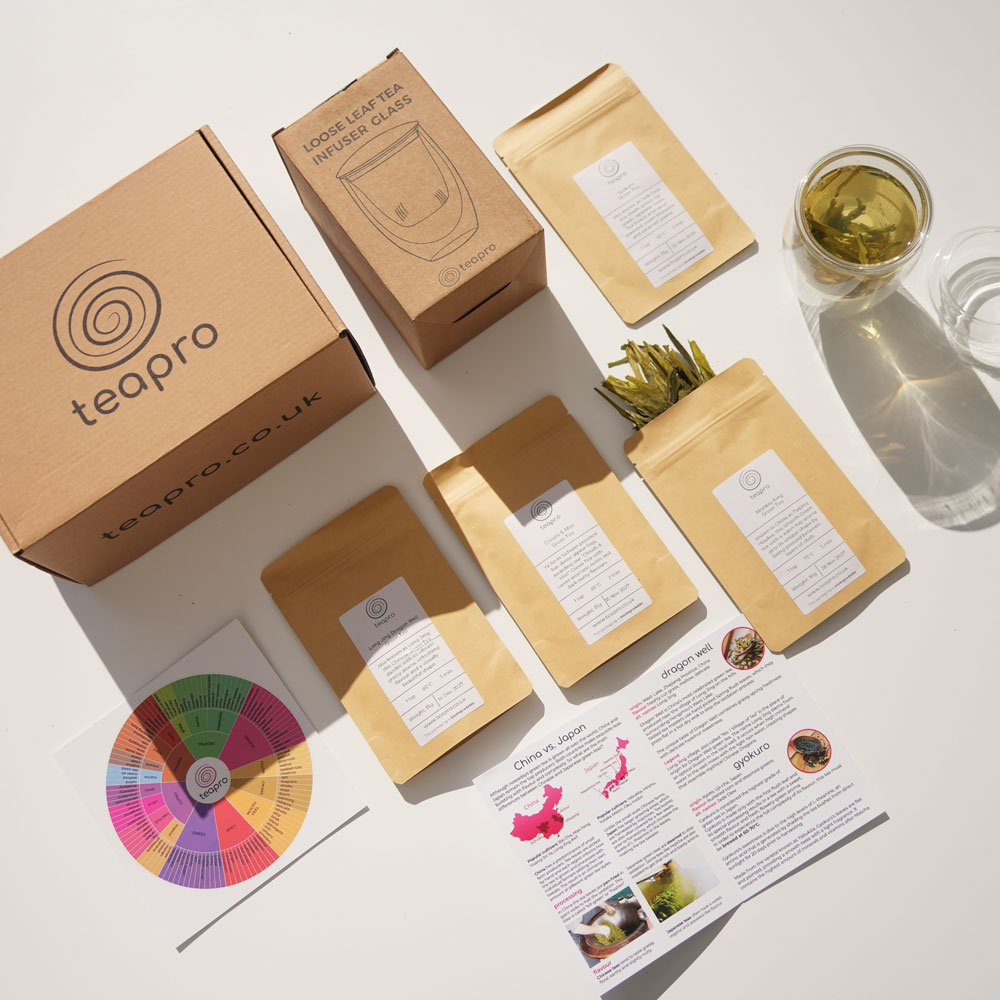
Ready to taste the difference for yourself? Explore Teapro’s pure green tea range, or discover how our Become a Teapro programme can deepen your knowledge, one tea type at a time.

Teapro co-founder. Favourite tea - Long Jing Dragon Well Green Tea. Obsessed with film, photography and travelling.


No Comments