10 May Tea Horse Road Pu’er City – Walking the Ancient Trade Route
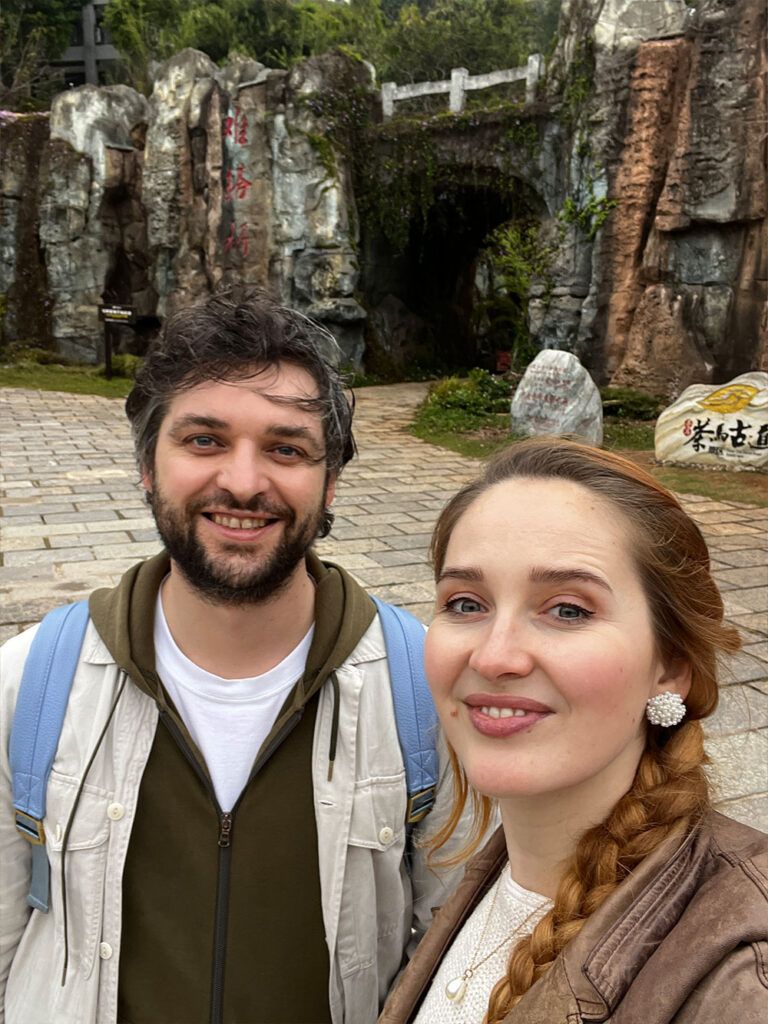
We recently made the trip to Pu’er city in Yunnan Province, China – and honestly, it felt less like a business trip and more like a pilgrimage.
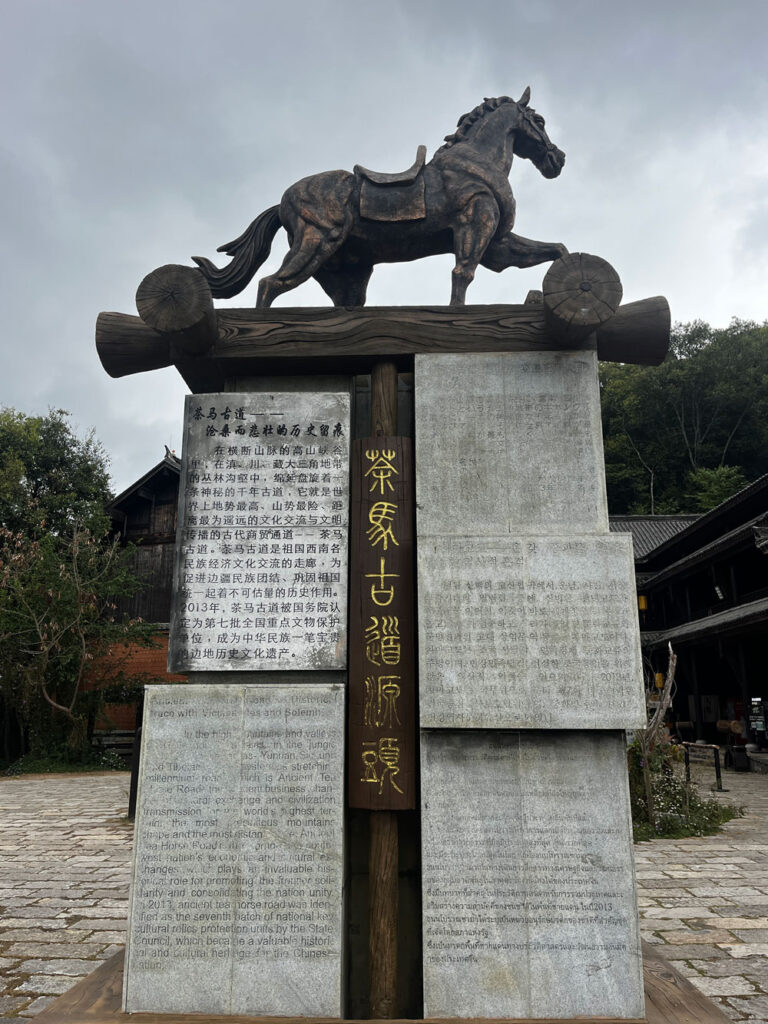
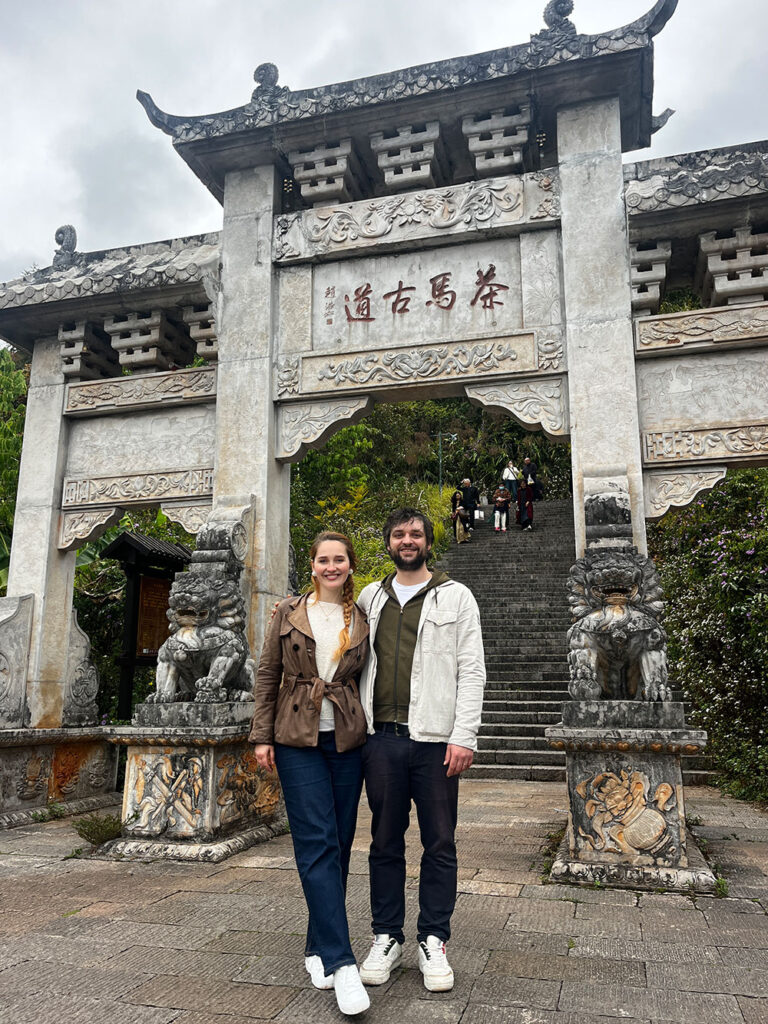
This is the place where pu-erh tea comes from. The birthplace. The pu-erh tea origin. And one of the stops we were most excited about was the Ancient Tea Horse Road Pu’er – or Chamagudao (茶马古道) as it’s known in Chinese.
Here’s what we got up to, what we learned, and why – if you ever find yourself in Yunnan – this is absolutely somewhere you should visit.
If you are new to pu-erh altogether and want to understand what it is, where it comes from, and why it has been drunk in China for centuries, start with our complete guide to pu-erh tea first. Then come back here when you are ready to brew.
A Bit of Background – What Is the Tea Horse Road?
Before we get to the fountains and peacocks (yes, really – more on that in a moment), it’s worth knowing what you’re walking into.
The Ancient Tea Horse Road China is one of the most significant trade routes in history. It dates back over 1,000 years to the Tang Dynasty (618-907 AD) and connected the tea-producing highlands of Yunnan and Sichuan all the way to Tibet, Nepal, India and beyond – making it, in many ways, the Southern Silk Road.
And Pu’er city? This was one of its most important starting points. The Yunnan-Tibet route began right here, winding through Dali, Lijiang and Shangri-La before reaching Lhasa – a journey that would take traders and their pack horses anywhere from three to six months to complete.
The name tells the whole story: tea was the currency, horses were the prize. Chinese tea – especially pu-erh, pressed into bricks or cakes for the journey – was traded for Tibetan horses that the Chinese military desperately needed. At its peak, China was trading millions of pounds of tea for around 25,000 horses a year. A single horse might cost 60 kilograms of tea. Raw tea was, at times, worth more than porcelain or silk.
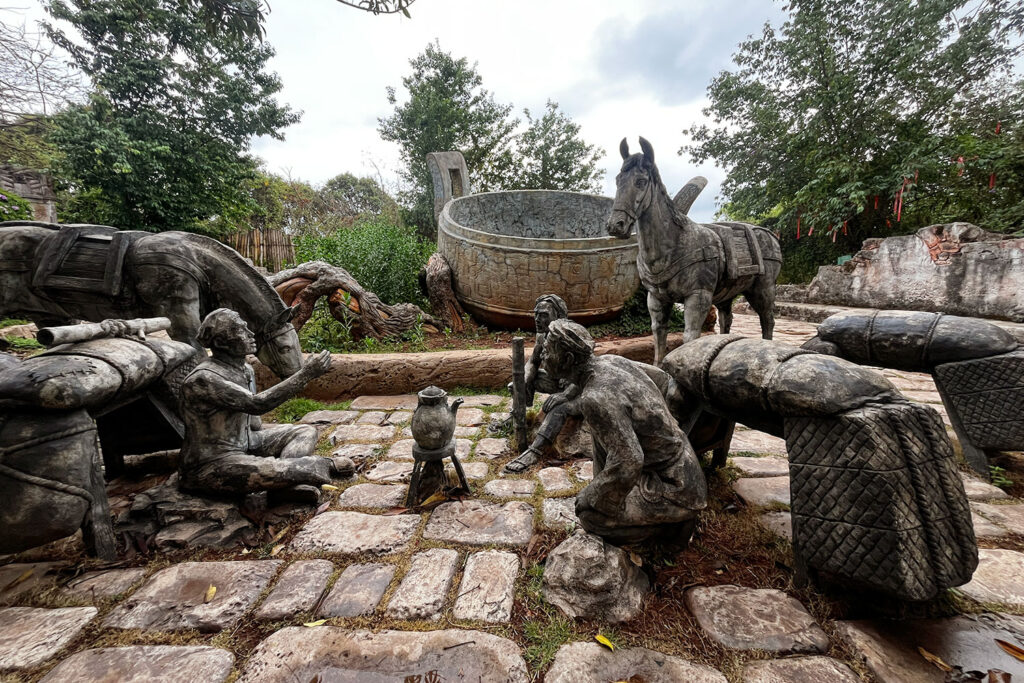
The road was carved out not by machines but by human feet and horse hooves – traders, porters and muleteers navigating some of the most treacherous mountain passes in the world, often carrying more than their own body weight in tea. The cobblestones we walked on still carry grooves worn 70 centimetres deep by centuries of hooves. It’s quite something to stand there and feel the weight of that history.
Pu erh Tea History
– tea horse road yunnan
Total length
10,000+ km
Yunnan-Tibet route from Pu'er: 3,800 km
Origins
Tang Dynasty
618-907 AD - over 1,000 years of history
Journey time
3-6 months
One way, Pu'er to Lhasa
Tea per horse
60 kg
The exchange rate at peak trade
| Fact | Detail |
|---|---|
| Also known as | Chamagudao (茶马古道) - "The Southern Silk Road" |
| Route covered | Yunnan and Sichuan through Tibet, into Nepal, India and beyond |
| Main cargo | Compressed pu-erh tea bricks, traded for Tibetan warhorses |
| Horses traded | Around 25,000 horses per year at peak in the 13th century |
| Road width | 1.5-2.6 metres, paved with stone slabs and cobblestones |
| Hoof depth | Up to 70 cm worn into stone slabs by centuries of hooves |
| Tea value | Raw tea was at times worth more than porcelain or silk |
| Tea in Tibet | First introduced to Tibetan nobility in the 7th century CE |
| Pu'er's role | One of the most important starting points on the Yunnan-Tibet route, established in the Qing Dynasty (1729 AD) |
| Heritage sites | 86 cultural sites preserved along the route in Yunnan province |
Arriving at the Lake – First Impressions
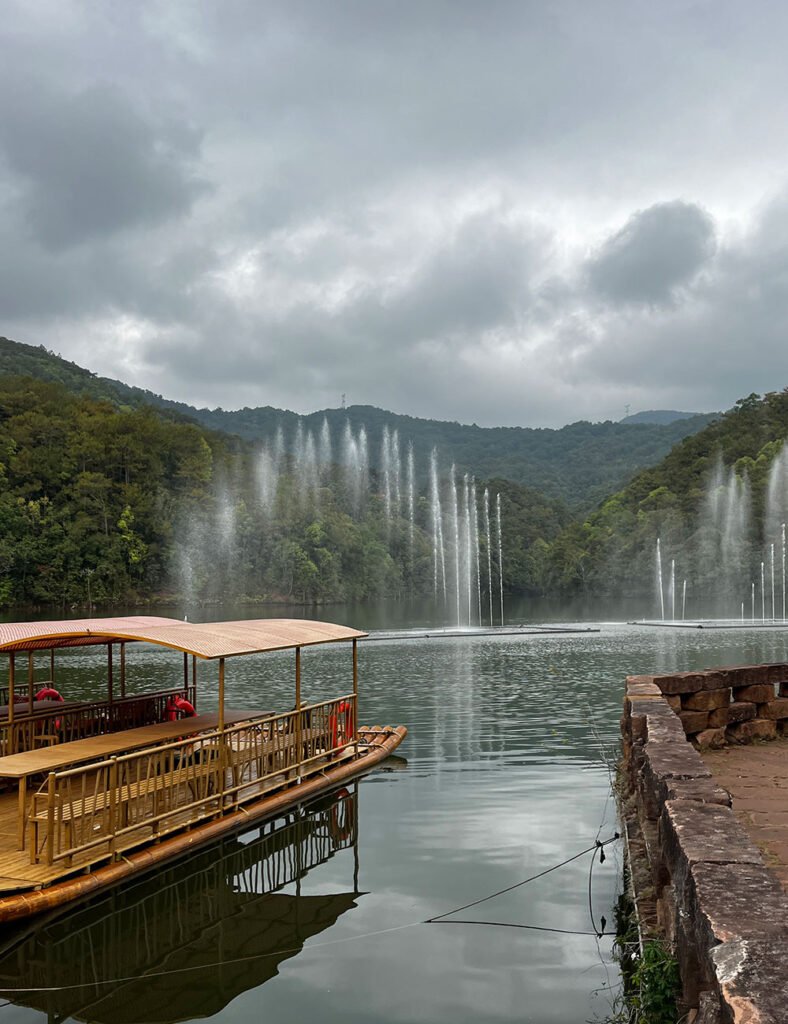
We started our visit at a beautiful lake right at the entrance of the site, complete with a fountain display that was genuinely impressive – the kind of thing you don’t expect to stumble upon. We heard that on certain days of the week there are live shows here too, so it’s worth checking the schedule before you go.
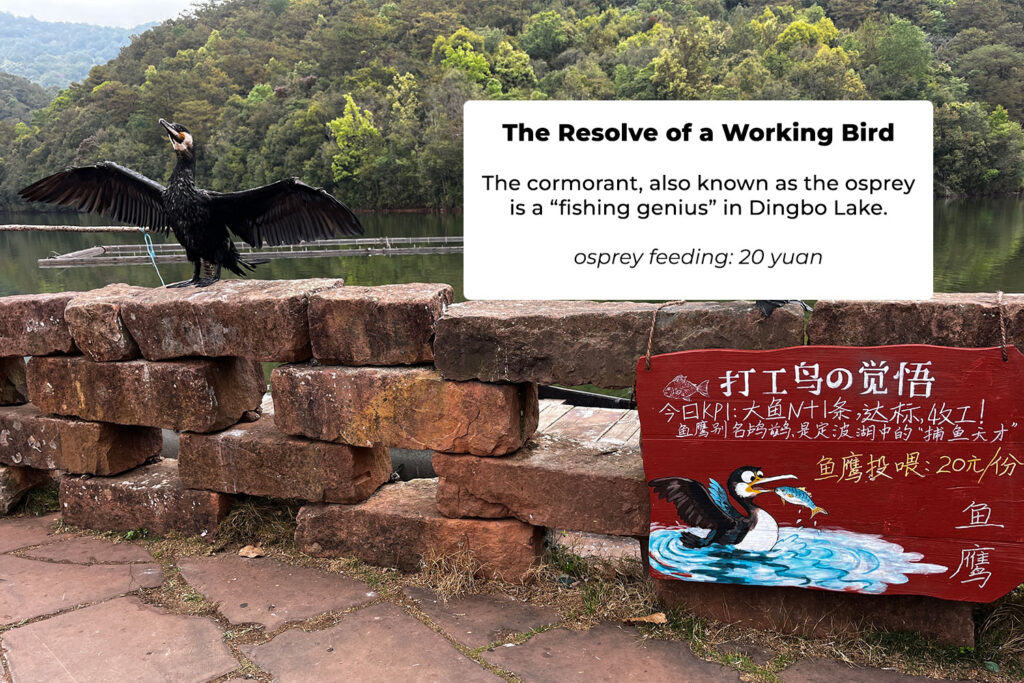
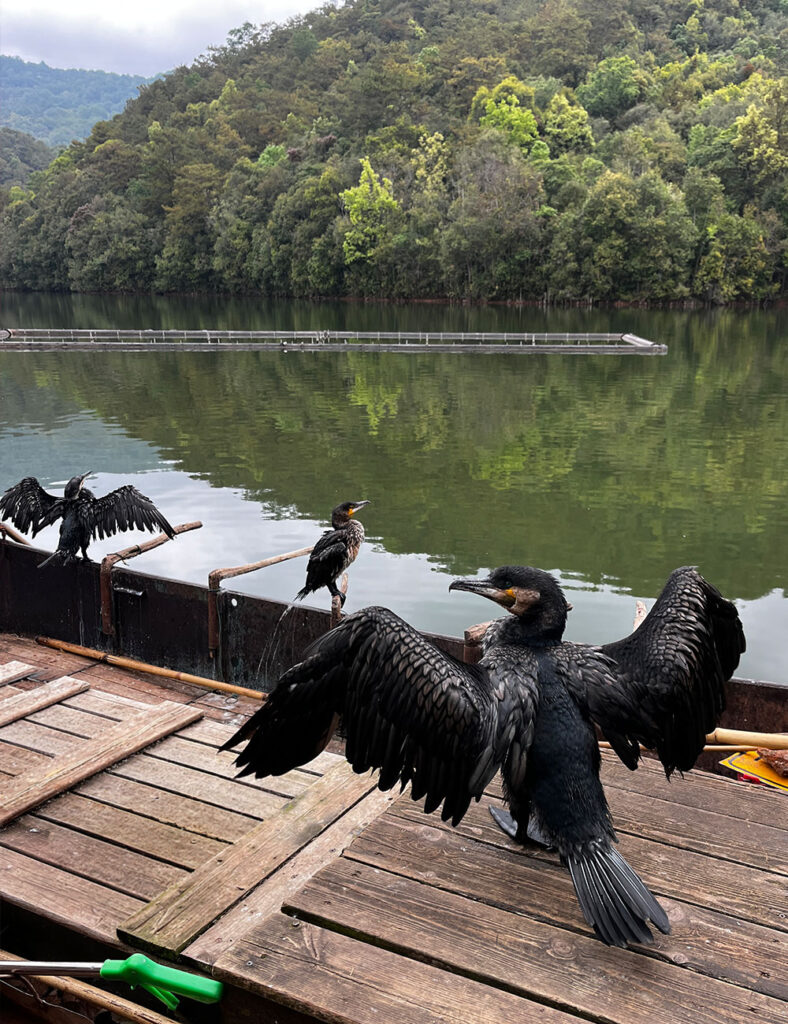
We were immediately greeted by some very confident osprey birds – they’ve clearly been trained to put on a bit of a show, flapping their wings enthusiastically, in hopes of being fed some delicious fish. Whilst being called “THE FISHING GENIUS”, the local ospreys figured that putting on a show for the tourists is much easier than actually going fishing in the lake!
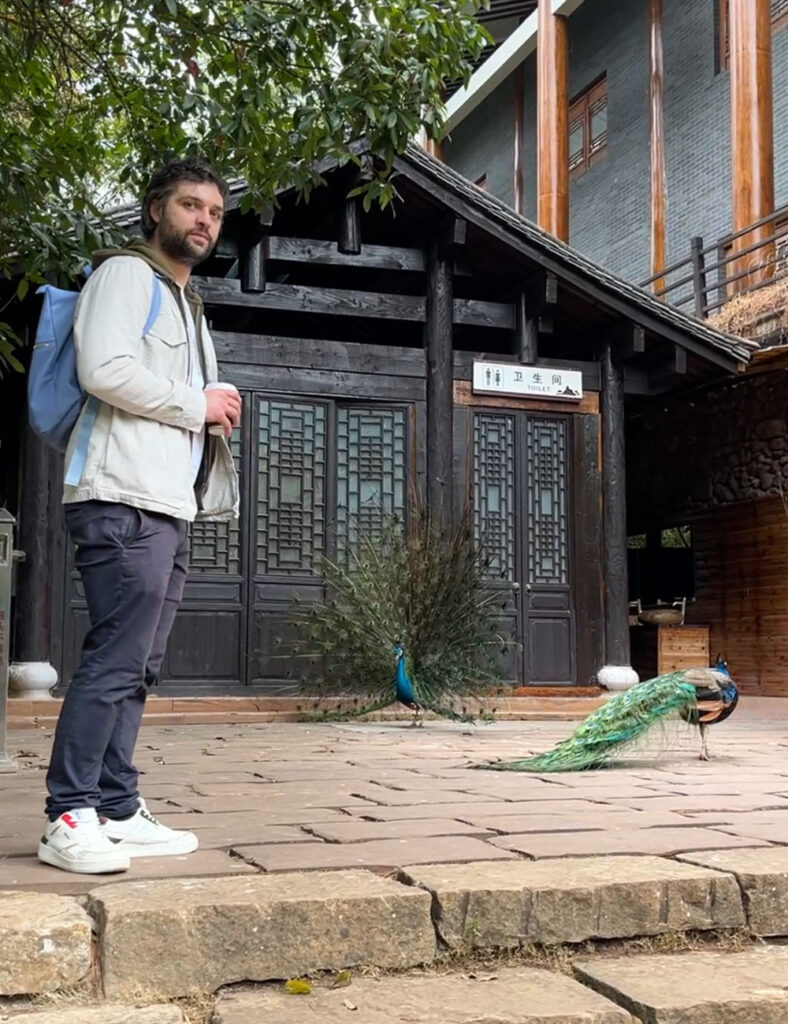
Wandering nearby were peacocks – not in enclosures, just roaming freely through a little forest area. Bright, beautiful and completely unbothered by the visitors around them. It set a wonderful, slightly magical tone for the rest of the visit.
The Museum – Life on the Road
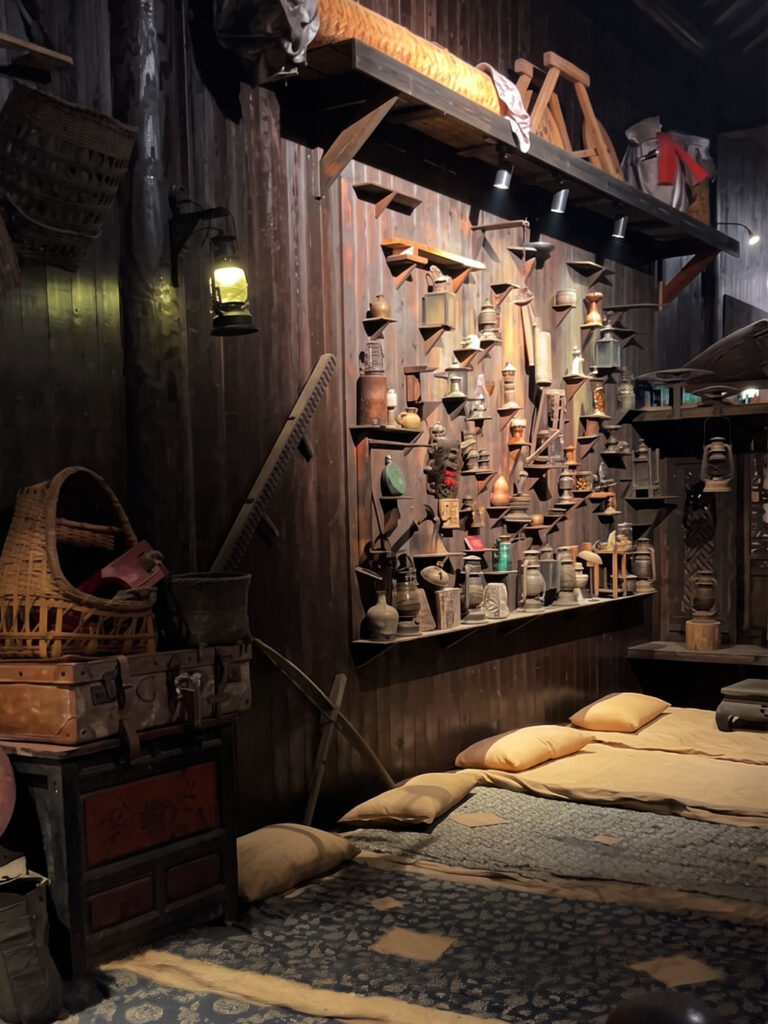
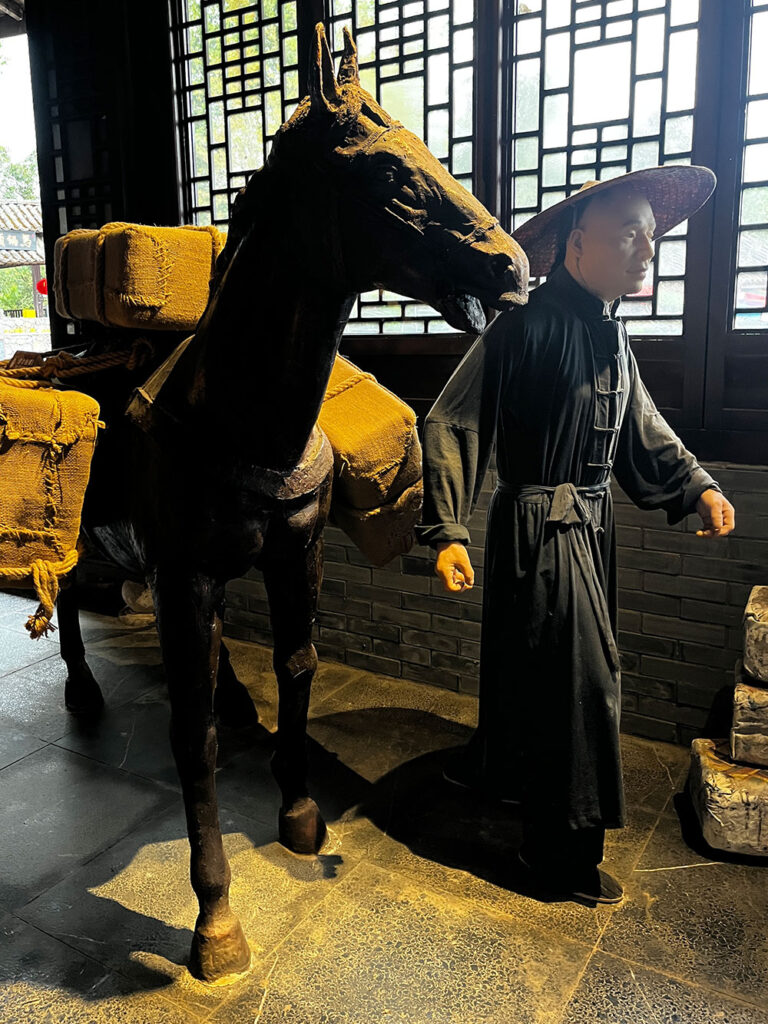
One of the highlights was the museum section dedicated to the traders themselves – the real human story behind the road.
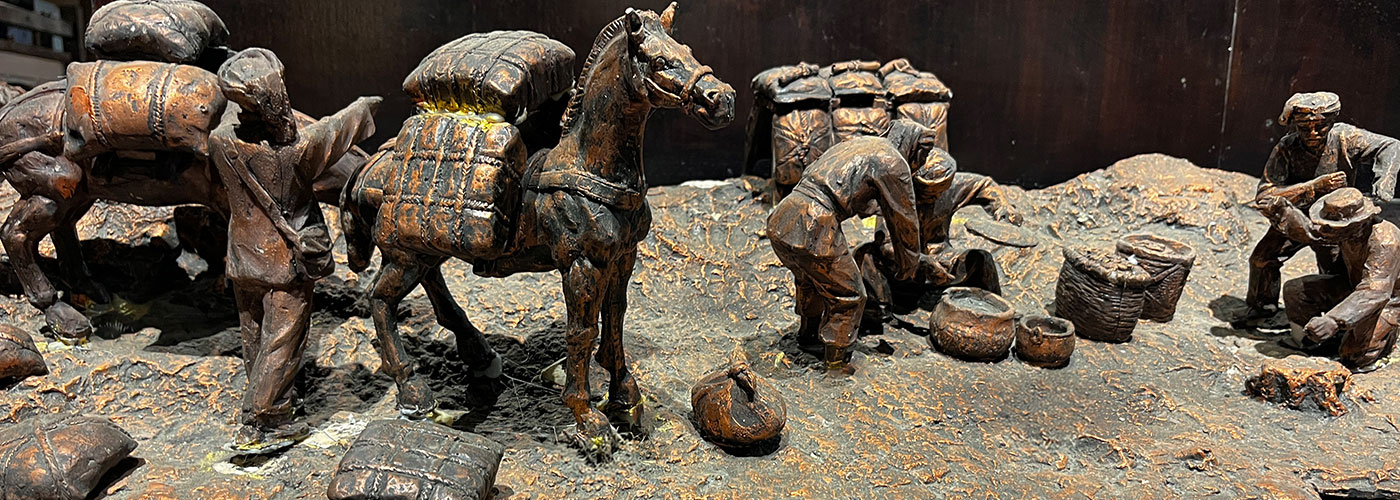
It brought to life what daily existence looked like for the people who made this journey: the equipment they carried, the shelters they slept in, the obstacles they faced. These were not short trips. This was months of gruelling travel through mountain passes and dense forests, often in extreme weather, with everything they needed strapped to their backs or their horses.
Seeing their tools and gear up close – and understanding just how much endurance and courage this journey required – gave a whole new meaning to the tea at the end of it. Every cake of pu-erh that reached Tibet arrived there because someone carried it, over mountains, through rivers, one step at a time.
The Pu-erh Section – Tea Shapes, Tea History and One Very Impressive “Melon”
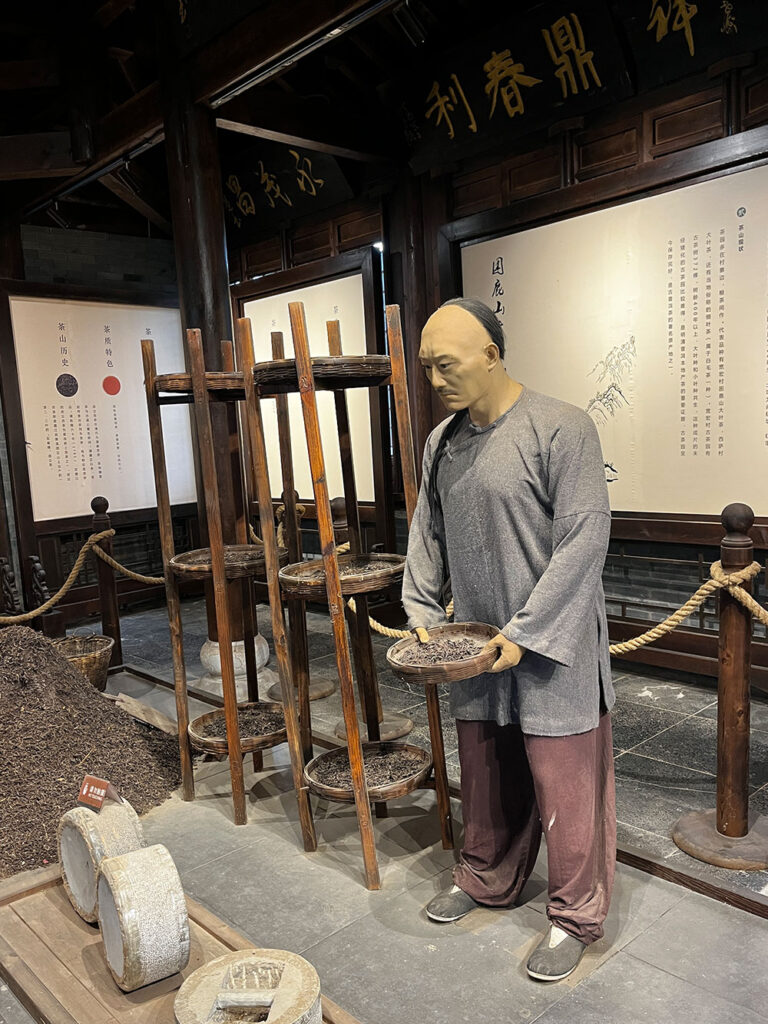
From the museum, we moved into a section dedicated entirely to pu-erh tea itself – how it’s produced, what makes it different, and the various shapes it traditionally comes in.
If you’re already a fan of pu-erh, this section is an absolute joy. You can see and understand the whole journey from leaf to compressed cake – the steaming, pressing and ageing process that gives pu-erh its unique character (and its reputation for getting better with time).
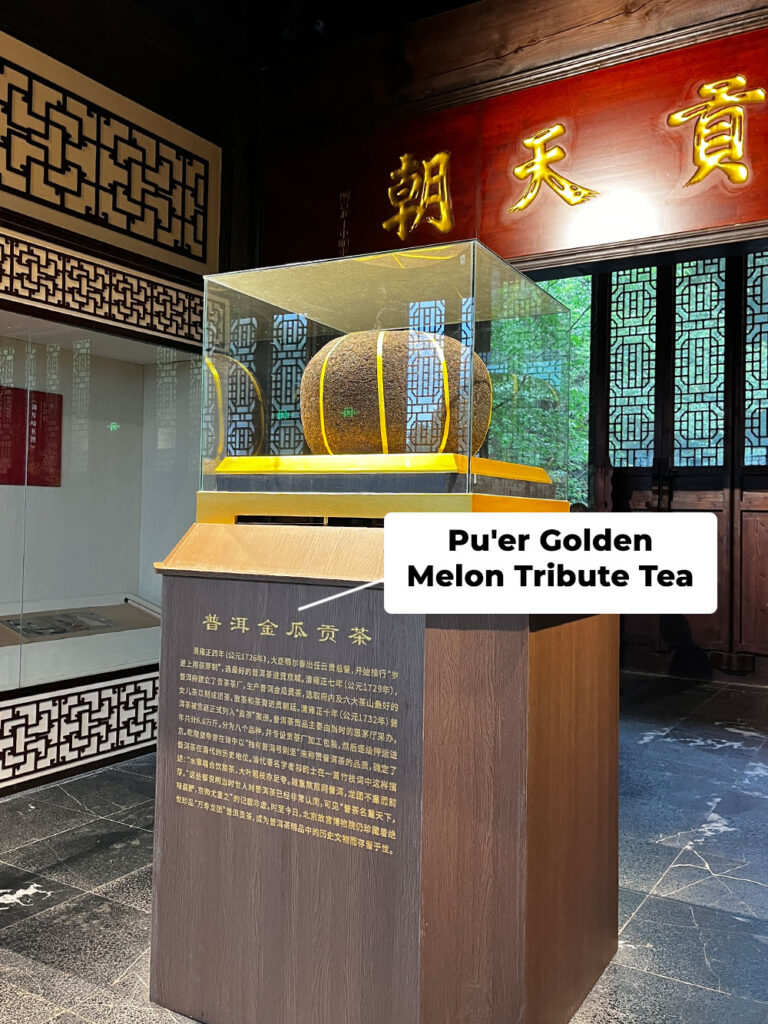
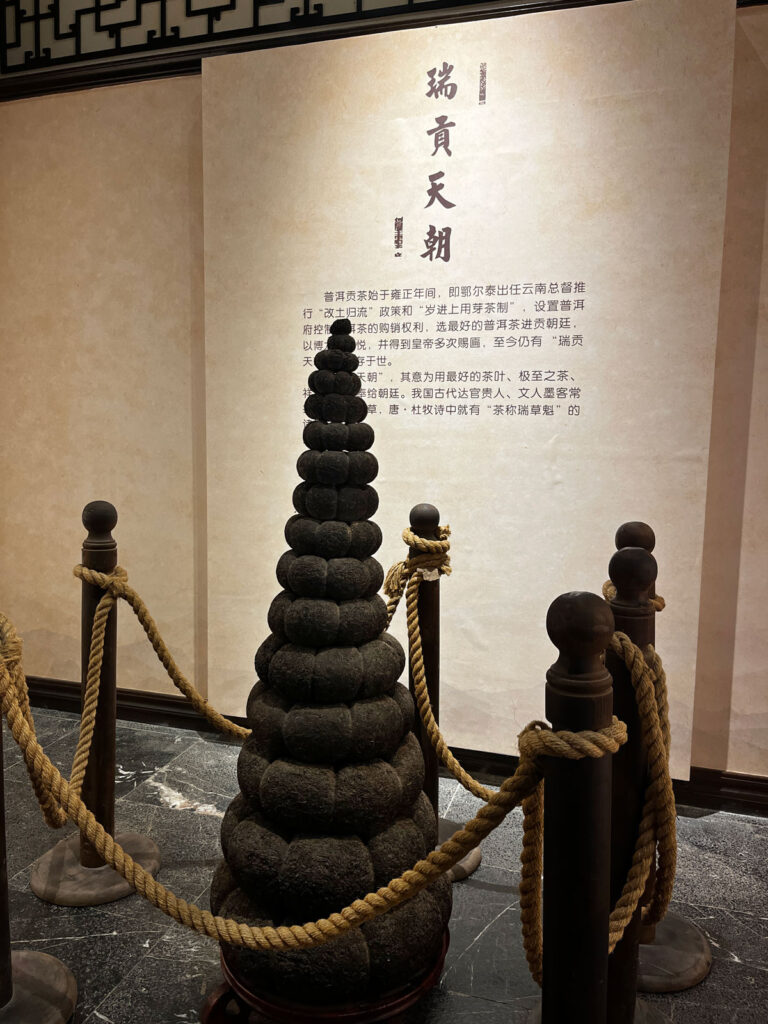
The showstopper here was a truly enormous pu-erh “melon” – a large, rounded compressed form that was historically made as tribute tea for the Emperor. We don’t want to oversell it, but it is genuinely one of the more remarkable things we’ve seen in our tea travels. These tribute teas represented the very finest pu-erh available – the kind reserved for royalty.
Pu’er Golden Melon Tribute Tea (translation)
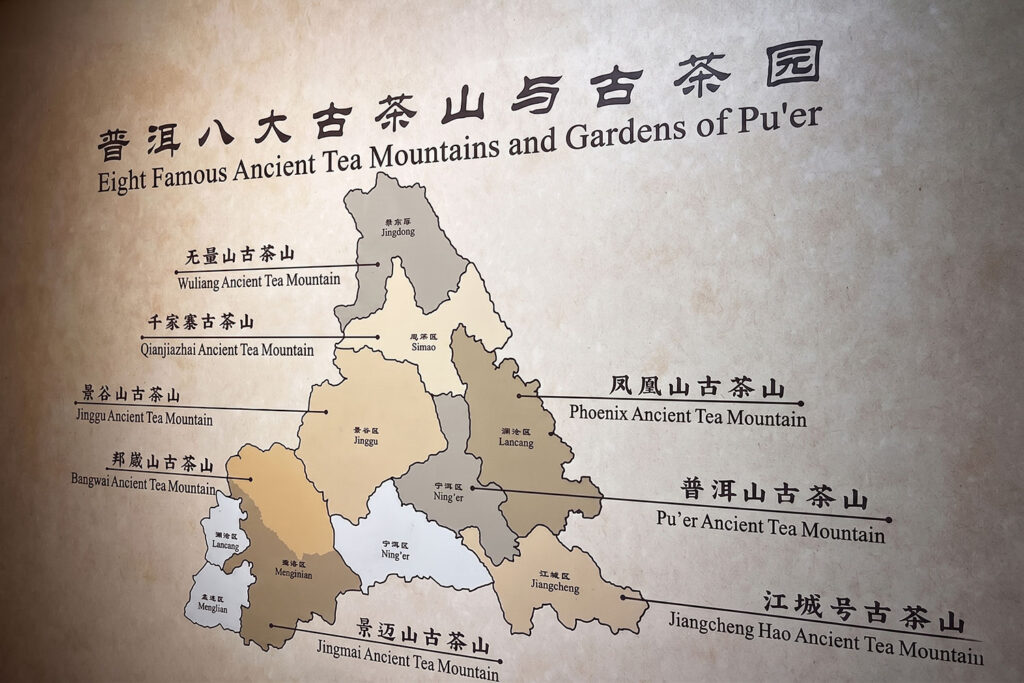
In 1726 (the fourth year of the Yongzheng Emperor’s reign), Minister Ortai was appointed Governor-General of Yunnan and Guizhou, and began implementing the “annual tribute of tea buds to the emperor,” selecting the finest Pu’er tea to be sent to the capital.
In 1729 (the seventh year of the Yongzheng Emperor’s reign), a tribute tea factory was established in Pu’er Prefecture to produce Pu’er Golden Melon Tribute Tea, selecting the finest Daughter Tea from within the prefecture and the six major tea mountains to process into compressed tea, loose tea, and tea paste for the court.
In 1732 (the tenth year of the Yongzheng Emperor’s reign), Pu’er tea was officially included in the “tribute tea” register by the imperial court. The Pu’er tea tribute was mainly procured by the Simao Prefecture, totaling 66,000 jin annually. It was divided into eight varieties, processed and packaged by a special tribute tea factory, and then transported to the capital through various levels of government.
The Qianlong Emperor praised the quality of Pu’er tea in a poem, stating “Only Pu’er is known for its strength and resilience,” thus establishing Pu’er tea’s historical status in the Qing Dynasty.
The renowned Qing Dynasty scholar Qi Deshi described Pu’er tea in a poem: “Cold water is perfect for brewing tea, even large leaves and coarse branches are praiseworthy.
Brew it freely like Pu’er, the Dragon Ball tea is not heavy, and the buds are fresh.” This demonstrates the high regard for Pu’er tea at the time, proving the accuracy of the record that “Pu’er tea is famous throughout the world, its flavor is the strongest, and it is especially valued in the capital.”
Even today, the Palace Museum in Beijing still treasures the exquisite “Longevity Dragon Ball” Pu’er tribute tea, preserving it as a historical artifact among Pu’er tea masterpieces.

Walking the Road Itself
Then came the moment we’d been waiting for – stepping onto the actual Tea Horse Road.
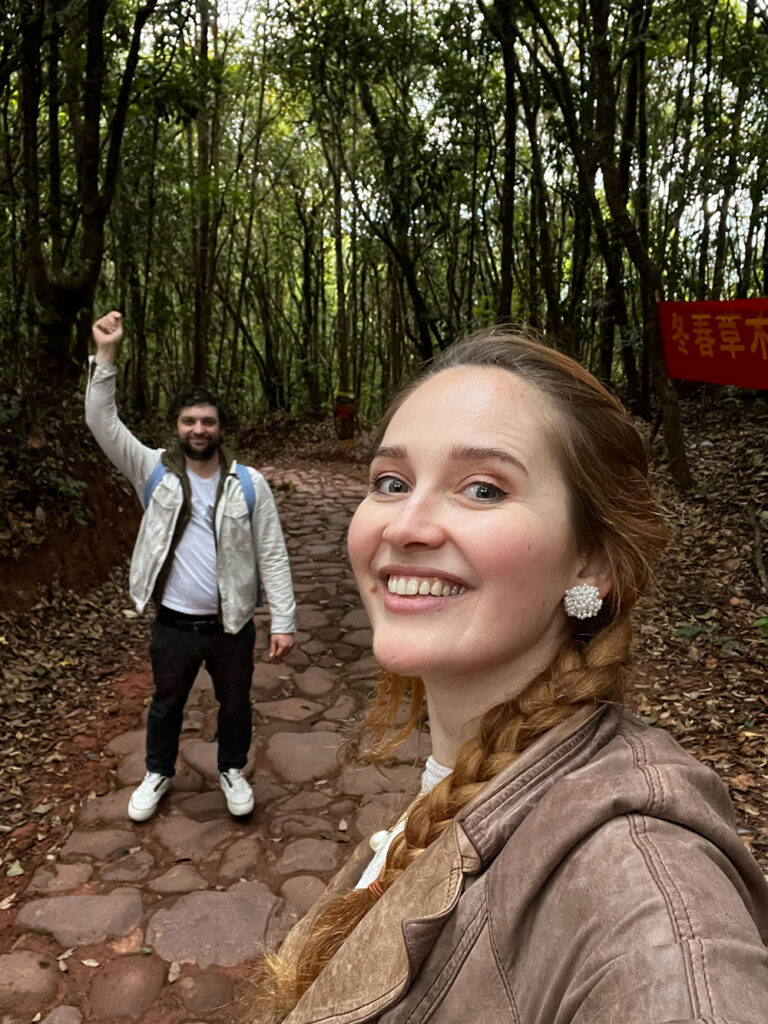
The path is uneven and cobblestoned, exactly as you’d expect from a route that’s been trodden for over a millennium. There’s something powerful about walking a surface that was shaped by centuries of footsteps and hooves. The landscape around you feels ancient too – it’s not hard to let your imagination wander.
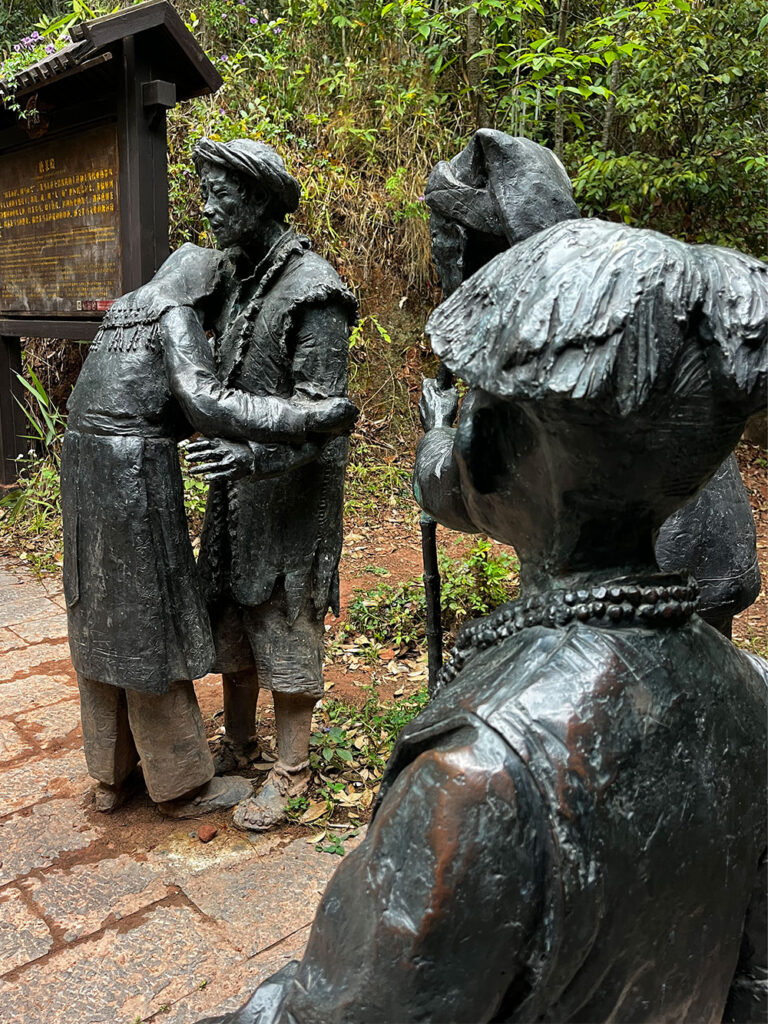
Along the route, there are several beautifully crafted statues depicting traders, porters and merchants – helping you visualise what life on the road actually looked like. They’re not flashy, but they’re well-placed and they do exactly what good public art should: they make history feel human.
The Temple – Praying for Safe Returns
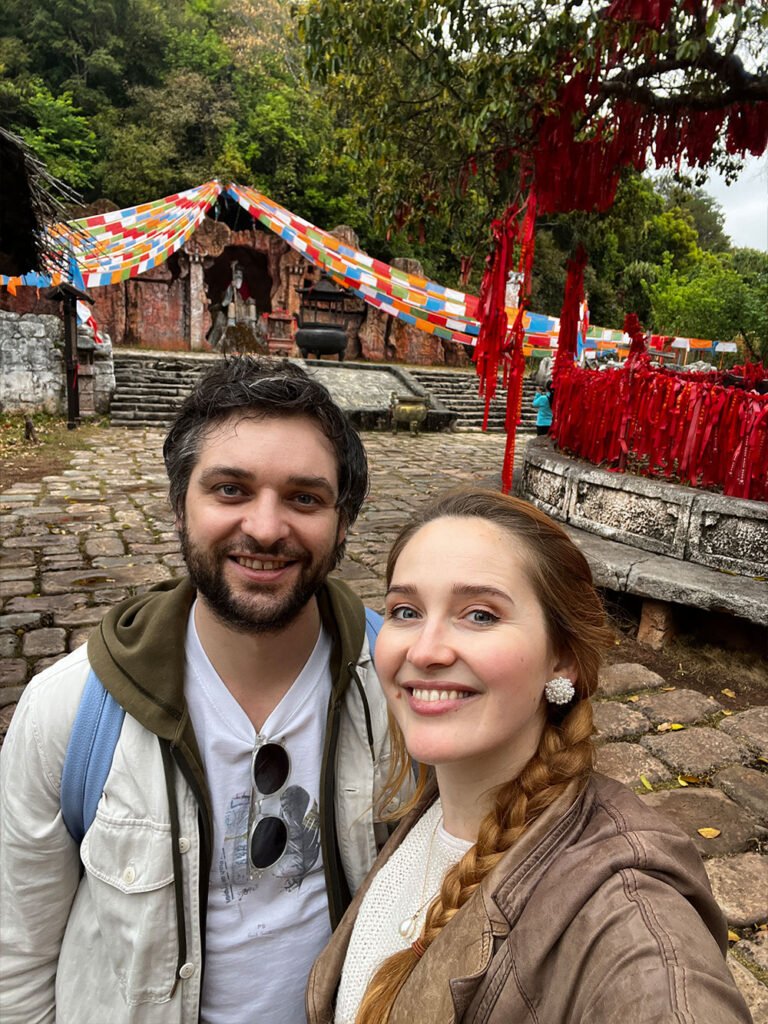
Towards the end of the route, we came across a temple – and this was perhaps the most quietly moving part of the whole visit.
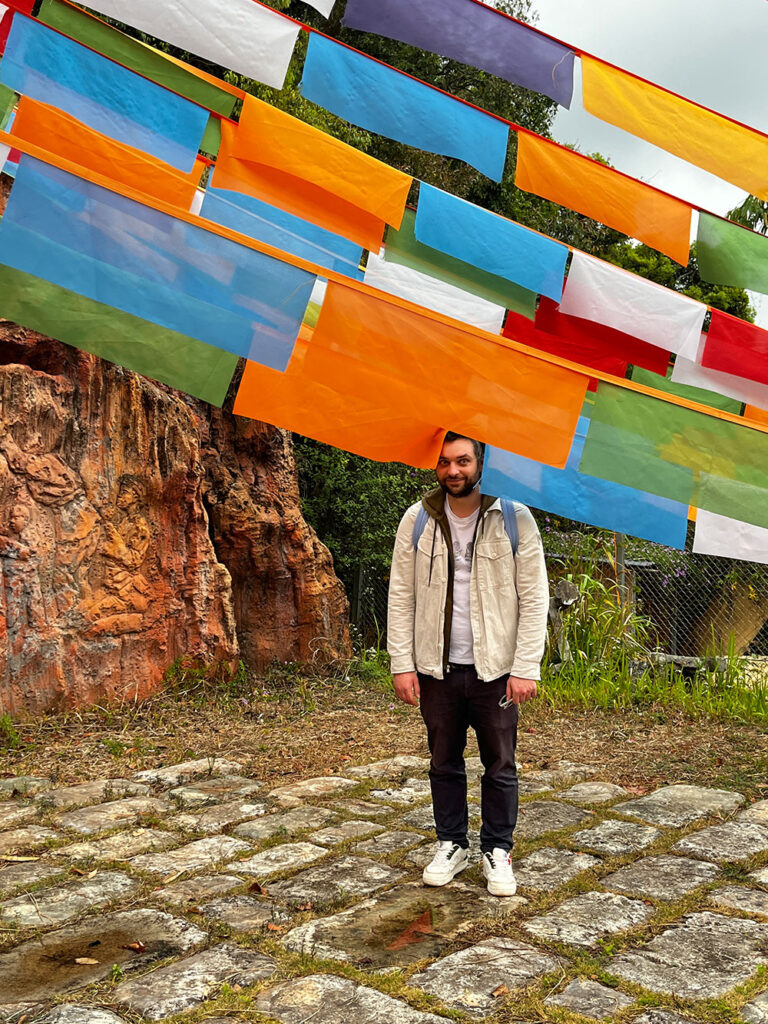
This was where traders would stop and pray before setting off on their long, dangerous journeys. Think about what that moment meant: leaving your family behind, not knowing exactly when – or in some cases whether – you’d return. The temple gave people a place to gather that courage, to seek some comfort before walking out into the unknown.
Standing there, it’s a reminder that behind every ancient trade route is an ocean of very ordinary, very human emotion.
The Rollercoaster – A Fun Way to Head Back
And then – a surprise. On the way back, you can take a short rollercoaster ride through the landscape. Yes, really.
It’s a fun, slightly unexpected way to round off what is otherwise a genuinely reflective experience. We loved it. It keeps things light and adds a bit of adventure to the return journey – which feels quite fitting for a route built entirely on adventure.
Should You Visit?
Absolutely, yes. If you’re passionate about tea – or even just curious about where it all comes from – the Tea Horse Road site in Pu’er is a brilliant half-day visit. It layers history, culture, tea education and natural beauty in a way that’s genuinely hard to find anywhere else.
You can pre-book your tea horse road pu’er tickets here or buy them on site (as we did – the entrace fee is 60 yuan / ca. £6)
And of course, after you’ve walked the road, you’ll never quite look at a cake of pu-erh the same way again.
Want to go deeper on pu-erh tea itself? Our complete guide to pu-erh covers everything from how it’s made and aged, to how to brew it properly at home. It’s the best place to start.
Want to Learn More About Tea?
There are so many teas to explore, and few are as fascinating – or as misunderstood – as pu-erh. Aged, fermented, and steeped in thousands of years of history, it’s a tea that rewards curiosity. But pu-erh is just one chapter in a much bigger story.
That’s what Teapro is built around. Not just selling tea, but teaching you to understand it. Across 12 carefully curated boxes, you’ll journey through the full world of tea – and when you reach the pu-erh box, you’ll get to explore both raw and ripe varieties, tasting how time and fermentation transform a leaf into something truly extraordinary.
Every gift box, every tea guide is designed to move you one step further along the journey from tea drinker to tea pro.
The world of tea is vast, ancient, and endlessly surprising. Welcome to it.

Teapro co-founder. Favourite tea - Long Jing Dragon Well Green Tea. Obsessed with film, photography and travelling.


No Comments