How to Blend Your Own Herbal Tea at Home

Learning to blend your own herbal tea at home is one of the most rewarding things you can do as a tea lover, and far easier than you might think.


With a handful of dried herbs, a simple ratio and your own taste buds, you can create pure, personalised blends for sleep, digestion, energy or pure enjoyment, with no artificial flavourings and nothing you cannot pronounce.

In this guide we will walk you through the building blocks of a great blend, share our signature 70-20-10 method, and give you three beginner recipes to try tonight. If you are new to the category, our complete guide to herbal tea is a lovely place to start first.

Why blend your own herbal tea?

Blending your own herbal tea puts you in complete control. You choose exactly what goes in, which means total purity (no fillers, no artificial flavourings, no mystery ingredients), and the freedom to tailor every cup to how you want to feel.

It is also genuinely fun, surprisingly economical once you build up a little herb collection, and a wonderful way to deepen your understanding of what each herb actually tastes and does.

In short, it is the very heart of becoming a tea pro: not just drinking tea, but truly understanding it.

The three building blocks of a blend

Almost every well-balanced herbal blend is built from three types of ingredient, each playing a different role.

Understanding these roles is the secret to blends that taste considered rather than chaotic:

The three building blocks of a blend:
The base The foundation and bulk of your blend. These are milder, rounded herbs that give body and volume without overpowering, such as rooibos, honeybush, chamomile, peppermint, nettle or oat straw.
The supporting herbs These reinforce the blend's purpose and add a second layer of flavour and benefit, such as lemon balm, lemongrass, hibiscus, fennel, ginger or spearmint.
The accent The finishing touch, or the magic. These are potent, aromatic ingredients used in small amounts for character and a memorable top note, such as lavender, rose, cardamom, cinnamon, citrus peel or clove.

The Teapro 70-20-10 blending method

So how much of each do you use? This is where our signature 70-20-10 method comes in. It is the simple ratio we teach for building a balanced blend every time, and once you know it, you will never look at a blend the same way again:

Proportion Role Examples
70% Base (body and volume) Rooibos, honeybush, chamomile, peppermint, nettle, oat straw
20% Supporting (depth and purpose) Lemon balm, lemongrass, hibiscus, fennel, ginger, spearmint
10% Accent (character and aroma) Lavender, rose, cardamom, cinnamon, citrus peel, clove
Loading...
rooibos tea
Price range: £4.50 through £70.00
Loading...
Butterfly Pea Tea Benefits
Price range: £6.50 through £349.00

The beauty of 70-20-10 is that it is forgiving and endlessly adaptable. Keep the proportions and simply swap the herbs to change the entire character and purpose of your blend, a calming one tonight, an invigorating one tomorrow.

The 10% accent is where restraint matters most: potent herbs like lavender can quickly take over, so a little really does go a long way.

How to blend your own herbal tea, step by step

Step What to do
Decide your purpose Sleep, digestion, energy, calm, or simply a flavour you love. Let this guide every herb you choose.
Pick your base (70%) Choose a mild, rounded herb that suits the purpose, for example chamomile for calm or peppermint for digestion.
Choose your supporting herbs (20%) Add one or two herbs that reinforce the goal and add depth.
Add your accent (10%) Finish with a small amount of something aromatic for character. Start with less than you think you need.
Measure by volume To begin, work in teaspoons rather than weighing, for example 7 teaspoons base, 2 supporting, 1 accent.
Test small, then taste Make a single-cup test batch first, brew it, and adjust before mixing a larger jar.
Rest and store Let your finished blend sit for a day or two so the flavours marry, then store it well (see below).

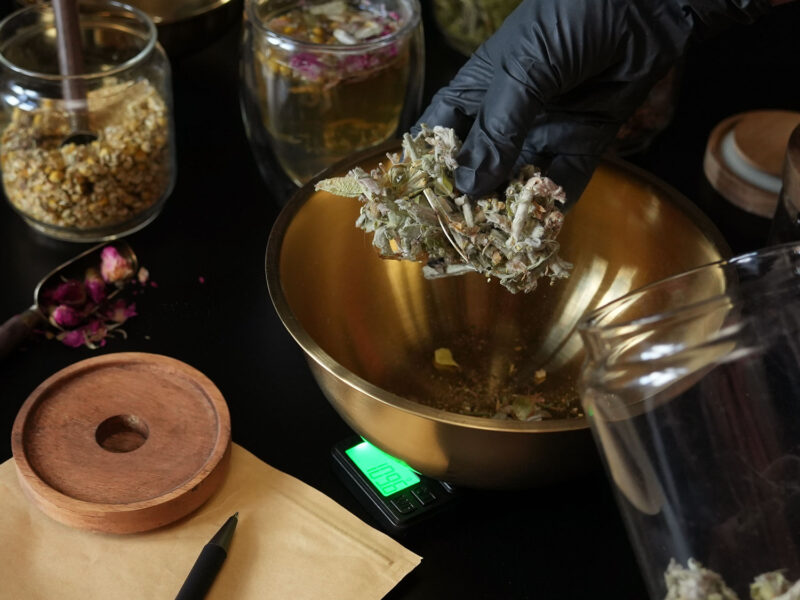
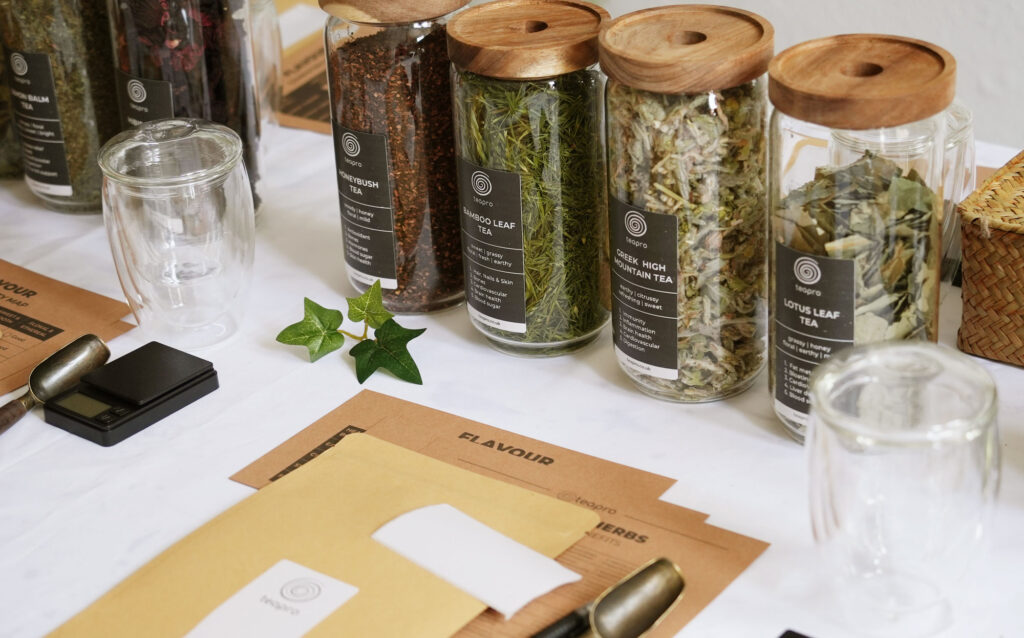
Ready to take your tea journey further? Our Herbal Tea Blending Masterclass and blending workshop provides a comprehensive step-by-step guide to herbal blending, helping you learn how to create personalised wellness tea blends from scratch.

Whether you’re blending at home or on the go, you’ll gain the skills and confidence to craft your own herbal infusions.

Loading...
Price range: £5.00 through £59.00
calendula tea marigold flower tea
Price range: £5.95 through £14.95

Herbs to start with

You do not need a huge collection to begin. A handful of versatile herbs will let you make dozens of blends. Here are some lovely, widely available starting points, many of which we stock as pure, single-origin loose herbs:

Herbs to start with:
Calming chamomile, lemon balm, lavender.
Digestive peppermint, fennel, ginger.
Bright and fruity hibiscus, rose petals, lemongrass.
Caffeine-free bases rooibos and honeybush.

3 beginner blends to try tonight

Each of these uses the 70-20-10 method. Measure in teaspoons (7 base, 2 supporting, 1 accent) for a small jar, then scale up once you love it.

Blend Recipe (70-20-10) Tasting note
Sweet Dreams (for calm and sleep) 70% chamomile (base)
20% lemon balm (supporting)
10% lavender (accent)
A gentle, floral, deeply soothing cup for winding down before bed.
Settle (for digestion) 70% peppermint (base)
20% fennel (supporting)
10% ginger (accent)
Fresh, warming and perfect after a heavy meal.
Sunrise (bright and uplifting) 70% rooibos (base)
20% hibiscus (supporting)
10% rose petals or orange peel (accent)
Caffeine-free, tart and pretty, lovely hot or iced.

Brewing and storing your blends

Herbal blends like a slightly different approach to true tea. Here is how to get the best from yours:

Brewing and storing your blends:
Brewing Use about a heaped teaspoon (2 to 3g) per 200 to 250ml of water just off the boil (around 95 to 100 degrees Celsius), and steep for 5 to 7 minutes. Herbs and flowers need longer than tea leaves to release their goodness, so do not rush them.
Storing Keep your blends in an airtight container away from light, heat and moisture. Label each one with its name, ratio and the date you made it.
Freshness For the best flavour and aroma, use your blends within 6 to 12 months.
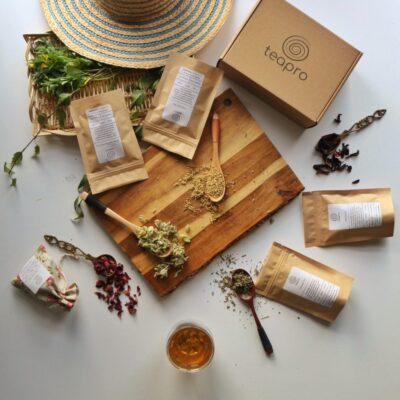
how to blend your own herbal tea at home - teapro herbal blending workshop

A note on safety and purity

Blending at home is wonderfully safe when you stick to well-known culinary and tea herbs, but a little care goes a long way.

Source pure, food-grade herbs from a trusted supplier (the whole point is knowing exactly what is in your cup), and introduce one new herb at a time so you can tell how it suits you.

Some herbs are not suitable during pregnancy or breastfeeding, or can interact with medication, so if you are pregnant, nursing, taking any medicine or managing a health condition, check with your doctor or pharmacist before drinking a new blend regularly.

As ever, these are supportive everyday rituals rather than medical treatments.

Frequently asked questions

It is our simple ratio for a balanced herbal tea blend: 70% base (a mild herb for body), 20% supporting herbs (for depth and purpose) and 10% accent (a potent, aromatic herb for character). Keep the ratio and swap the herbs to create endless blends.

Mild, rounded herbs make the best bases because they add body without overpowering. Popular choices include rooibos, honeybush, chamomile, peppermint, nettle and oat straw. Your base should make up around 70% of the blend.

When you are starting out, measure by volume in teaspoons rather than weighing, for example 7 teaspoons of base, 2 of supporting herbs and 1 of accent. Always make a small single-cup test batch and taste it before mixing a larger jar.

Yes. You can use a true tea such as green, black or rooibos as your base or a supporting element, just remember it will add caffeine. Green tea with mint and lemongrass, or black tea with cinnamon and orange peel, both work beautifully.

Stored in an airtight container away from light, heat and moisture, most dried herbal blends keep their flavour for around 6 to 12 months. Label each blend with the date you made it so you can keep track.

Not at all. A few jars, a teaspoon and a bowl to mix in are all you need to start. As you get more serious, a small kitchen scale and airtight tins are useful, but they are far from essential.

Start blending

Once you learn to blend your own herbal tea, you will never look at a teabag the same way again. With the 70-20-10 method in your back pocket and a few favourite herbs on the shelf, you hold the power to create a pure, personal cup for any mood or moment.

Start simple, taste as you go, and let your curiosity lead.

And when you want to deepen your knowledge or stock up on pure, single-origin herbs to blend with, our complete guide to herbal tea and the wider Teapro range are always here to help you on your journey from tea drinker to tea pro.

Loading...
Loading...
herbal tea gift box - herbalism
Price range: £19.50 through £36.50

Teapro co-founder. Favourite tea - Long Jing Dragon Well Green Tea. Obsessed with film, photography and travelling.

No Comments

Post A Comment