Light vs Dark Oolong: A Beginner’s Guide to Oxidation Levels
So, Light vs Dark Oolong? If you have ever stood in front of an oolong tea selection – whether online or in a specialist shop – and felt genuinely baffled by the range, you are not alone. Oolong is one of the most diverse tea categories in the world.

A light Taiwanese High Mountain oolong and a roasted Wuyi rock oolong are both called oolong, but they look different, smell different, brew to entirely different colours, and taste like they come from completely different worlds. 

The key to understanding all of that diversity is oxidation. Once you understand what oxidation does to a tea leaf – and why producers choose different levels – the entire oolong category starts to make sense. 

This guide is designed for beginners and curious drinkers alike. Whether you have never tried oolong, or you have been drinking it for years without quite knowing where your favourite sits on the spectrum, this will give you the grounding to explore with confidence. 

What is oxidation – and why does it matter? 

Oxidation is the chemical process that begins when a tea leaf is damaged or bruised – enzymes within the leaf react with oxygen in the air, breaking down compounds and transforming the leaf’s colour, aroma, and flavour.

It is the same process that turns a cut apple brown. 

In tea production, oxidation is something the producer controls deliberately – either allowing it to happen, stopping it early, or letting it run almost to completion.

Green tea is made by stopping oxidation immediately after picking (through steaming or pan-firing).

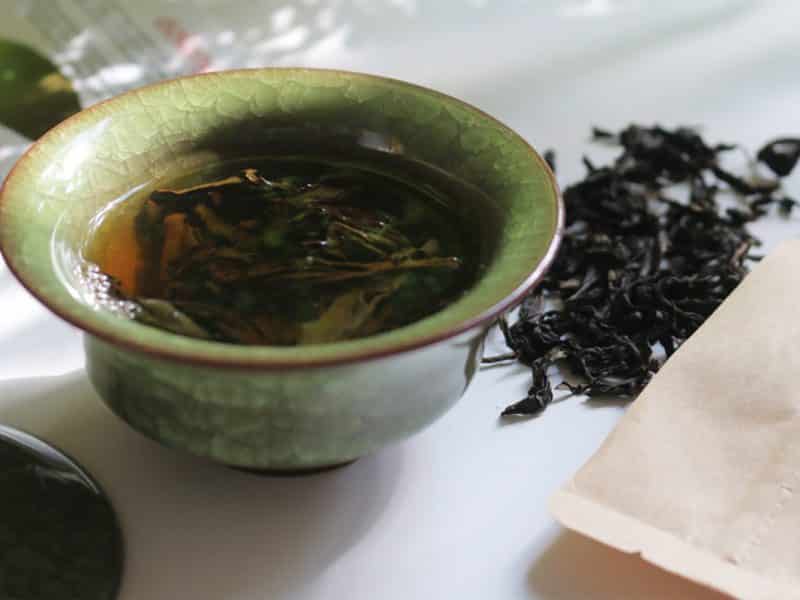
oolong tea oxidation light vs dark oolong

Black tea is fully oxidised. Oolong sits everywhere in between – partially oxidised, with producers choosing precisely where on the spectrum they want the tea to land.

Think of oxidation as a dial, not a switch. Oolong tea producers turn that dial to a specific position and then stop the process at exactly the right moment. The position of the dial determines almost everything about the finished tea.

This is why oolong is sometimes called the most technically demanding tea to produce. The window for stopping oxidation at exactly the right point is narrow – and the difference between a 30% and a 50% oxidised leaf is significant in the cup. 

The partial oxidation process in oolong production involves a specific sequence: after picking, the leaves are spread out and allowed to wither, then deliberately tossed or tumbled to bruise the leaf edges – this is where oxidation concentrates.

The process is repeated over several cycles, with the maker monitoring colour, aroma, and texture constantly. When the leaves have reached the target oxidation level, they are fired to arrest the process and lock in the character. 

The Oolong spectrum: From 15% to 85% 

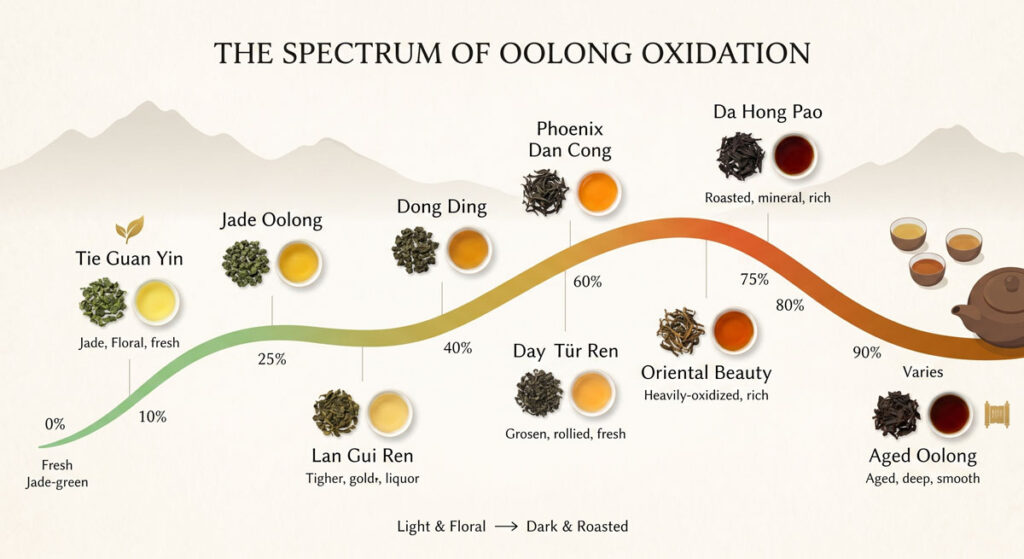
Oolong oxidation is typically described as a percentage range, though this is a rough guide rather than a precise measurement. The broad spectrum runs from around 15% at the lightest end to around 85% at the darkest – with many styles sitting in distinct zones along the way. 

It helps to think of the spectrum in three broad bands: 

Style Oxidation Character
Light oolong ~15–40% Green-adjacent in colour and character, often floral and delicate
Medium oolong ~40–60% The complex middle ground, balancing floral and roasted notes
Dark oolong ~60–85% Amber to dark in colour, roasted, rich, and deeply complex

Within each band there are distinct regional styles, named varieties, and individual producer interpretations. The same nominal oxidation level can taste quite different depending on the cultivar, the altitude, the climate, and the skill of the producer. This is what makes oolong such an endlessly interesting category to explore. 

Loading...
Price range: £5.00 through £60.00
magic tea gift box - tea gift sets - tea gifts
Price range: £20.00 through £37.00
Price range: £4.95 through £70.00

Light Oolong: floral, delicate, and green-adjacent

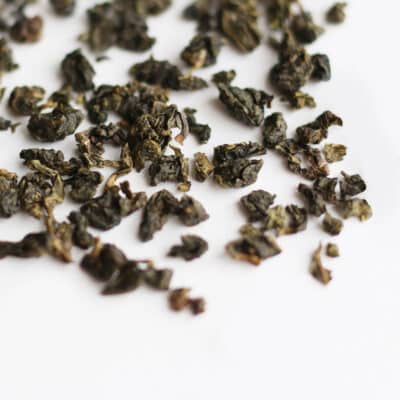
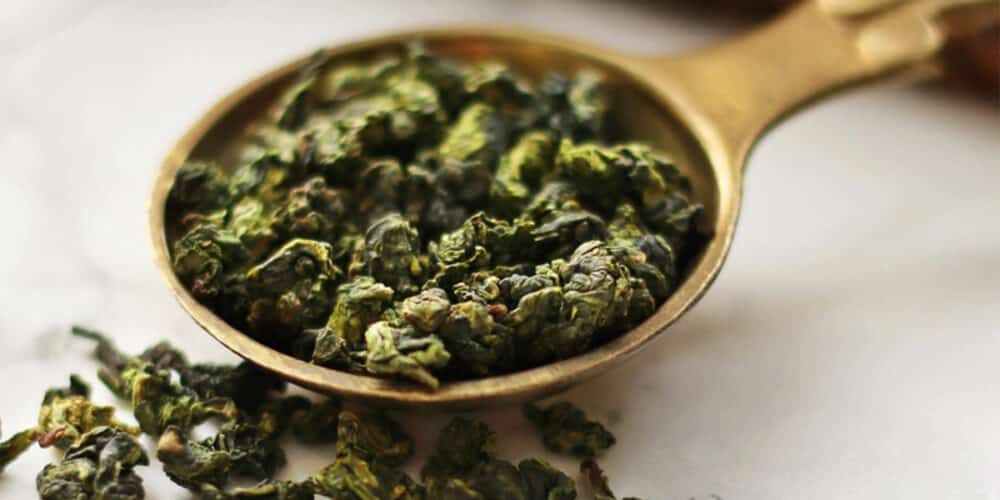
Light oolongs are oxidised just enough to move them out of the green tea category – but not so much that they lose the fresh, floral, vegetal character of a relatively unprocessed leaf. They are often the entry point for green tea lovers who want to explore oolong without straying too far from familiar territory. 

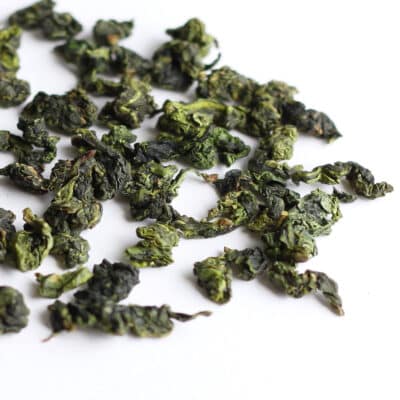
lightly oxidized - light vs dark oolong

What light oolong tastes like

Expect delicate floral notes – often compared to orchid, gardenia, or lily. There is usually a buttery or creamy quality, a clean sweetness, and sometimes a subtle grassy or vegetal undertone that connects them to green tea.

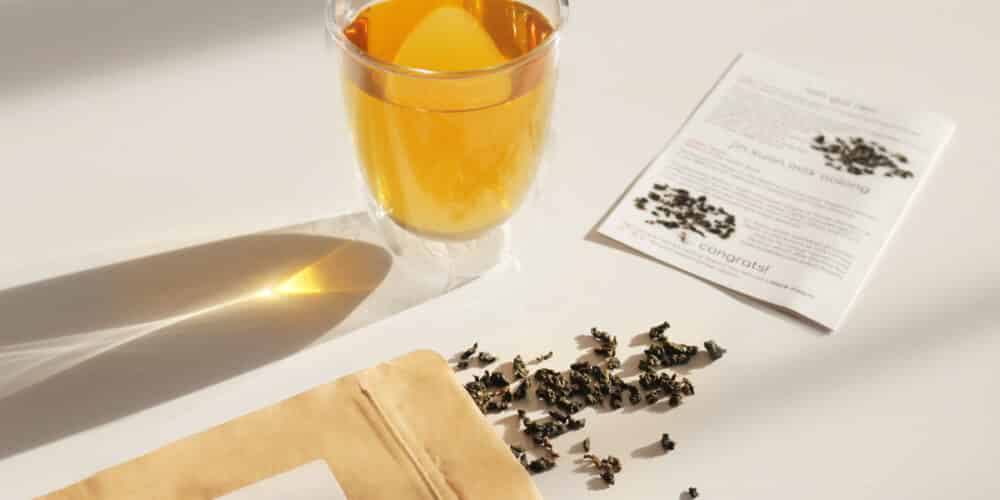
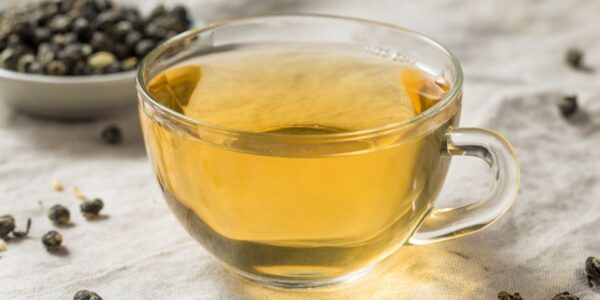
The liquor is pale – typically a light gold or yellow-green – and the aroma when you first open the leaves is often breathtaking: complex, floral, and remarkably fresh. 

Light oolongs are some of the most fragrant teas in the world. If aroma is important to you, this end of the spectrum is worth spending time in. 

Key styles to know 


Variety Origin Oxidation Character
Anxi Ben Shan Fujian, China ~10-20% Very lightly oxidised, green and fresh with delicate floral notes
Tie Guan Yin Fujian, China ~10-20% Modern qingxiang style - bright, floral, and almost green-tea-like in appearance and taste
Baozhong (Pouchong) Taiwan ~15% The lightest of all oolongs. Extraordinarily floral and almost green in character - one of the best introductions to light oolong
Jade Oolong Taiwan ~15-25% Vibrant green appearance with a fresh, vegetal sweetness
Lan Gui Ren (Queen Orchid) Taiwan / Fujian ~30-40% Pronounced orchid-like aroma with gentle complexity - sits at the lighter end of the medium band
High Mountain (Gaoshan) Taiwan ~20-40% Grown above 1,000m - altitude slows growth and concentrates flavour, producing exceptional depth and a long, sweet finish. Alishan, Li Shan, and Da Yu Ling are the most celebrated examples

Light oolongs are forgiving to brew and relatively easy to enjoy without prior experience. If you are new to oolong, a quality Taiwanese High Mountain tea is one of the best possible starting points. 

Medium Oolong: The Complex Middle Ground

Medium oolongs sit in the most interesting territory on the spectrum – where the tea has developed enough oxidation to introduce warmth, body, and complexity, but has not yet moved into the roasted, mineral world of the darkest styles.

This is where many experienced oolong drinkers spend most of their time.

milk oolong

What medium oolong tastes like 

The flavour profile shifts noticeably from the lightest styles. Floral notes are still present but warmer – often moving from white flowers toward stone fruit, honey, and toasty notes. There is more body in the cup. The liquor is deeper in colour – often a warm amber-gold. Some medium oolongs, particularly those that have been lightly roasted after oxidation, add a gentle roasted quality that is deeply comforting without being heavy.

Key styles to know


Variety Origin Oxidation Character
Jin Xuan (Milk Oolong) Taiwan ~30% Creamy, floral, and delicate - the milky quality comes from the cultivar itself, not additives
Dong Ding Taiwan ~40-50% Warmer and more rounded than high mountain styles - a classic and reliable introduction to medium oolong
Phoenix Dan Cong (Feng Huang Dan Cong) Guangdong, China ~40-60% Named after the aromatic profiles they're cultivated to produce - honey orchid, duck shit (one of the most prized), almond, ginger flower, and more. Remarkable aromatic complexity with a characteristic honey finish
Wuyi Medium Roast Fujian, China ~40-60% Sits between the approachable floral oolongs and the intense rock teas - a good entry point into the Wuyi style

Dark Oolong: Roasted, Rich, and Mineral-Deep

Dark oolongs are the most oxidised members of the family – and often the most dramatically different from any other tea category.

They are beloved by connoisseurs for their extraordinary complexity, their ability to develop further with age, and the unique mineral or ‘rocky’ quality that the best examples possess.

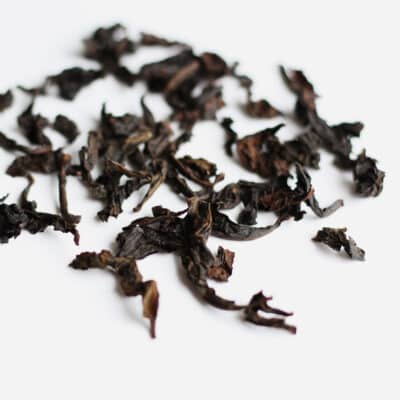
da hong pao

What dark oolong tastes like 

The flavour language changes entirely at this end of the spectrum. Fresh florals give way to deep, roasted notes – think dark chocolate, dried fruit, coffee, charcoal, and a distinctive mineral quality that is sometimes described as ‘rock’ or ‘petrichor’ (the smell of rain on warm stone).

The liquor is deep amber to dark brown. The aroma is complex and often lingering – some dark oolongs continue to reveal new notes over multiple infusions. 

There is often a warming quality to dark oolongs – they are the most naturally comforting of the category, and the style that often resonates most with coffee drinkers and black tea lovers exploring oolong for the first time.

Key styles to know 

Variety Origin Oxidation Character
Da Hong Pao (Big Red Robe) Wuyi Mountains, Fujian ~60-75% Probably the most famous dark oolong in the world. Rich, roasted, and mineral, with notes of dark fruit and a long, satisfying finish. Originally from legendary ancient bushes; now a style produced from similar cultivars
Wuyi Rock Oolongs (Yancha) Fujian, China ~60-80% From the volcanic rock terrain of the Wuyi Mountains. The mineral complexity - sometimes called yan yun or "rock rhyme" - is unlike anything else in the tea world. Shui Xian, Rou Gui, and Huang Guan Yin are key styles
Oriental Beauty (Dong Fang Mei Ren / Bai Hao) Taiwan ~60-80% One of the most heavily oxidised oolongs, with a remarkable origin story - leafhopper insects biting the leaves trigger a natural oxidation response in the plant. The result is exceptional natural sweetness, honey and muscat notes, and a reddish liquor that looks almost like a light black tea
Aged Oolong Various Varies Oolong is one of the few tea types that improves with careful ageing. Well-stored aged oolongs develop remarkable depth and smoothness over years or even decades

Dark oolongs reward patience. Brewing them gongfu-style – with a small vessel, more leaf, and multiple short infusions – reveals layers of flavour that a single long steep would never capture. 

Dark vs light oolong - oxidation levels

How oxidation affects brewing 

Understanding oxidation levels helps you brew oolong correctly – because different styles need different treatment.

Water temperature 

Light oolongs are more delicate and benefit from cooler water – typically 80-85 degrees C. Too hot and you will cook away the floral aromatics and introduce unwanted bitterness. Dark oolongs are more robust and can handle temperatures of 90-95 degrees C, which helps extract the depth and mineral complexity. 

Steep time 

All oolongs benefit from shorter infusions and multiple re-steeps rather than one long brew. This is one of the defining joys of good oolong – the way the flavour evolves across three, four, or five infusions. Start with 1-2 minutes for light styles, and 2-3 minutes for darker ones. Adjust to taste. 

Leaf quantity 

For Western-style brewing (one infusion per pot): 3-5g per 200ml is a good starting point. For gongfu-style brewing (multiple short infusions in a small vessel): 5-7g per 100ml, with infusion times starting at around 20-30 seconds. 

Re-steeping 

Quality oolong is designed to be re-steeped. Light oolongs typically give 3-4 good infusions. Dark oolongs – particularly Wuyi rock oolongs – can give 5-7 or more, with the later infusions often revealing the deepest flavour. Do not throw the leaves away after the first brew. 

Vessels 

  • Light and medium oolongs – ceramic or glass teapot, gaiwan 
  • Dark oolongs – Yixing clay teapot (a traditional unglazed clay that absorbs and enhances the roasted character over time), or ceramic 
  • All oolongs – avoid metal, which can interfere with delicate aromatics 

Which Oolong should a beginner start with? 

This is the question we hear most often – and the honest answer is: it depends on what you already drink and enjoy. 

Your starting point Where to begin Why it works
You drink green tea and enjoy delicate, floral flavours A light Taiwanese oolong - High Mountain (Alishan or similar) or Tie Guan Yin You will recognise the freshness immediately. The added complexity feels like a natural next step rather than a leap
You drink black tea or coffee and want something with body and warmth Jin Xuan (Milk Oolong) or Da Hong Pao Jin Xuan has a natural creaminess that will feel familiar to black tea drinkers. Da Hong Pao is the natural choice if you want to go straight to the roasted, full-bodied end
You want the most accessible middle-ground introduction to oolong Tie Guan Yin (traditional style) Real complexity without being challenging. It is the style most oolong drinkers encounter first - and for good reason
You drink herbal teas and are drawn to floral or aromatic infusions Phoenix Dan Cong - try the honey orchid or osmanthus varieties Dan Cong oolongs are cultivated specifically for their aromatic intensity. The floral and fruity notes will feel familiar, but the depth is unlike anything in the herbal world
You already enjoy oolong and want to go deeper Wuyi Rock Oolongs (Yancha) - start with Shui Xian before moving to Rou Gui Yancha is where oolong gets truly complex. The mineral character - yan yun, or rock rhyme - is unlike anything else in tea. Shui Xian is the more approachable entry point; Rou Gui rewards patience

Whatever you start with, we would encourage you to try more than one style before forming a strong opinion about oolong as a category.

A single light oolong tells you a very different story from a single dark one – and neither gives you the full picture of what this remarkable tea type can offer.

Loading...
magic tea gift box - tea gift sets - tea gifts
Price range: £20.00 through £37.00
Da Hong Pao Oolong
Price range: £6.00 through £69.00
Price range: £4.95 through £70.00

Quick-Pick Guide by Preference

If you enjoy or want... Start with...
Green tea and want to go deeper Light oolong - Taiwanese High Mountain or Dong Ding
Floral, delicate, buttery cups Light oolong - Alishan or Baozhong
Moving away from coffee but want body Medium oolong - Milk Oolong or Dan Cong
Fruit-forward, honeyed complexity Medium-dark - Phoenix Dan Cong
Black tea drinker curious about oolong Dark oolong - Da Hong Pao or Wuyi rock oolong
Roasted, mineral, deeply complex Dark oolong - any Wuyi rock style
Not sure where to start Light or Roasted - Tie Guan Yin. The most accessible middle ground

Frequently Asked Questions 

The difference is oxidation level. Light oolongs are oxidised to around 15-40% – they retain a green, floral, delicate character and are closest to green tea on the spectrum. Dark oolongs are oxidised to 60-85% – they are amber to brown in colour, with roasted, mineral, and fruit-forward flavour profiles. Both are oolong, but they are profoundly different in character. 

Oxidation is the chemical process that occurs when enzymes in a bruised or damaged tea leaf react with oxygen in the air. In oolong production, the tea maker deliberately controls how far this process proceeds before arresting it with heat. The level of oxidation – measured roughly as a percentage – determines the colour, aroma, and flavour of the finished tea. Low oxidation means a greener, more delicate tea. Higher oxidation produces a darker, richer, more roasted result. 

Traditional Tie Guan Yin or a Taiwanese High Mountain oolong are the most common recommendations for beginners. Tie Guan Yin sits in the middle of the oxidation spectrum and offers genuine complexity without being challenging. Taiwanese High Mountain oolongs – lightly oxidised and floral – are a particularly good entry point for green tea lovers. If you prefer black tea or coffee, a medium-dark style like Da Hong Pao may feel more immediately comfortable. 

In terms of caffeine, the difference is relatively modest – all oolong types contain moderate caffeine, typically 30-50mg per cup. In terms of flavour intensity and body, yes – dark oolongs are generally richer, fuller, and more robust in the cup. Light oolongs are more delicate and subtle. Neither is objectively better; they serve different moments and different preferences. 

Absolutely – and re-steeping is one of the defining pleasures of quality oolong. Light oolongs typically give 3-4 good infusions. Dark oolongs, particularly Wuyi rock styles, can be steeped 5-7 times or more, with later infusions often revealing the deepest and most complex flavour. Increase the steep time slightly with each subsequent infusion.

It depends on the oxidation level. Light oolongs need cooler water – around 80-85 degrees C – to protect the delicate floral compounds. Medium oolongs work well at 85-90 degrees C. Dark oolongs can handle 90-95 degrees C, where the higher temperature helps extract the roasted depth. Using water that is too hot for a light oolong will flatten the aromatics and introduce unwanted bitterness. 

Da Hong Pao – Big Red Robe – from the Wuyi Mountains in Fujian, China, is probably the most celebrated dark oolong in the world. It has a rich, roasted, mineral character and a deep amber liquor. The Wuyi rock oolong family more broadly – sometimes called yancha – includes several other revered styles such as Shui Xian and Rou Gui. These teas are prized for their distinctive mineral quality, sometimes described as yan yun or rock rhyme. 

Yes, to a degree. Light oolongs retain more catechins and EGCG – the antioxidant compounds more closely associated with green tea – because less oxidation means more of these compounds are preserved. Dark oolongs have a higher proportion of theaflavins and thearubigins, the oxidised forms more associated with black tea. Both have genuine antioxidant properties. The unique polyphenols formed at intermediate oxidation levels – specific to oolong – are present across the spectrum, though at varying concentrations.

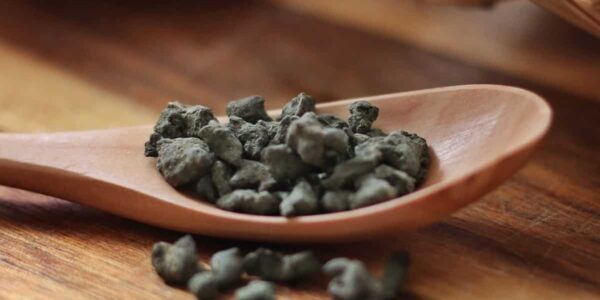
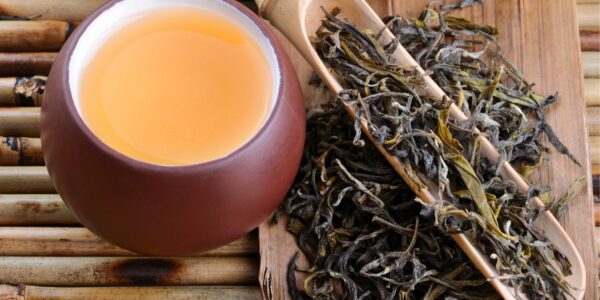
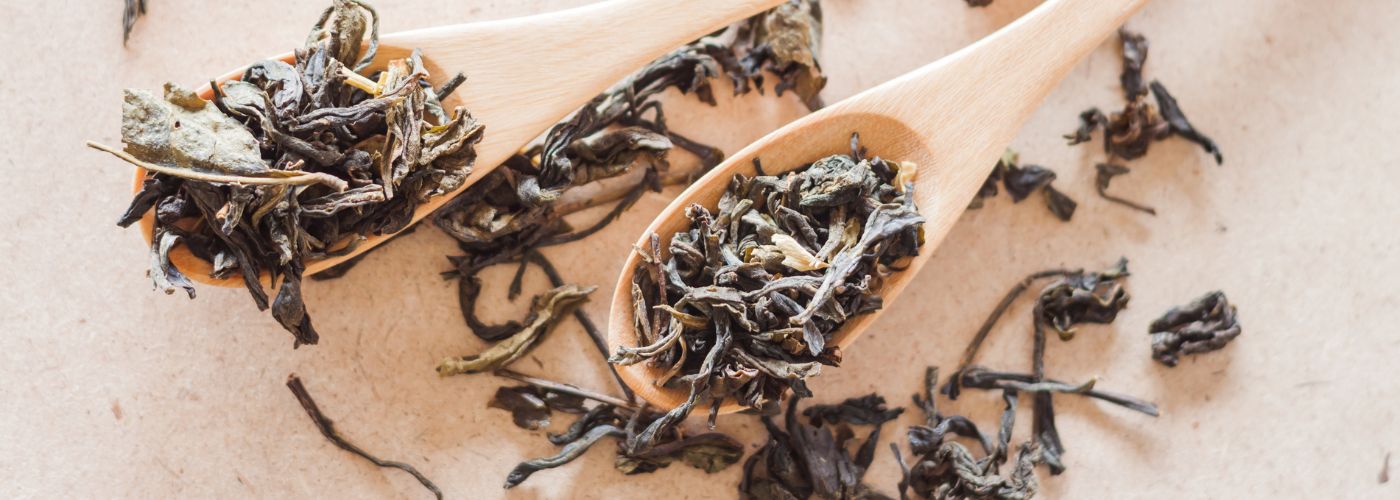
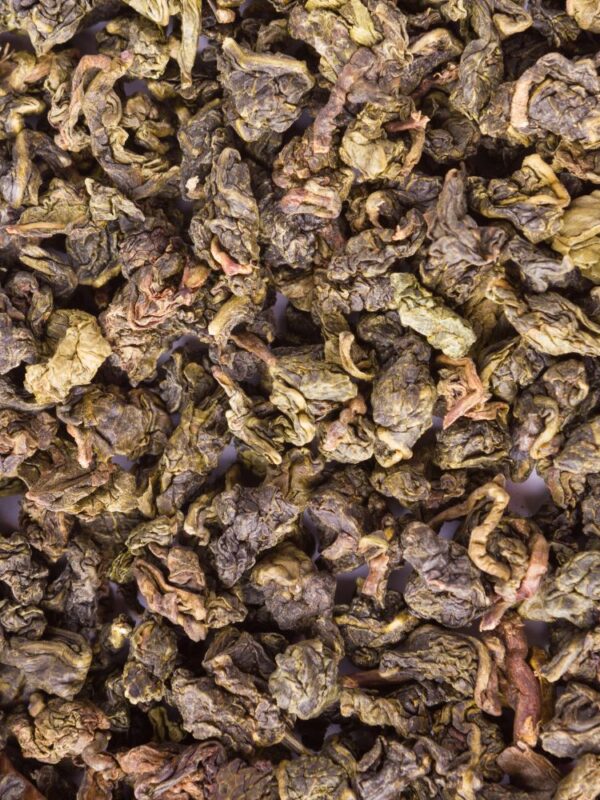
The colour of both the dry leaf and the brewed liquor reflects the oxidation level. Lightly oxidised oolongs retain the green chlorophyll of the fresh leaf – so the dry leaves appear green or olive-green, and the brewed tea is pale gold or yellow-green. Heavily oxidised oolongs lose their chlorophyll through the oxidation process – the leaves become dark brown or black, and the brewed liquor is deep amber to dark brown. The colour is one of the easiest ways to judge roughly where on the spectrum a particular oolong sits.

Explore Teapro Oolong Teas 

All oolong teas in the Teapro oolong collection are sourced as single-origin loose leaf with no artificial flavourings. Each one is selected for what it genuinely represents about its style, its origin, and its oxidation level – not for commercial convenience or blending. 

Every Teapro order includes brewing guidance and tasting notes built in – so you know not just what you are drinking, but how to get the best from it. That is how we turn tea drinkers into tea pros. 

Oolong is also one of the twelve tea types in our Become a Teapro 12-box subscription – a structured educational journey through the full world of loose leaf tea.

The oolong box takes you through the oxidation spectrum with a curated selection, tasting notes, and the context to understand what you are experiencing. 

Ready to explore the full range? Visit teapro.co.uk/oolong-wulong-tea to browse our current oolong selection.

Loading...
Loading...
teapro oolong tea gift box
Price range: £21.00 through £38.00
No Comments

Post A Comment