READ MORE
how does tea support bone health?
Bone is living tissue that constantly remodels itself – breaking down old bone and building new bone in a continuous cycle. Several factors influence how well this process works, and tea can contribute positively to a number of them.
Silica is one of the most important and overlooked minerals for bone formation – it plays a direct role in collagen synthesis and bone mineralisation, and bamboo leaf is one of the richest plant sources of silica available. Flavonoids and polyphenols in teas like rooibos, green rooibos, and Greek Mountain Tea have been associated with reduced bone loss by inhibiting the activity of osteoclasts – the cells responsible for breaking down bone tissue.
Curcumin in turmeric has well-documented anti-inflammatory properties and is being increasingly studied for its ability to modulate bone metabolism. Maca root contains plant sterols and phytoestrogens associated with hormonal balance – particularly relevant for post-menopausal bone health where oestrogen decline accelerates bone loss. Honeybush contains a range of flavonoids including pinitol, specifically associated with bone-building activity in research.
what does bone health tea taste like?
The flavour range across this collection is pleasantly varied and approachable – all completely caffeine-free and comfortably enjoyable at any time of day.
Bamboo Leaf is mild, lightly grassy, and gently sweet. Maca Root has a distinctive warm, malt-like earthiness with a nourishing quality. Turmeric Chai is warming and aromatic – spiced, slightly peppery, and deeply comforting. Honeybush is naturally sweet and floral – one of the most pleasant and immediately accessible teas in the range.
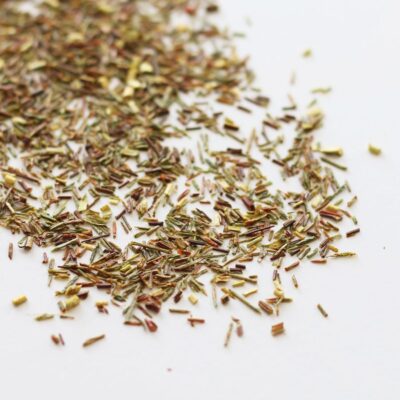
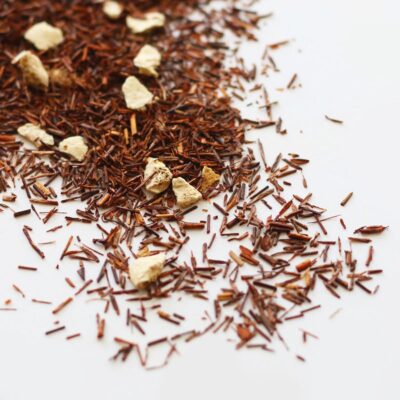
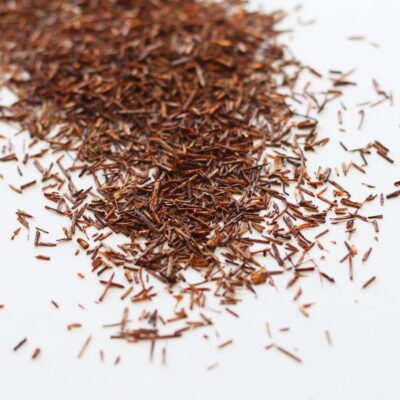
The rooibos teas – Pure Red, Green, and Lemon – range from warm and earthy to fresh and citrusy, all naturally smooth and tannin-free. Greek Mountain Tea has a unique, resinous, lightly herbal character with a clean, mineral quality that reflects the high-altitude mountain terrain where Sideritis grows wild.
how do the key teas support bone health?
Bamboo Leaf Tea: One of the richest plant sources of silica available – a mineral essential for collagen synthesis and bone mineralisation. Also rich in flavonoids with anti-inflammatory properties that reduce the oxidative stress linked to accelerated bone loss.
Maca Root Tea: A Peruvian adaptogenic root containing plant sterols and phytoestrogens associated with hormonal balance and bone density support – particularly relevant for women during perimenopause and post-menopause, when oestrogen decline is the primary driver of bone loss.
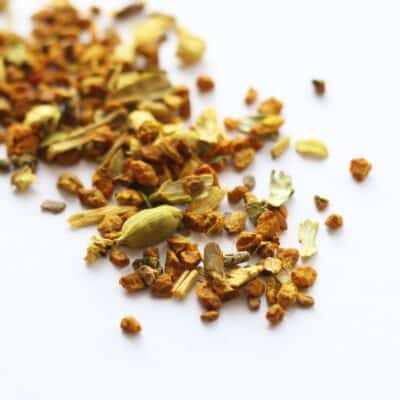
Turmeric Chai Tea: Curcumin – the active compound in turmeric – has potent anti-inflammatory and antioxidant properties, and is associated in research with reduced osteoclast activity and improved bone formation markers. The black pepper in chai formulations enhances curcumin absorption significantly.
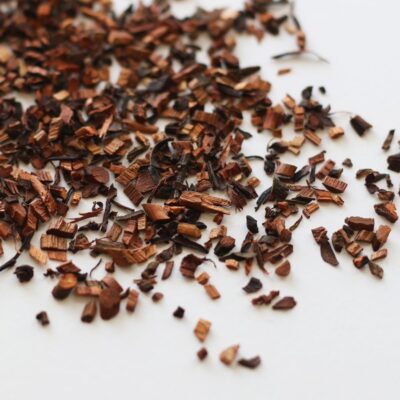
Honeybush Tea: Contains pinitol and a range of flavonoids associated with bone-building activity in studies. Naturally rich in minerals including calcium, manganese, and magnesium – all directly relevant to bone density maintenance.
Rooibos (Red, Green, and Lemon): Contains aspalathin and luteolin – flavonoids associated with inhibited osteoclast activity and improved bone mineral density in research. Naturally tannin-free, rooibos does not inhibit mineral absorption – an important distinction from tannin-rich teas that can reduce calcium uptake.
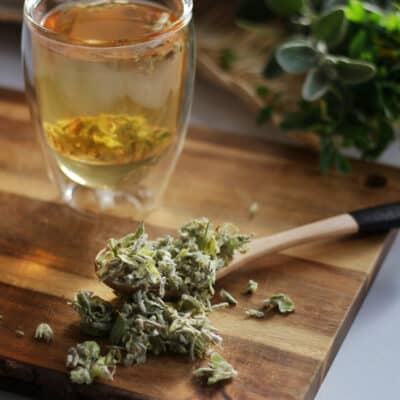
Greek Mountain Tea (Sideritis): A traditional Greek medicinal herb increasingly studied for its bone health properties. Research has associated regular consumption with improved bone density and reduced osteoporosis risk – attributed to its high flavonoid content and the acetylcholinesterase-inhibiting compounds found in Sideritis species.
how to brew bone health teas
Bamboo Leaf Tea: 90-100°C, 5-7 minutes
Maca Root Tea: 90-100°C, 8-10 minutes – the roots benefit from a longer steep to fully extract their nutritive compounds
Turmeric Chai Tea: 90-100°C, 5 minutes in water, or simmered with milk for a richer golden latte
Honeybush and Rooibos teas: 90-100°C, 5-10 minutes – cannot be over-steeped
Greek Mountain Tea: 90-100°C, 5-8 minutes – traditionally prepared with a small amount of honey and lemon
what caffeine levels are available?
Every tea in this collection is completely and naturally caffeine-free. Bamboo leaf, maca root, turmeric chai, honeybush, all rooibos varieties, and Greek Mountain Tea contain no Camellia sinensis and no caffeine whatsoever.
This makes the entire bone health collection suitable at any time of day – morning, afternoon, or evening – and ideal for those who want meaningful wellness support without any impact on sleep or caffeine sensitivity.
is bone health tea good for beginners?
Honeybush and rooibos are among the most universally approachable and immediately enjoyable teas in our entire range – naturally sweet, smooth, and impossible to over-brew. They are an excellent starting point for anyone new to herbal wellness teas.
For those ready to explore further, Greek Mountain Tea and bamboo leaf offer something genuinely different and less commonly encountered – both mild and pleasant enough for everyday drinking, while contributing meaningful bone health support as part of a consistent daily routine.

 This product has multiple variants. The options may be chosen on the product page
 This product has multiple variants. The options may be chosen on the product page
 This product has multiple variants. The options may be chosen on the product page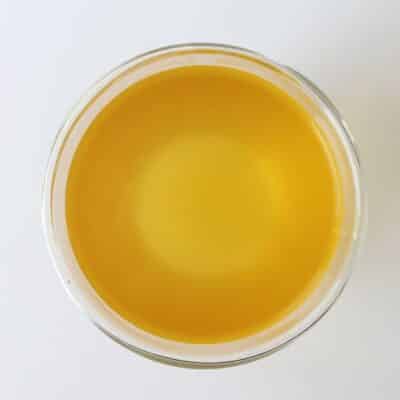
 This product has multiple variants. The options may be chosen on the product page
 This product has multiple variants. The options may be chosen on the product page
 This product has multiple variants. The options may be chosen on the product page
 This product has multiple variants. The options may be chosen on the product page
 This product has multiple variants. The options may be chosen on the product page