22 Jun The Tea Break As the Last Culturally Acceptable Excuse to Do Nothing
Guest post: Chloe Markham for Teapro. June 2026
The art of the traditional tea ritual is slowly being lost, replaced by hurried routines that leave little time for the mindful preparation and enjoyment of tea.
You can get a cup of tea from Starbucks for just shy of a fiver. A large mug filled with hot water, and a dust-filled teabag chucked in absentmindedly.
A fiver.
A lacklustre cup of beige water drunk on the go – is this really what’s become of our great British tea tradition? Because there’s nothing more glorious and regulating than the ritual of tea.
You can pay slightly more for the pleasure of drinking it at a crumb-covered, slightly sticky table. Or you could save the pennies and drink it on the go.
Tea was born, the myths say, in 2737 BC when a Chinese emperor was sitting under a tree. He noticed a leaf of the tea plant fall into his water and he decided to taste it.
Fast forward to 1650 and tea leaves made it to Britain, when it was popularised by the wife of King Charles II, a princess from Portugal, where tea was a popular aristocratic tipple.
And the tea bag – perhaps the ruin of our tea ritual – was invented in 1908. Efficient, the tea bag. A quick cuppa, and back to work we go.
I’d argue this is one of the biggest vices of modern society: optimising, hurrying, and making productive every waking moment, including our sacred tea.
The case for a tea ritual
Modern society is teaching us to knuckle down. To crack on. Maybe even to man up, but that’s a whole other problematic affair. Work harder, earn more money, buy more things. A relentless and almost impossible pace has been set, and woe-betide you if you ‘fall behind’.
But falling behind is precisely what I’m encouraging.
We’ve an epidemic of burnout, stress, and overwhelm. 9 in 10 adults in the UK in 2026 have experienced high or extreme levels of pressure or stress in the last year. How can drinking tea be a solution?
Here’s how: we ditch the efficient tea break – merely a way to recharge batteries for another stint at the grindstone – and we make a tea ritual to be proud of.
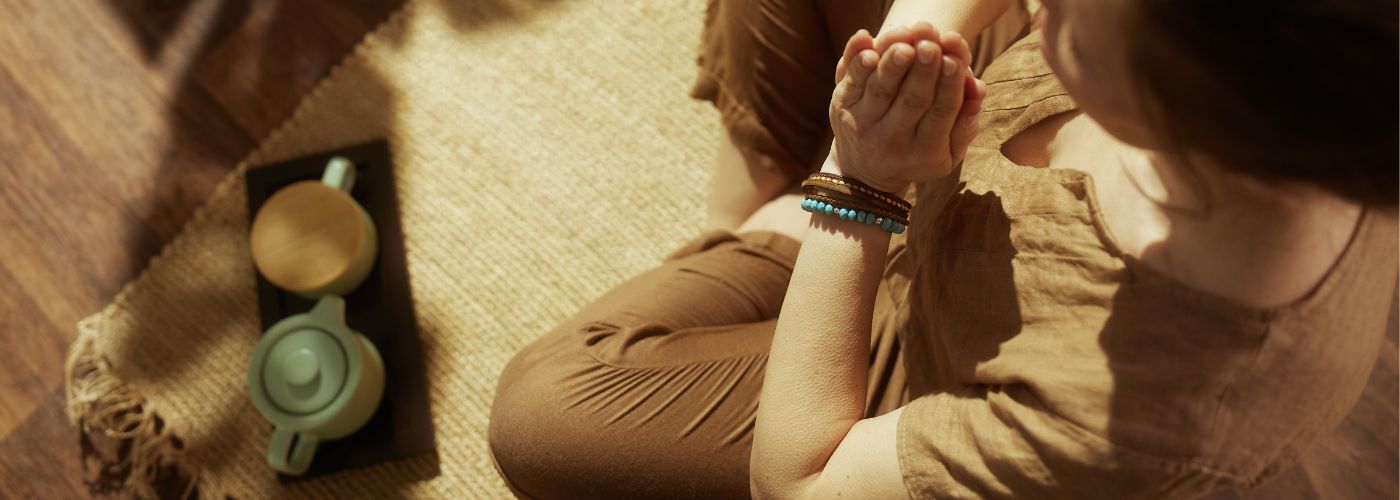
Not a ten-minute Starbucks run, or a quick brew while you answer your emails. I’m talking about a pause in your day. A proper time-out to engage with something analogue, to interrupt the doing, and to allow your nervous system to down-regulate a while.
How to practice a tea ritual
“There is something in the nature of tea that leads us into a world of quiet contemplation of life.” – Lin Yutang, The Importance of Living.
All that doing is a bit of a disaster for our nervous systems. These intelligent, biological systems of ours can’t tell the difference between a snarling leopard and a stressful email; between actual threat and those tiny perceived threats of Instagram reels and newsfeeds and online trolls. No wonder we’re all stressed.
The tea ritual, then, can act as an antidote to our always-on culture.
Here’s how we do it:
Step 1: boil water. More specifically, boil water and do almost nothing else. Perhaps stare out a window. Sit and close your eyes. Take a few deeper breaths.
Or, if you can, a little movement is great (more on that below): wiggle your toes, your shoulders, your legs, shake out your day, stamp your feet. Regardless, see this as an opportunity to hit the big red pause button and stop being productive for a while.
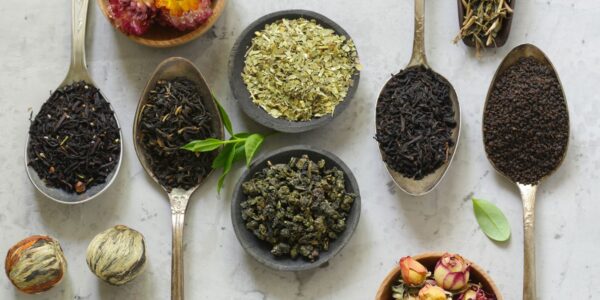
Step 2: Prepare your tea. Loose leaf is always recommended – the higher quality the tea, the higher quality the mindfulness (probably). I use a glass teapot and Teapro’s pure red rooibos – there’s something magical about the colour. Use around a teaspoon per brew.
Step 3: I like to wait a moment after the kettle’s boiled before adding water to the tea. Perhaps I was told too often about burning the leaves as a child (whether that’s true or not…).
Once you’re ready, pour the water slowly, from a height. Noticing as it changes colour, the leaves as they swirl and dance, the sound the water makes as it gurgles.
Step 4: If you’ve a glass teapot like mine, it becomes a lava lamp of tea; a perfect meditative aid.
Watch the leaves as they settle, or resume the kettle-boiling loafing – watch the birds outside your window, the clouds, or the people; close your eyes and meditate (just sit quietly and notice how you’re feeling – it’s easier than they let on); sit and breathe a bit deeper for a few minutes.
Step 5: slowly pour into your favourite mug. Notice the smell as you pour. Feel the mug as it warms up. Watch the steam as it rises. Make this an every-sense experience and pay attention.
Step 6: once it’s cooled a little, employ your tastebuds and take a sip. This sipping of your tea is well accompanied by a nice book (preferably fiction), or further loafing as above.
The entire process should take around 20 minutes (a very reasonable ask in our too-busy lives), but it can be wonderfully stretched out with more tea, a larger teapot, and one or two good friends.
To know more about proper tea brewing techniques, see our complete brewing guide.
The nervous system benefits of a tea ritual
Notice the amount of physical sensations in the ritual; smell, taste, sight… There’s a reason it’s so beneficial: it’s regulating for our nervous systems.
Modern society has taught us to think through everything. And there’s a certain amount of cerebral arrogance that comes with it – we can think our way out of any problem, rationalise everything, apply logic left, right, and centre. But our nervous systems aren’t logic-based; we can’t think our way out of stress (what’s known as a top-down solution) – it must be felt (or a bottom-up solution).
So we feel. If you can pay attention to your body as your kettle boils, as your tea steeps, and find a little movement, or humming, shoulder-rolling, or stamping your feet… you’re discharging the tension built up from your toil.
Like the act of running away from a tiger, our bodies often need a physical response to the stress we face in order to come back to a place of safety, but as hard as we try, running away from our emails doesn’t quite work in the same way (Colin’s pas-ag email will still be there after a 5k sprint).
Gentle movement can be all we need to process the stress. Once we’ve swayed to the music of the boiling water, we can soften into safety.
And a signal of safety in our bodies is basically a tonic: digestion works better, we get more creative, our heart rate drops, and sleep becomes easier.
So even the loafing we do as we make our tea is important. Once we discharge the stress, the tea will be that much sweeter and your nervous system will thank you.

The takeaway
Our always-on, work-harder, optimise-everything culture has almost entirely removed our quiet pockets of life.
The tea break is a rebellion against that. Not a hasty tea-bag cuppa in a Starbucks drive-through, but a meaningful and nourishing ritual we get to wallow in, if only for a few minutes a day.
Because surely, in these finite days of ours, we should aim to feel relaxed, easy-going, and happy more often than stressed, overwhelmed, and burned out.
And maybe it’s never really been about the tea at all. Maybe it’s really about carving a ritualised moment in our lives to come back to ourselves. A moment of being in our lives, instead of rushing through them.
Tea, then, brewed and drunk like we mean it, is a gateway to the ease we’ve been looking for all along.
Choosing your next ritual
Ready to curate your next meaningful pause? Depending on what your mind and body need today, explore our curated guides to finding the perfect blend:
For a natural lift: Swap the frantic coffee rush for a sustained, jitter-free morning. Discover these 7 energy-boosting teas to power you through the day.
For a mental reset: If you are stepping away from a chaotic screen to clear the fog, try these 9 best teas for mental clarity and focus.

Chloe Markham is a writer on joy: how do we live our most joyful lives? She’s a nervous system educator and yoga teacher, and has been featured in Vogue, Psychologies Magazine, and The Independent.
Find her writing inside Joyful on Substack and everything else on her website, https://www.chloemarkham.co.uk/
No Comments