READ MORE
what makes Japanese tea so special?
Japan is the only major tea-producing country that steams its leaves rather than pan-firing them – a technique that preserves chlorophyll, locks in a vibrant deep green colour, and creates the characteristic umami richness that Japanese teas are famous for worldwide.
The country’s tea culture is one of the most philosophically rich in the world, rooted in the Zen Buddhist tradition of mindfulness and presence. To drink Japanese tea is to engage in a small ritual of attention – a pause, a breath, a cup made with extraordinary care.
what does Japanese tea taste like?
Japanese teas are defined by their umami – a savoury, sea-breezy depth that comes from the amino acid L-Theanine, which develops particularly strongly in shade-grown varieties like Gyokuro and Matcha.
Ceremonial Matcha is the most concentrated expression of Japanese tea – a rich, vibrant, and creamy bowl of powdered leaf with a lingering sweetness and a full, rounded umami character. Gyokuro is the pinnacle of loose-leaf Japanese tea – intensely umami, lush, and deeply green, shade-grown for three to four weeks before harvest to maximise its amino acid content.
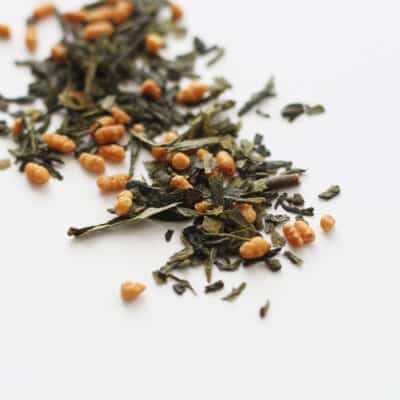
Genmaicha offers a gentler, more playful entry into Japanese tea – a blend of green tea and toasted brown rice that produces a comforting, nutty, popcorn-like aroma with a mild, grassy sweetness that is immediately appealing and endlessly drinkable.
how to brew Japanese tea
Japanese teas are highly sensitive to temperature – lower water temperatures than you might expect are key to preserving their delicate umami character and preventing bitterness.
Gyokuro: 50-60°C, 2g per 100ml, 90 seconds – even cooler than most green teas to protect its intense character
Genmaicha: 70-80°C, 2-3g per 350ml, 1-2 minutes
Ceremonial Matcha: 70-80°C, 1-2g per 80ml, whisked vigorously with a bamboo whisk until frothy
Infusions: Gyokuro and Genmaicha can be re-steeped 2-3 times, each revealing slightly different layers of flavour.
is Japanese tea caffeinated?
Yes – all three teas in our Japanese collection contain caffeine, though the character of that caffeine differs meaningfully. Ceremonial Matcha has the highest caffeine content because you consume the whole powdered leaf – a typical serving contains approximately 60-70mg.
Gyokuro is also relatively high in caffeine due to its shade-growing process, which concentrates both L-Theanine and caffeine in the leaf. Genmaicha is gentler – the addition of toasted rice dilutes the tea content, making it a lower-caffeine option. In all cases, the high L-Theanine content promotes a calm, focused energy rather than a sharp spike.
what are the health benefits?
Japanese teas – particularly Matcha and Gyokuro – are among the most nutrient-dense beverages in the world. Both are exceptionally rich in EGCG, the powerful antioxidant associated with heart health, metabolism support, and cognitive function.
Matcha is uniquely potent because consuming the whole powdered leaf means you receive the full concentration of its natural compounds, rather than just what steeps out into water. The high L-Theanine content in both Matcha and Gyokuro promotes sustained calm alertness – widely associated with the meditative clarity of the Japanese tea ceremony.
Japanese teas at a glance
Our Japanese collection celebrates three of the country’s most iconic and beloved tea styles.
Matcha “Land of Fire” Ceremonial Grade: Stone-ground ceremonial matcha of exceptional quality – vibrant, rich, and creamy, with a deep umami sweetness and a clean, lingering finish. Used in traditional tea ceremony and in matcha lattes alike.
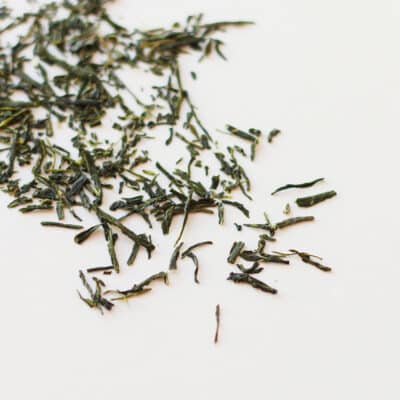
Gyokuro Green Tea: The most prized loose-leaf green tea in Japan – shade-grown to concentrate its extraordinary umami depth and lush sweetness. A meditative, rewarding cup for those who want to experience Japanese tea at its most refined.
Genmaicha Rice Popcorn Green Tea: A beloved everyday Japanese tea blending green tea with toasted brown rice for a warm, comforting, nutty character – approachable, naturally low in caffeine, and delicious hot or cold.
can you cold brew Japanese tea?
Absolutely – and cold brewing is an exceptional way to experience both Gyokuro and Genmaicha. Cold brewing draws out the umami sweetness and natural complexity of Japanese teas with no bitterness whatsoever, producing drinks of extraordinary clarity and delicacy.
Add 3-4g of tea to 500ml of cold water and steep in the fridge for 4-8 hours. For Gyokuro, even 2-3 hours produces a remarkable result.
Cold-brewed Genmaicha over ice is one of the most comforting and refreshing cold drinks imaginable – nutty, smooth, and naturally sweet.
how should I store Japanese tea?
Freshness is paramount for Japanese tea. Store in a cool, dark, airtight container away from moisture, heat, and strong odours. All three teas are best enjoyed within 6-12 months of harvest to experience their full vibrancy.
Matcha is particularly sensitive to oxidation – once opened, keep it sealed tightly and refrigerated if possible, and aim to use it within 4-6 weeks for the freshest flavour and the most vivid green colour.
is Japanese tea good for beginners?
Genmaicha is one of the most naturally approachable and beginner-friendly teas in our entire collection – its toasty, popcorn-like warmth is immediately comforting, and it is almost impossible to over-brew into bitterness.
Ceremonial Matcha is a wonderful experience for anyone curious about it – our brewing guidance makes it straightforward, and once you taste the real thing, you will never look at a mass-produced matcha latte the same way again. Gyokuro is for the more adventurous tea lover ready to discover what shade-grown Japanese green tea truly tastes like at its finest.

 This product has multiple variants. The options may be chosen on the product page
 This product has multiple variants. The options may be chosen on the product page
 This product has multiple variants. The options may be chosen on the product page