

03 Mar Bamboo Leaf Tea: Health Benefits, Silica Content & Why It’s the Secret Tea for Skin, Hair & Nails
“Caffeine-free. Sustainably harvested. And quietly one of the most nutrient-dense teas most UK drinkers have never tried.”
Most people are familiar with bamboo as a building material, a panda’s favourite food, or a sustainable alternative to plastic. Far fewer know that bamboo leaves have been brewed as tea in China and Japan for centuries – and that the bamboo leaf tea benefits, mostly unknown to the western world, are frankly, remarkable.
Bamboo leaf tea is caffeine-free, rich in antioxidants, and contains more silica than almost any other plant on earth. That last fact alone makes it worth knowing about. Silica is the mineral your body uses to produce collagen – the protein responsible for skin elasticity, hair strength, and nail integrity.
For anyone who has spent money on collagen supplements, peptides, or beauty-focused wellness drinks, bamboo tea offers the same biological pathway in a cup.
This is a tea that most UK drinkers haven’t discovered yet. That’s part of what makes it interesting – and why, once you’ve tried it, you tend not to stop.
What Is Bamboo Leaf Tea?
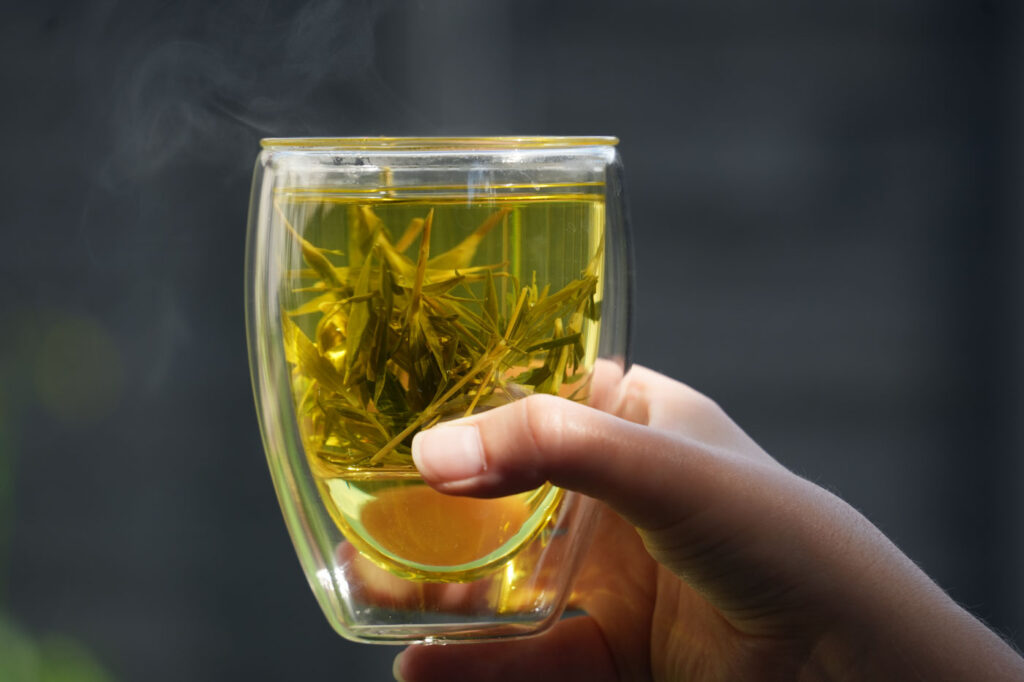
Bamboo leaf tea is an herbal infusion made from the dried leaves of the bamboo plant – specifically from species such as Bambusa vulgaris and Phyllostachys edulis, both cultivated across China and Japan. It is not made from the bamboo shoots used in cooking, and it is not related to Camellia sinensis, the plant that produces green, black, white, and oolong teas.
This means bamboo leaf tea is a true herbal infusion – naturally caffeine-free – and it has been used in traditional Chinese medicine and East Asian wellness practice for generations.

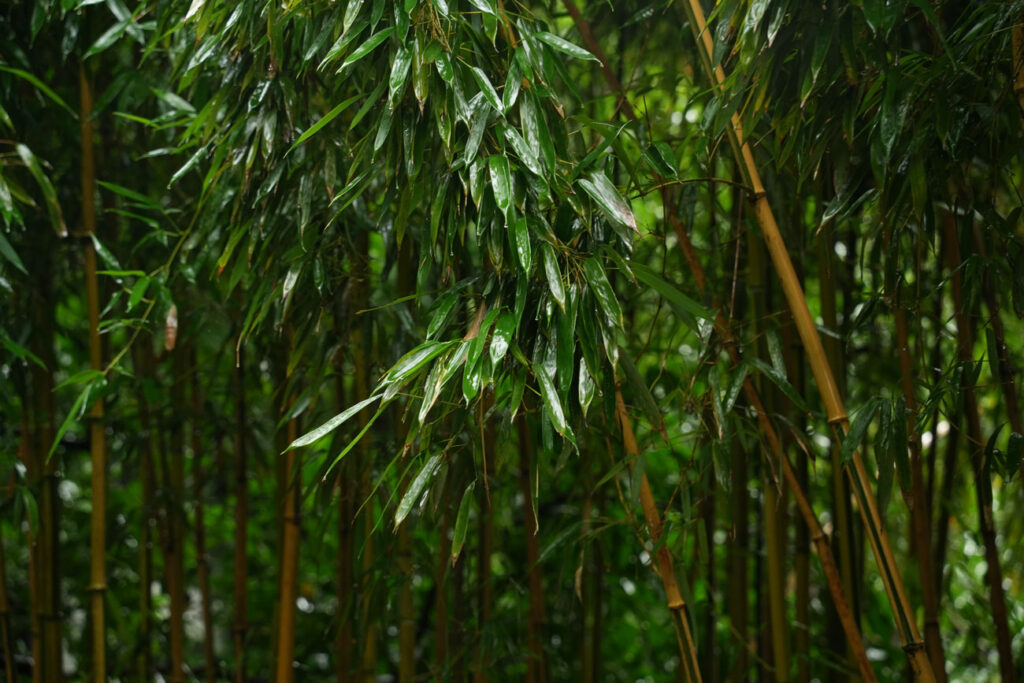
Bamboo leaves are harvested during peak growing season, typically in spring or early summer, when nutrient levels in the leaves are at their highest. Because bamboo is one of the fastest-growing plants on earth – capable of growing up to 90cm (about 36 inches) in a single day under the right conditions – the leaves can be harvested sustainably without replanting. The plant regenerates from its existing root system, making it one of the most renewable tea sources available.
Not all bamboo varieties are suitable for tea production. Only specific species with the right phytochemical profiles are selected. The bamboo used for Teapro’s loose leaf bamboo tea is carefully sourced for flavour, purity, and nutritional quality – no artificial flavourings, no blending to mask an inferior base leaf.
What Does Bamboo Leaf Tea Taste Like?
Bamboo leaf tea is delicate and refreshing, with a flavour profile that sits somewhere between green tea and fresh grass, with faint notes of lemon and natural sweetness. It is mild enough to drink without sweetener, though a small spoon of honey works beautifully if you prefer something warmer in flavour.
For anyone moving away from coffee, bamboo tea makes an easy transition: it has none of the bitterness of coffee or black tea, and its naturally sweet, light character works well both hot and cold. Iced bamboo tea is a genuinely lovely summer drink.
If you’ve had Japanese barley tea (mugicha) or a light sencha, bamboo tea occupies a similar gentle, green-grassy register – approachable for new drinkers, interesting enough to hold the attention of experienced ones.
The Silica Story: Why Bamboo Tea Is Exceptional for Skin, Hair & Nails
This is where bamboo leaf tea earns its reputation – and where the bamboo leaf benefits for skin, hair, and nails become impossible to ignore.
Bamboo is one of the richest natural sources of silica – specifically orthosilicic acid (OSA), the bioavailable form your body can actually absorb and use. While silica (silicon dioxide, SiO₂) is found in many plant foods, bamboo’s concentration is among the highest of any known plant.
What Does Silica Actually Do?
Silica is not a headline-grabbing mineral like zinc or magnesium, but it performs a critical structural role in the body:
Collagen synthesis. Silica is directly involved in the production of collagen, the most abundant protein in the human body. Collagen is the structural scaffold of your skin, hair follicles, nails, bones, and connective tissue. Without adequate silica, collagen synthesis slows – and this slowdown accelerates visibly with age.
Skin elasticity. Collagen is what keeps skin firm, supple, and resilient. As collagen levels naturally decline from our mid-twenties onwards, skin loses elasticity and fine lines become more visible. Silica supports the body’s ongoing collagen production, helping to maintain skin integrity from the inside.
Hair strength. Silica delivers nutrients directly to the scalp and hair follicles, and has been shown to support the structural protein bonds that keep hair strands strong and resistant to breakage. It does not reverse hair loss, but silica supplementation is consistently linked to reduced hair breakage and improved tensile strength.
Nail integrity. The compound orthosilicic acid, delivered by silica, is essential for keratin production – the protein that forms your nails. Regular silica intake supports harder, less brittle nails and promotes healthy growth.
Bone and connective tissue. Silica aids calcium absorption and plays a role in synthesising the collagen matrix that gives bones their flexibility (as opposed to calcium, which provides hardness). Together, they contribute to higher bone mineral density and more resilient connective tissue.
Bamboo Tea vs Collagen Supplements
The collagen supplement market in the UK is now worth hundreds of millions of pounds annually. Most of these products deliver hydrolysed collagen peptides – fragments of collagen that your digestive system must process before they can be used.
Bamboo leaf tea takes a different approach. Rather than delivering collagen directly, it delivers silica – the raw material your body uses to synthesise its own collagen. For many people, this is a more natural and sustainable approach. Bamboo tea works alongside your biology rather than bypassing it.
This doesn’t make collagen supplements wrong – but it does make bamboo tea a compelling complement, or for some, a preferable alternative. A cup of bamboo leaf tea each day provides a consistent silica intake without the cost, the powder, or the flavoured sachet.

Full Guide on Bamboo Leaf Tea Benefits
1. Skin, Hair & Nails – The ‘Big Three’


Unlock the Benefits of Bamboo Leaf Tea for Hair Health
As detailed above, the silica content in bamboo leaf tea is the primary driver of its beauty and structural wellness benefits. Regular daily consumption supports collagen production, which in turn supports skin elasticity, hair resilience, and nail strength. This is the benefit most consistently cited by bamboo tea drinkers, and the one most supported by the nutritional science around silica supplementation.
Support Your Skin’s Health with Bamboo Leaf Tea
It is known that silica aids in the production of collagen. This protein plays a key role in retaining skin elasticity and reducing the visibility of fine lines and wrinkles. As we age, collagen levels naturally decrease, making silica supplementation particularly beneficial.
Bamboo leaf tea, with its high silica content, offers a natural and effective way to promote healthy skin, helping you maintain a vibrant and youthful appearance through your tea.
Strengthen Your Nails Naturally with Bamboo Leaf Tea
By incorporating bamboo leaf tea into your daily routine, you can naturally boost your silica intake, supporting stronger and healthier nails. Silica, found abundantly in bamboo leaf tea, delivers orthosilicic acid, a compound essential for nail health.
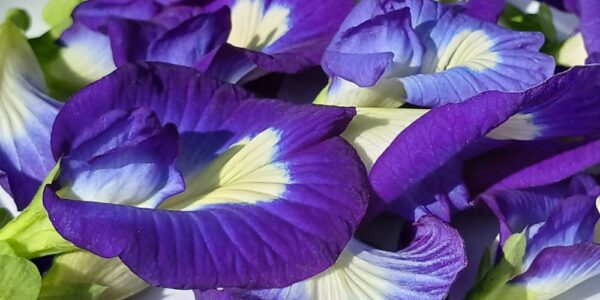
If you’re interested in supporting your skin from the inside out, it’s worth exploring butterfly pea tea too – its antioxidant-rich anthocyanins work alongside collagen to protect skin cells from oxidative stress.
2. Antioxidant Protection
Bamboo leaves contain significant levels of flavonoids and polyphenols – including rutin, gallic acid, and various phenolic acids. These compounds act as antioxidants, neutralising free radicals that cause oxidative stress at the cellular level.
Oxidative stress is implicated in accelerated ageing, chronic inflammation, and a wide range of health conditions. The antioxidant profile of bamboo leaf tea makes it functionally comparable to green tea in terms of protective capacity – which is a meaningful benchmark.
A 2025 systematic review of bamboo tea across 19 species confirmed strong antioxidant activity across all tested varieties, with activity further boosted in fermented preparations. In plain terms: bamboo tea is genuinely rich in protective compounds, not just by implication.
3. Digestive Health
Bamboo leaf tea contains natural dietary fibre and anti-inflammatory compounds – particularly flavonoids and saponins – that support gut health. The anti-inflammatory action of these compounds may help soothe the digestive tract, reducing conditions like bloating and gastritis.
The fibre content also contributes to a feeling of satiety, making bamboo tea a useful addition to a balanced diet for those managing weight or digestive comfort.
Additionally, the anti-inflammatory properties of flavonoids and saponins can soothe the digestive system, potentially alleviating conditions like gastritis and irritable bowel syndrome (IBS).

For a deeper dive into teas that support the digestive system, our guide to peppermint tea covers its well-researched benefits for bloating, IBS, and overall gut comfort.
4. Bamboo Leaf Tea for the Immune Support
For anyone who has used tea as a way to front-load their morning with functional nutrition, bamboo leaf tea earns its place in that routine.
Bamboo leaves are a meaningful source of Vitamin C, which plays a central role in immune function – supporting white blood cell production and acting as an antioxidant in its own right.
The small amount of B vitamins present (B1, B2, B3) contribute to energy metabolism, reducing feelings of fatigue without any caffeine involvement.
Dive deeper into immune-boosting teas and explore our full range here.

If immune support is a priority, hibiscus tea is another caffeine-free herbal worth knowing about – it’s one of the highest natural sources of Vitamin C available in loose leaf form.
5. Bone and Connective Tissue Health
Bio-silica has been associated with higher bone mineral density, and the collagen matrix that silica helps form provides bones with the flexibility that makes them resilient rather than brittle.
This is particularly relevant for women, who are disproportionately affected by loss of bone density as they age.
Silica in bamboo leaf tea aids in calcium absorption, which strengthens bones and connective tissues.
Regular consumption of silica-rich bamboo leaf tea can contribute to higher bone mineral density, making bones more resilient and less prone to deterioration.
Moreover, Silica plays a vital role in the synthesis of collagen, essential for the integrity of bone, cartilage, and connective tissues.

6. Liver Support (Promising, Early-Stage)
Traditional Chinese medicine has used bamboo leaves as a liver tonic for centuries. More recent research suggests that the flavonoids in bamboo leaves may have a liver-protective effect, particularly in cases of minor oxidative damage. The mechanism appears to be the antioxidant action of bamboo flavonoids shielding liver cells from damage.
This research is promising but still early-stage – we’re not claiming bamboo tea treats liver conditions. What the evidence does support is that a regular antioxidant-rich diet, of which bamboo tea can be part, contributes to liver health over time.
7. Heart Health (Under Research)
Studies on bamboo shoots – a different part of the plant – have suggested cholesterol-lowering effects. The evidence for the same effect from bamboo leaf tea specifically is not yet conclusive. We include this honestly: the potential is there based on the flavonoid profile, but we won’t overstate it.

Looking for more teas to support your body? Browse our collection of herbal teas and read more – from Greek Rock Rose Leaf Tea to the remarkable health benefits of Yerba Mate.
Bamboo Leaf Tea Nutritional Profile
| Nutrient | Role |
|---|---|
| Silica (orthosilicic acid) | Collagen synthesis, skin, hair, nails, bone density |
| Flavonoids (rutin, gallic acid) | Antioxidant, anti-inflammatory, liver support |
| Polyphenols / Phenolic acids | Cellular protection, oxidative stress reduction |
| Vitamin C | Immune function, antioxidant |
| Vitamin B complex (B1, B2, B3) | Energy metabolism, anti-fatigue |
| Dietary fibre | Digestive health, satiety |
| Calcium, Magnesium, Potassium | Cardiovascular and skeletal health |
Is Bamboo Leaf Tea Caffeine-Free?
Yes – bamboo leaf tea is completely caffeine-free.
This makes it suitable for all-day drinking, including in the evenings and before bed. Unlike green or black tea, which contain caffeine and theanine, bamboo tea provides its functional benefits without any stimulant effect. For anyone reducing their caffeine intake, managing anxiety, or simply wanting a warm cup in the evening that won’t affect sleep, bamboo leaf tea is an excellent choice.
It is also safe for most people who are sensitive to caffeinated drinks – though as with all herbal teas, those who are pregnant, breastfeeding, or taking medication should consult a healthcare professional before adding it to their regular routine. UK-specific research on bamboo tea during pregnancy is limited, and caution is always appropriate.
The Sustainability Story
Bamboo is one of the most environmentally compelling plants on earth. It is a grass – not a tree – which means it does not need to be replanted after harvesting. The root system (rhizome) simply regenerates new shoots. Bamboo can grow up to 90cm in a single day in ideal conditions, making it one of the fastest-renewing natural resources available.
It requires no pesticides to grow vigorously, no irrigation beyond natural rainfall in most growing regions, and sequesters carbon at a rate comparable to many trees. The environmental footprint of bamboo cultivation is dramatically lower than that of most crops.
For Teapro’s audience – people who care about where their products come from and what impact they have – bamboo leaf tea is a natural fit. You are drinking something that genuinely does not cost the earth to produce.
This aligns with everything Teapro stands for: sourcing teas that are pure, traceable, and produced with integrity. Bamboo leaf tea has nothing to hide.
Brewing Bamboo Leaf Tea

Bamboo leaf tea is simple to brew and forgiving if you get the steep time slightly wrong – unlike some green teas, it does not turn bitter with over-steeping.
| Parameter | Guidance |
|---|---|
| Amount | 3–4g per 600ml (approx. 2 people) |
| Water temperature | 90–95°C (just off the boil) |
| Steep time | 3–4 minutes |
| Re-steeps | 1–2 re-steeps possible; flavour lightens with each |
| Best served | Hot or chilled over ice |
| Sweetener | Optional - a small spoon of honey complements the natural sweetness |
For iced bamboo tea: brew at double strength (6–7g per 600ml), steep for 10 minutes, then pour directly over ice. The dilution from the ice brings it to the perfect strength. This is an excellent summer drink and retains the full antioxidant profile even when chilled.
We recommend brewing bamboo leaf tea in our Teapro 800ml glass teapot — the clear glass lets you watch the leaves unfurl, and the built-in strainer keeps loose leaves out of your cup.
Where to Buy Bamboo Leaf Tea
Curious about the delicate, sweet grass flavour of bamboo leaf tea? You can explore this tea along with its heap of health benefits below!


Frequently Asked Questions
Bamboo leaf tea is particularly valued for its silica content, which supports collagen production and therefore benefits skin elasticity, hair strength, and nail integrity. It is also a meaningful source of antioxidants, supports digestive health, and provides Vitamin C for immune function – all without any caffeine.
Yes. Bamboo is one of the richest natural sources of silica – specifically orthosilicic acid (OSA), the bioavailable form the body can absorb and use for collagen synthesis. This is one of the key reasons bamboo leaf tea is associated with skin, hair, and nail benefits.
Yes, completely. Bamboo leaf tea is an herbal infusion – it contains no Camellia sinensis and therefore no caffeine. It can be drunk at any time of day, including evenings, without affecting sleep.
Bamboo leaf tea does not deliver collagen directly, but it delivers silica – the mineral your body uses to synthesise its own collagen. For many people, this is a natural and cost-effective complement to, or alternative to, collagen supplement products. Think of it as feeding your body the raw materials it needs rather than the end product.
Most regular bamboo tea drinkers consume 1–3 cups per day. Because it is caffeine-free and gentle in character, it can be incorporated at any point in the day. Consistency over time is more important than quantity – silica-related benefits such as hair and nail strength are cumulative and typically noticed over weeks of regular consumption.
Bamboo leaf tea has a delicate, lightly sweet flavour with notes of fresh grass and a faint citrus quality. It is milder than most green teas and has no bitterness. First-time drinkers often describe it as refreshing and easy to drink – a good entry point for anyone exploring herbal teas for the first time.
Bamboo leaf tea is caffeine-free and generally mild, but UK-specific clinical research on its use during pregnancy is limited. We recommend consulting a healthcare professional before drinking it regularly if you are pregnant or breastfeeding.
Teapro’s bamboo leaf tea is available as a loose leaf herbal tea – pure, unflavoured, and sourced for quality. You can find it in our shop below.

Potential Side Effects and Precautions
Bamboo leaf tea is widely considered safe for regular consumption. As with all herbal teas, a small number of considerations apply:
- Medication interactions: As with many herbal teas, there is a theoretical possibility of interaction with certain medications. If you take regular medication, check with your GP before making bamboo tea a daily habit.
- Pregnancy and breastfeeding: UK-specific clinical research on bamboo leaf tea during pregnancy is limited. We recommend consulting a healthcare professional as a precaution, even though bamboo leaf tea is caffeine-free and generally regarded as mild.
- Quantity: There is no established upper limit for bamboo leaf tea consumption in healthy adults. Drinking 1–3 cups per day is the typical range among regular consumers.
The Bottom Line
Bamboo leaf tea is one of the best-kept secrets in UK wellness – a caffeine-free, antioxidant-rich herbal tea with one of the highest natural silica concentrations of any plant on earth. For anyone interested in supporting their skin, hair, and nails through what they drink rather than what they supplement with, it deserves a place in your daily routine.
It is sustainable to produce, delicate to drink, and backed by a growing body of research that supports what traditional East Asian medicine has known for centuries.
And unlike a lot of what gets marketed as a wellness tea, bamboo leaf tea benefits are completely natural with no artificial additives. Just leaves, water, and a genuinely remarkable nutritional profile.
That’s exactly what tea should be.
Want to explore more herbal teas? Read our guides to Greek Mountain Tea, Hibiscus Tea, and the health benefits of Yerba Mate.


REFERENCES
1. Silica and collagen synthesis / skin elasticity Jugdaohsingh R. et al. (2004) — Silicon and bone health. Journal of Nutrition, Health & Ageing. Supports: the orthosilicic acid → collagen synthesis claim. → https://pubmed.ncbi.nlm.nih.gov/15329324/
2. Silica and hair strength Barel A. et al. (2005) — Effect of oral intake of choline-stabilised orthosilicic acid on skin, nails and hair. Archives of Dermatological Research. Supports: the hair breakage / tensile strength claim. → https://pubmed.ncbi.nlm.nih.gov/16205932/
3. Bamboo antioxidant activity Search PubMed for: “bamboo leaf extract antioxidant flavonoid” — there are several studies from 2020–2025 confirming the flavonoid and phenolic acid profile. The 2025 systematic review across 19 species I referenced in the article should be findable via: “bamboo leaves antioxidant systematic review 2025”
4. Bamboo leaf liver protection / flavonoids Search PubMed for: “bamboo leaf flavonoids hepatoprotective” — the flavonoid-liver protective mechanism is documented in several Chinese-language studies with English abstracts available on PubMed.
5. Bone mineral density and silicon Macdonald H.M. et al. (2012) — Dietary silicon interacts with oestrogen to influence bone health. Bone Journal. Supports: the bone density / silica absorption claim. → Search PubMed: “dietary silicon bone mineral density Macdonald”

Hot drinks lover, especially peppermint tea. Consumer Behaviour and Marketing student. Passionate about cooking, exploring new music, and playing the piano.



No Comments